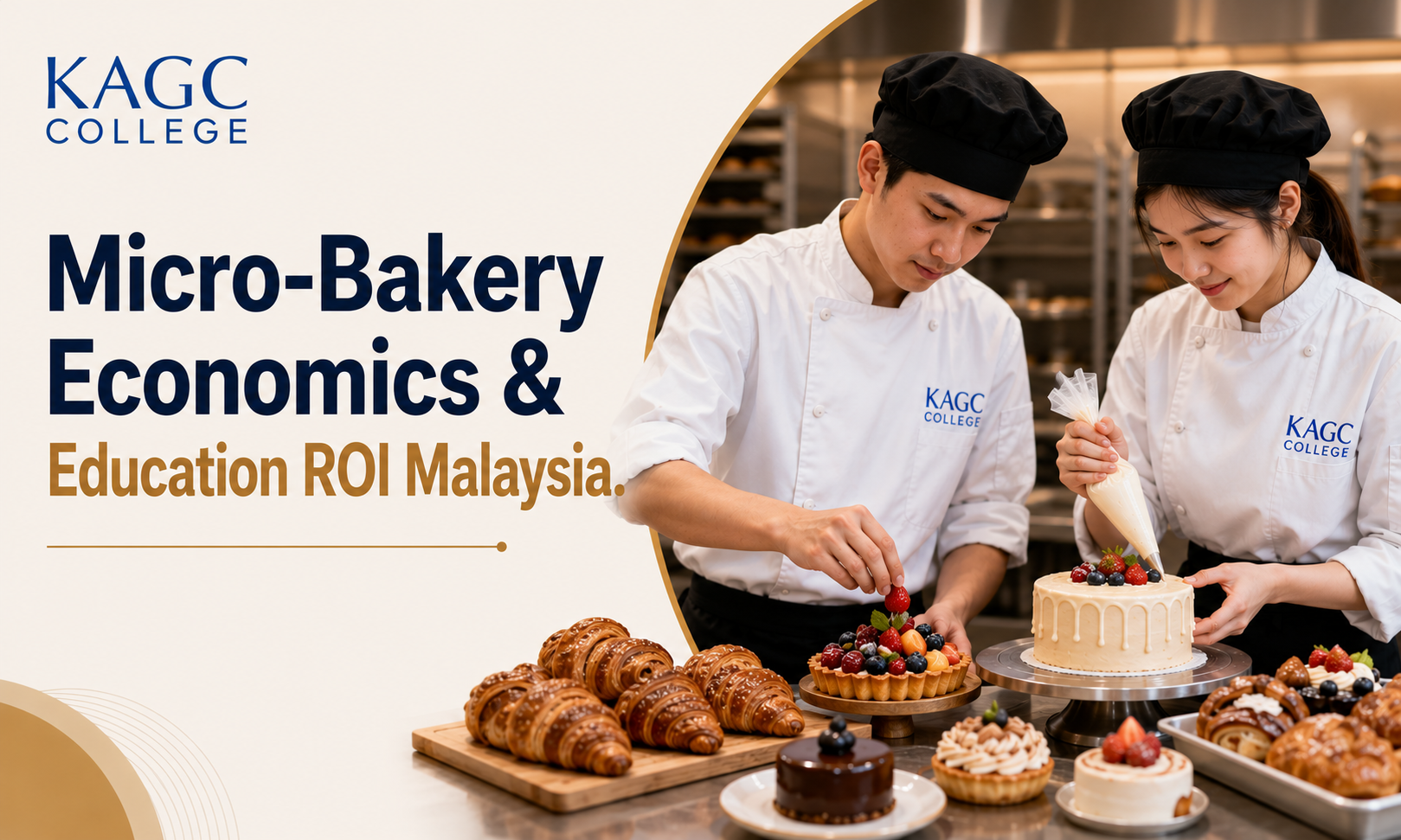


The Economics of a Micro-Bakery: How Fast Can You Recoup Your Education Investment?
Why More Malaysians Are Choosing the Micro-Bakery Business Model
For many aspiring pastry professionals, opening a traditional bakery may seem like the ultimate goal. However, the bakery industry has changed significantly over the past decade.
Instead of investing hundreds of thousands of ringgit into a full-scale retail outlet, many successful pastry entrepreneurs today are starting with a micro-bakery model.
A micro-bakery is a small-scale bakery operation that focuses on producing premium artisan products with lower overhead costs. Many operate through pre-orders, social media platforms, e-commerce channels, cloud kitchens, or home-based production facilities.
This business model allows bakery owners to focus on product quality, customer experience, and profitability without carrying the financial burden of large retail spaces, extensive staffing requirements, and expensive equipment investments.
As consumers increasingly seek handcrafted sourdough breads, artisan croissants, premium cakes, and specialty desserts, the demand for high-quality bakery products continues to grow across Malaysia.
For pastry graduates, this creates an opportunity to transform technical skills into a profitable business venture with relatively low startup costs.
Why Artisan Products Generate Higher Profit Margins
One of the biggest advantages of a micro-bakery lies in the type of products it sells.
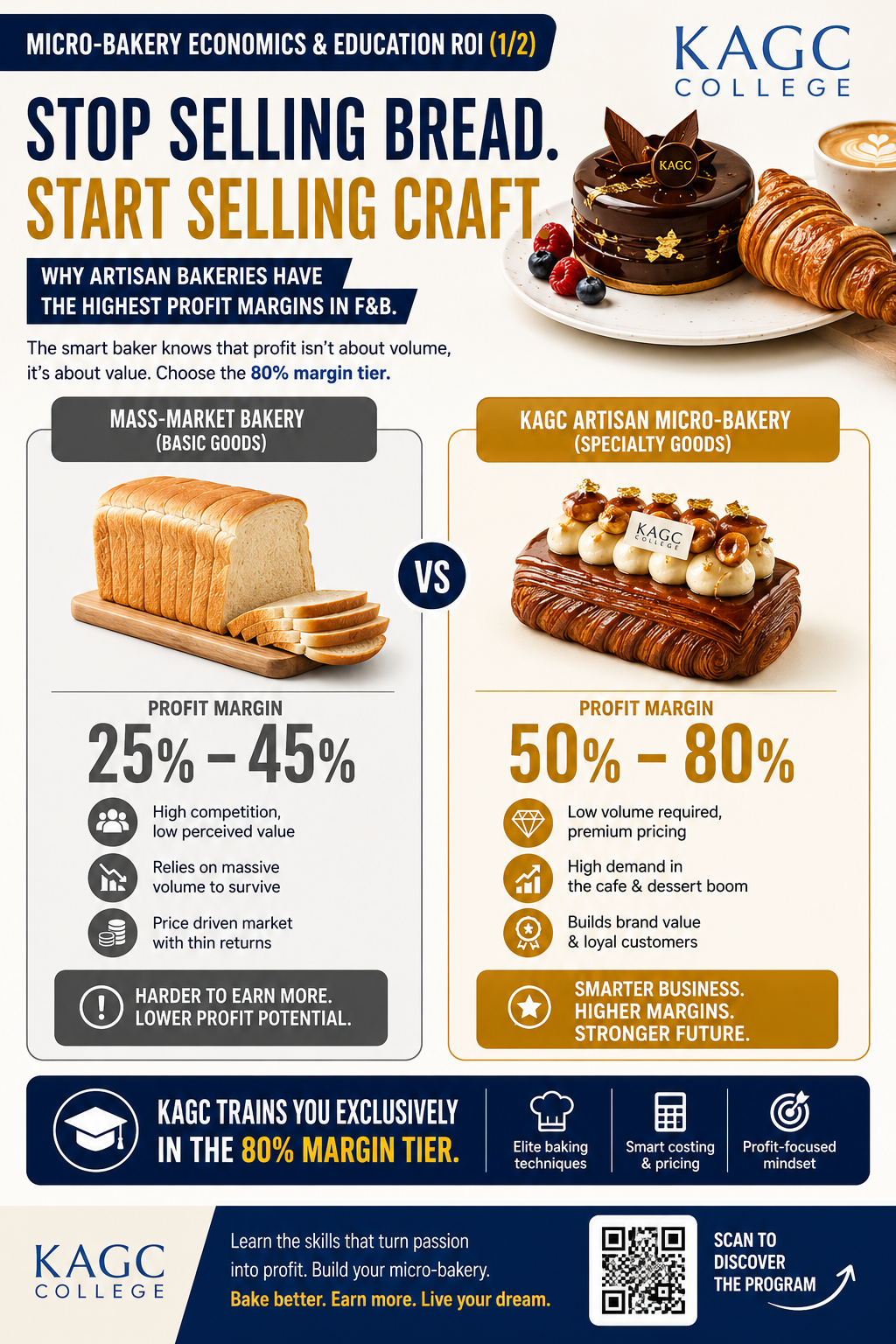
Mass-market bakery products often compete on price. Products such as white bread, basic buns, and generic pastries are widely available and therefore generate lower profit margins.
Artisan products, however, compete on quality, craftsmanship, uniqueness, and customer experience.
| Product Type | Typical Gross Margin Potential |
| Standard Bread & Buns | 25% – 45% |
| Basic Cakes | 30% – 50% |
| Artisan Croissants | 50% – 70% |
| Specialty Sourdough | 50% – 75% |
| Premium Entremets | 60% – 80% |
| Custom Celebration Cakes | 60% – 80% |
Consumers are often willing to pay premium prices for products that demonstrate superior craftsmanship, unique flavours, attractive presentation, and high-quality ingredients.
This is why many successful artisan bakeries focus on specialised products rather than competing directly with large commercial bakeries.
Understanding the Real Economics of an Artisan Micro-Bakery
Many people assume bakery businesses generate small profits because they focus only on ingredient costs.
Professional bakery operators understand that profitability comes from proper food costing, pricing strategy, waste control, and production efficiency.
Consider a simple artisan bakery scenario:
Example: Artisan Croissant Business
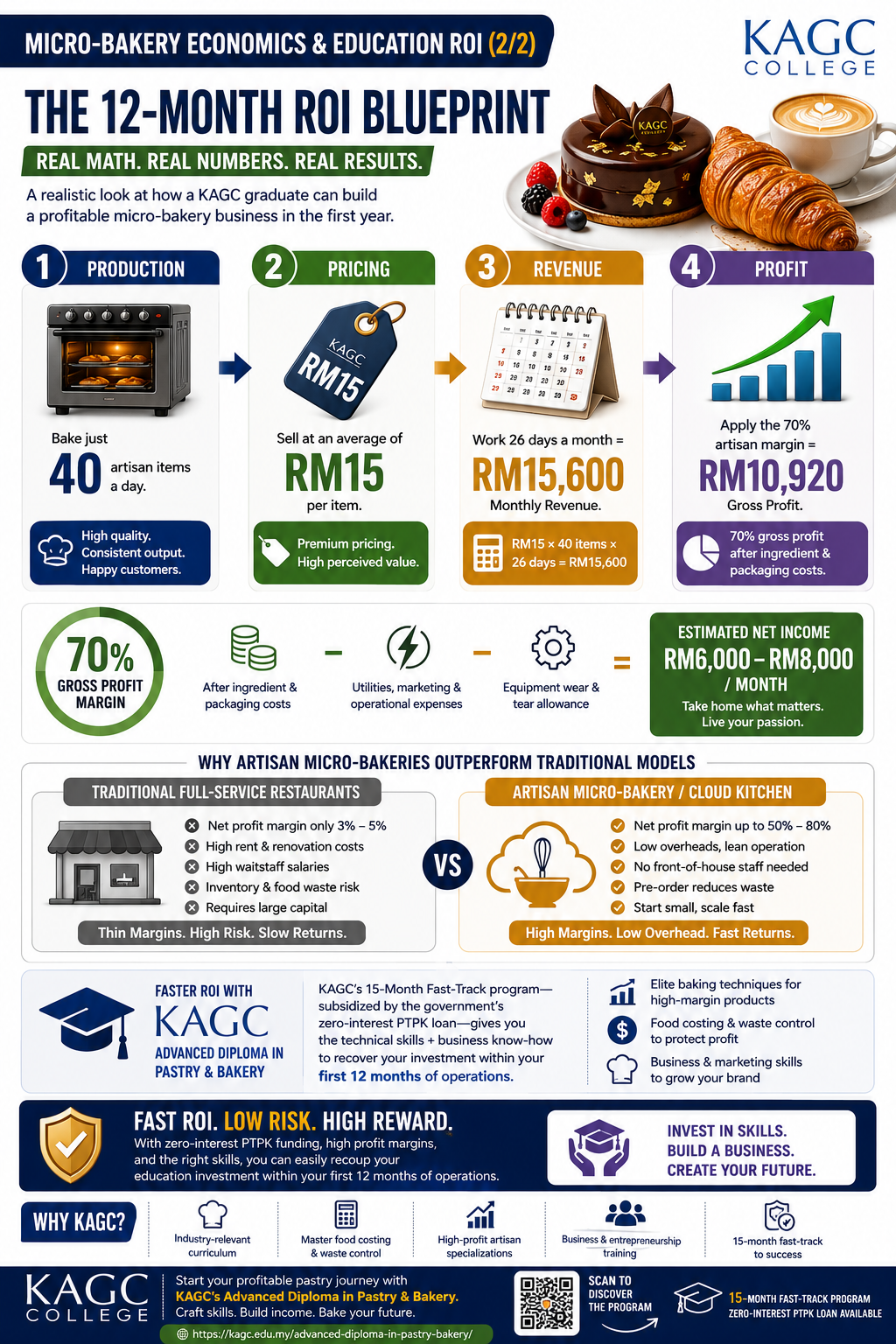
Daily Production: 40 croissants
Average Selling Price: RM15 per croissant
Daily Revenue: RM600
Monthly Revenue (26 operating days): RM15,600
Assuming a 70% gross margin:
Gross Profit: RM10,920 per month
After deducting:
- Utilities
- Packaging
- Marketing
- Equipment maintenance
- Miscellaneous operating expenses
Estimated Net Income: RM6,000 – RM8,000 per month
While actual results vary depending on location, product mix, and business management skills, this example demonstrates why many pastry entrepreneurs choose artisan bakery models.
The key is not simply baking more products.
The key is creating products that customers perceive as valuable enough to command premium pricing.
Why Baking Skills Alone Are Not Enough
Many bakery businesses struggle despite producing excellent products.
The reason is simple.
Running a successful bakery requires more than technical baking knowledge.
Bakery owners must also understand:
- Food costing
- Inventory management
- Waste reduction
- Pricing strategy
- Menu engineering
- Marketing
- Customer retention
- Business operations
A baker who understands both pastry production and business management is significantly more likely to build a sustainable and profitable operation.
This is one reason why professional pastry education continues to provide value even in an era where baking tutorials are freely available online.
How Professional Training Accelerates Your Return on Investment
One of the biggest challenges self-taught bakers face is the amount of time spent learning through trial and error.
Mistakes in recipe development, production planning, food costing, and inventory management can become expensive.
Professional training accelerates this learning process by providing structured knowledge, industry-standard techniques, and real-world practical experience.
At KAGC College’s Advanced Diploma in Pastry & Bakery, students learn not only artisan bread production, viennoiserie, cakes, and desserts, but also critical commercial skills such as:
- Food costing
- Profit margin analysis
- Menu engineering
- Inventory control
- Bakery entrepreneurship
- HACCP and food safety practices
Combined with six months of industry training, students graduate with practical experience that helps shorten the learning curve between education and employment or business ownership.
Is a Pastry Diploma Worth the Investment?
The answer depends on how the qualification is used.
A pastry diploma should not be viewed simply as a certificate.
It is an investment in technical expertise, industry exposure, business knowledge, and career opportunities.
Whether graduates choose to work in hotels, premium bakeries, cruise ships, cafés, or launch their own micro-bakery, the ability to create high-value products while managing profitability can significantly influence long-term earning potential.
For many aspiring pastry professionals, the real question is not:
“How much does a pastry diploma cost?”
The better question is:
“How quickly can the skills acquired generate value throughout an entire career?”
Frequently Asked Questions
How profitable is a micro-bakery in Malaysia?
Profitability varies based on product selection, pricing, operating costs, and business management. Artisan products generally offer higher profit margins than mass-market bakery products.
Can I start a bakery business from home?
Many micro-bakeries begin as home-based businesses using pre-order and online sales models before expanding into commercial operations.
Is pastry and bakery a good career in Malaysia?
The growing café, hospitality, tourism, and foodservice sectors continue to create opportunities for skilled pastry professionals and bakery entrepreneurs.
What products generate the highest profit margins in bakeries?
Premium artisan products such as croissants, sourdough breads, entremets, specialty desserts, and custom celebration cakes typically generate higher margins than mass-market bakery items.
Can a pastry diploma help me start my own bakery?
A professional pastry qualification provides both technical baking skills and business knowledge that can support future bakery ownership and entrepreneurship.
Explore More Pastry & Bakery Resources
Interested in learning more about the profession?