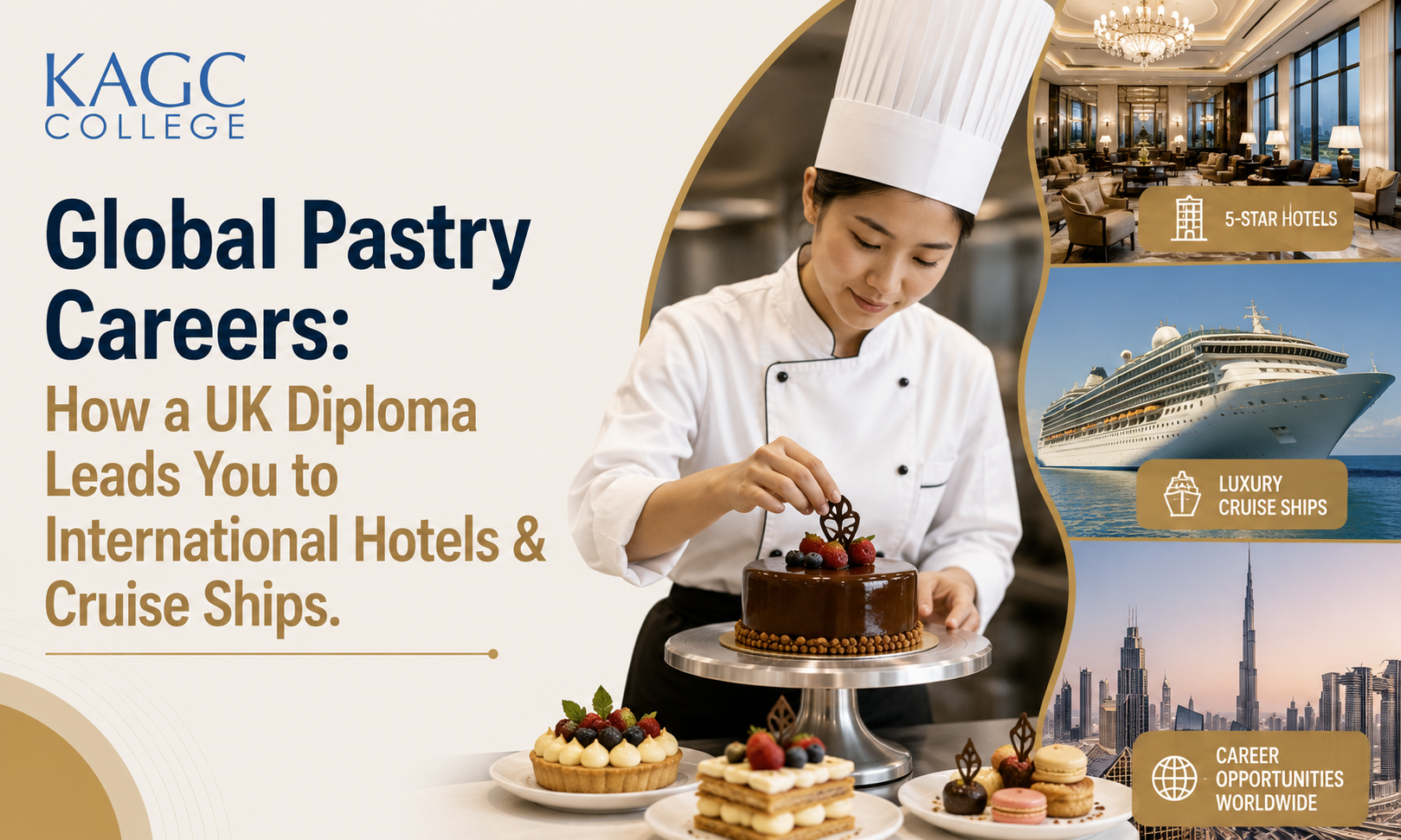


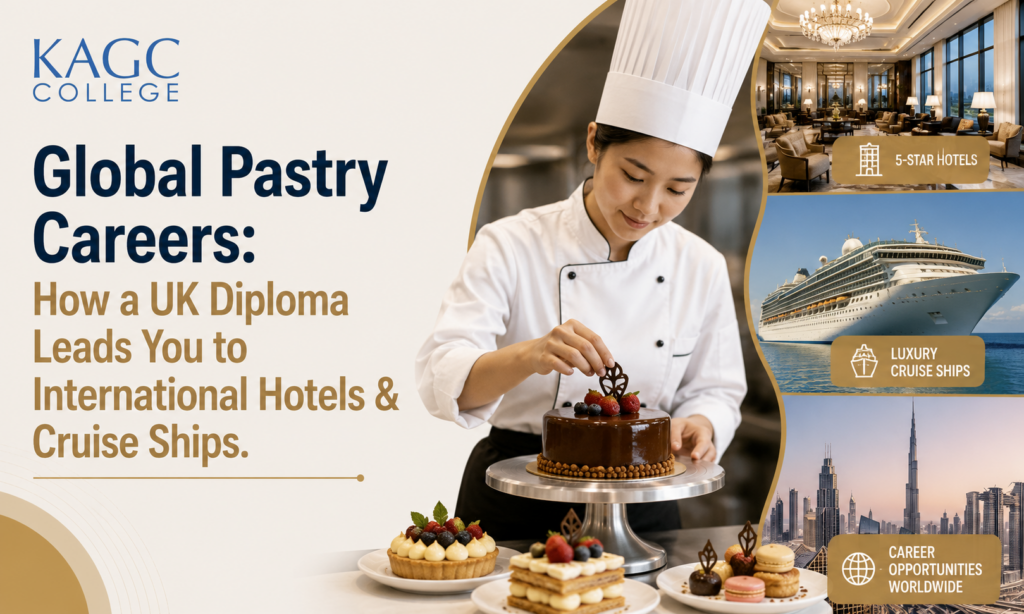
Global Ovens: Taking Your UK Pastry Diploma to International Hotels and Cruise Ships
The Modern Pastry Industry Is More Global Than Ever
When many people think about a pastry career, they imagine working in a local bakery, neighbourhood café, or dessert shop.
While these opportunities certainly exist, today’s pastry industry offers career pathways that extend far beyond local employment.
Luxury hotels, international resorts, cruise ships, premium bakeries, and global hospitality brands are constantly searching for skilled pastry professionals who can deliver exceptional products while maintaining professional standards.
As international tourism continues to recover and hospitality industries expand across Asia, the Middle East, Europe, and cruise sectors, demand for trained pastry professionals remains strong.
For aspiring pastry chefs, a professional qualification is no longer just a pathway to employment.
It can become a gateway to international career opportunities, global exposure, and long-term professional growth.
Why Pastry Skills Are Needed Around the World
Unlike many professions that are tied to local regulations or languages, pastry and bakery skills are highly transferable.
A well-made croissant in Kuala Lumpur follows the same fundamental principles as a croissant produced in Paris, Dubai, Singapore, London, or Sydney.
Similarly, artisan breads, cakes, desserts, viennoiserie, and plated desserts rely on internationally recognised techniques and standards.
This global consistency makes pastry professionals particularly valuable within international hospitality environments.
Employers across different countries often seek candidates who can:
- Produce consistent results
- Follow food safety standards
- Work in professional kitchen environments
- Understand large-scale production
- Collaborate within multicultural teams
- Adapt to international operating procedures
For skilled pastry professionals, these competencies can create opportunities across multiple countries and hospitality sectors.
Career Path 1: Luxury Hotels
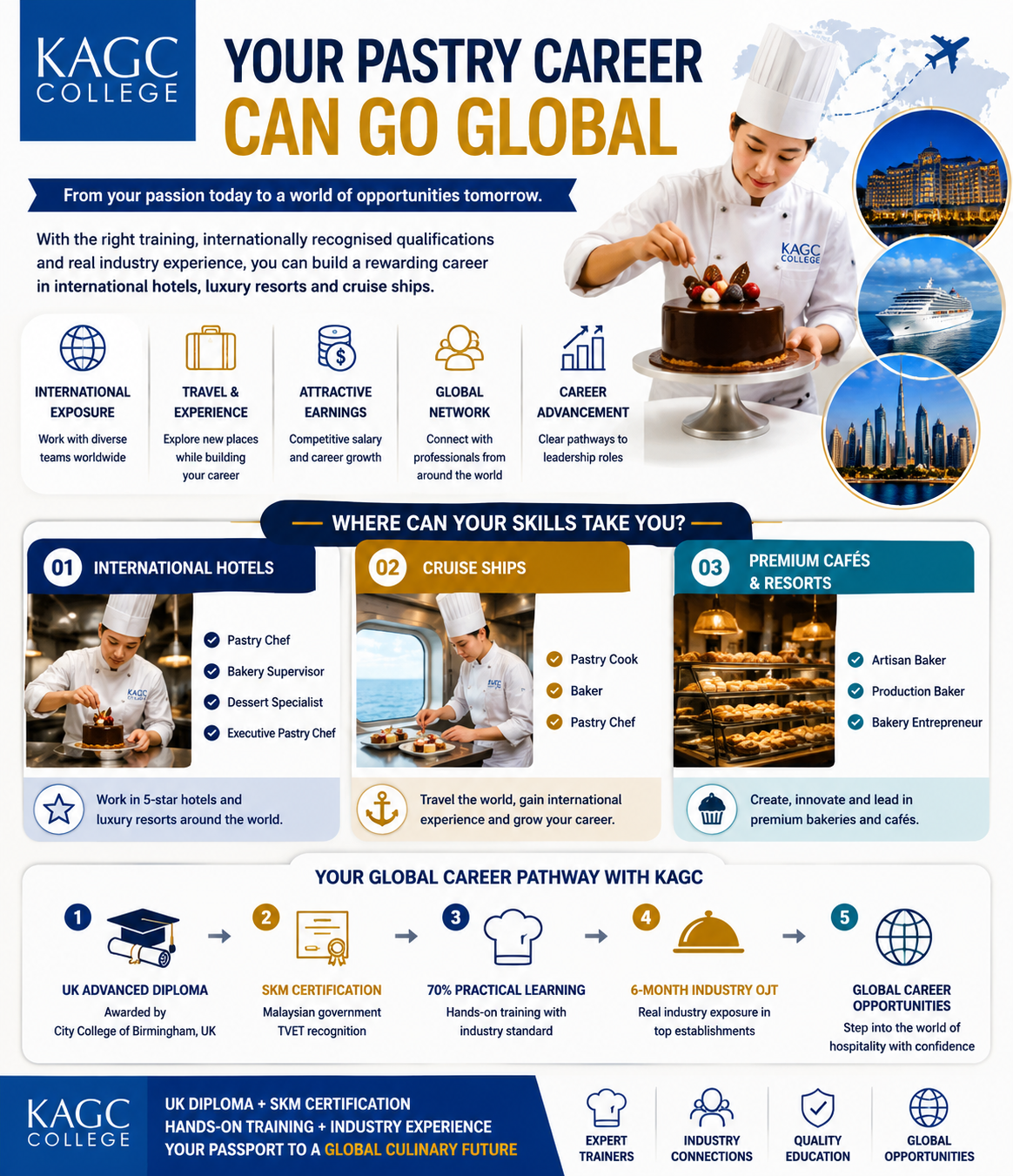
One of the most common international career pathways for pastry graduates is the luxury hotel sector.
Five-star hotels often operate large pastry departments responsible for:
- Breakfast pastries
- Buffet desserts
- Afternoon tea service
- Fine dining desserts
- Banquet functions
- Wedding events
- VIP guest experiences
These environments provide exposure to high production standards and advanced culinary techniques.
Career progression may include:
| Position | Typical Responsibilities |
| Commis Pastry Chef | Basic pastry preparation and production support |
| Demi Chef de Partie | Manage specific pastry sections |
| Chef de Partie | Supervise pastry production |
| Pastry Sous Chef | Assist department management |
| Executive Pastry Chef | Lead pastry operations across the property |
Many internationally recognised hotel groups actively recruit pastry professionals who demonstrate strong technical skills, consistency, and professionalism.
Career Path 2: International Resorts
Luxury resorts represent another attractive career option for pastry professionals.
Popular hospitality destinations include:
- Maldives
- Dubai
- Abu Dhabi
- Bali
- Phuket
- Singapore
- Mauritius
Resort pastry operations often focus on:
- High-end dessert experiences
- International buffet production
- Specialty breads and pastries
- Wedding and event desserts
- Premium guest services
Working in international resorts offers benefits such as:
- Exposure to international guests
- Multicultural working environments
- Professional development opportunities
- Global networking
- Career progression within international hospitality groups
Many pastry professionals use resort experience as a stepping stone toward senior leadership positions later in their careers.
Career Path 3: Cruise Ships
Few sectors offer the same combination of travel and professional experience as the cruise industry.
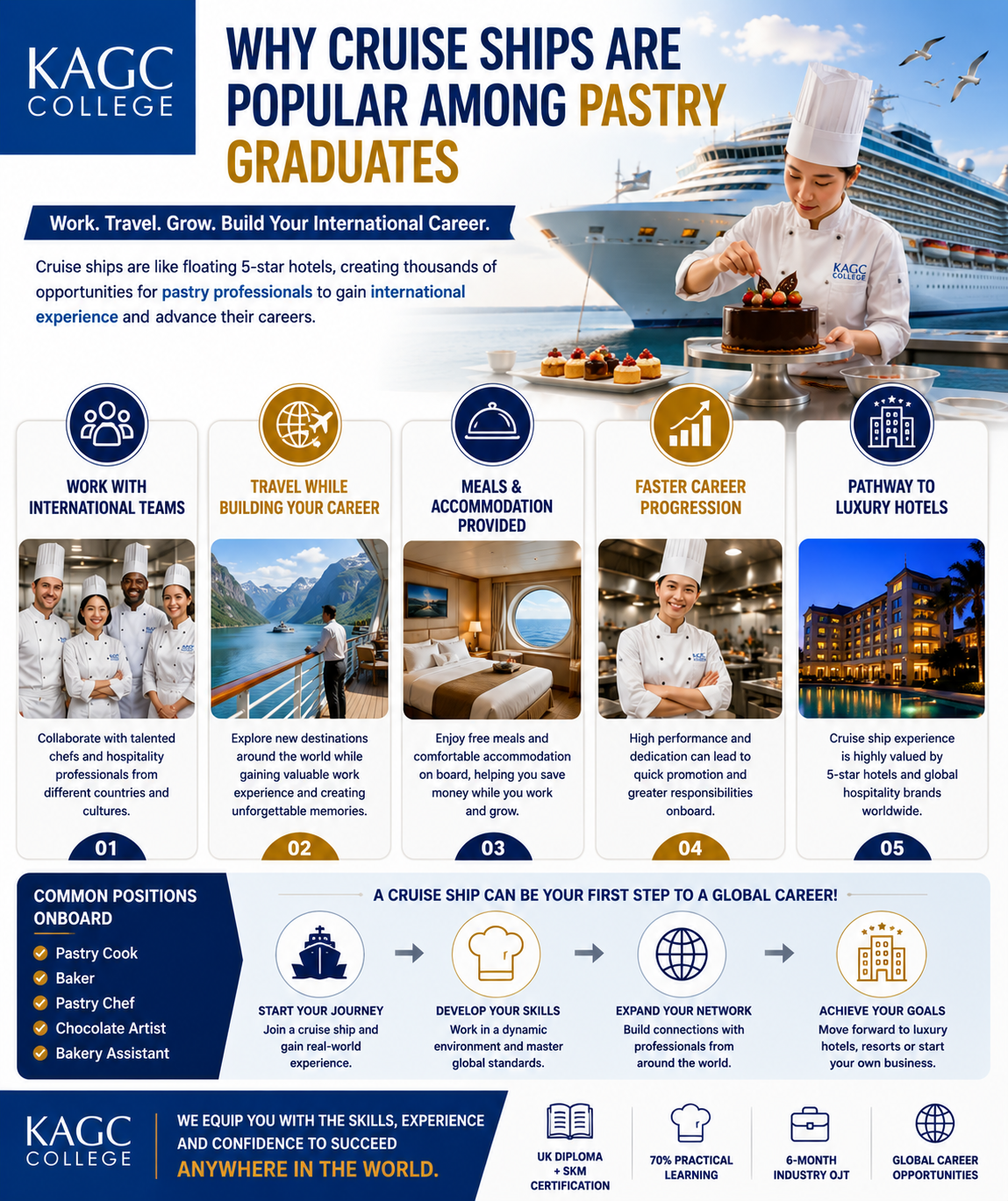
Modern cruise ships operate as floating hospitality destinations, often serving thousands of passengers every day.
To support these operations, cruise companies employ large culinary teams that include specialised pastry professionals.
Cruise ship pastry departments may be responsible for:
- Daily dessert production
- Buffet pastries
- Specialty restaurants
- Celebration cakes
- Bread production
- Event catering
- Premium dining experiences
For many pastry professionals, cruise ships offer unique advantages:
International Exposure
Work alongside colleagues from around the world while serving guests from multiple countries.
Accelerated Learning
High-volume production environments develop technical skills rapidly.
Professional Growth
Exposure to international hospitality standards and operational systems.
Financial Benefits
Many cruise contracts include accommodation and meals, allowing professionals to save a significant portion of their earnings.
Career Mobility
Cruise experience is often highly regarded by luxury hotels and international hospitality employers.
For young pastry professionals seeking adventure and global experience, cruise ships can provide an excellent starting point.
Career Path 4: Premium Bakeries and Artisan Brands
Not every international career takes place in hotels or cruise ships.
The rise of artisan baking has created opportunities within premium bakery brands across the world.
These businesses often specialise in:
- Artisan breads
- Viennoiserie
- French pastries
- Modern desserts
- Specialty cakes
- Boutique bakery concepts
Employers increasingly seek bakers who understand both traditional craftsmanship and modern production techniques.
Professionals with strong technical foundations often find opportunities in:
- International bakery chains
- Boutique artisan bakeries
- Premium dessert studios
- Luxury retail food brands
This sector continues to grow as consumers become increasingly interested in handcrafted, premium-quality baked products.
What International Hospitality Employers Look For
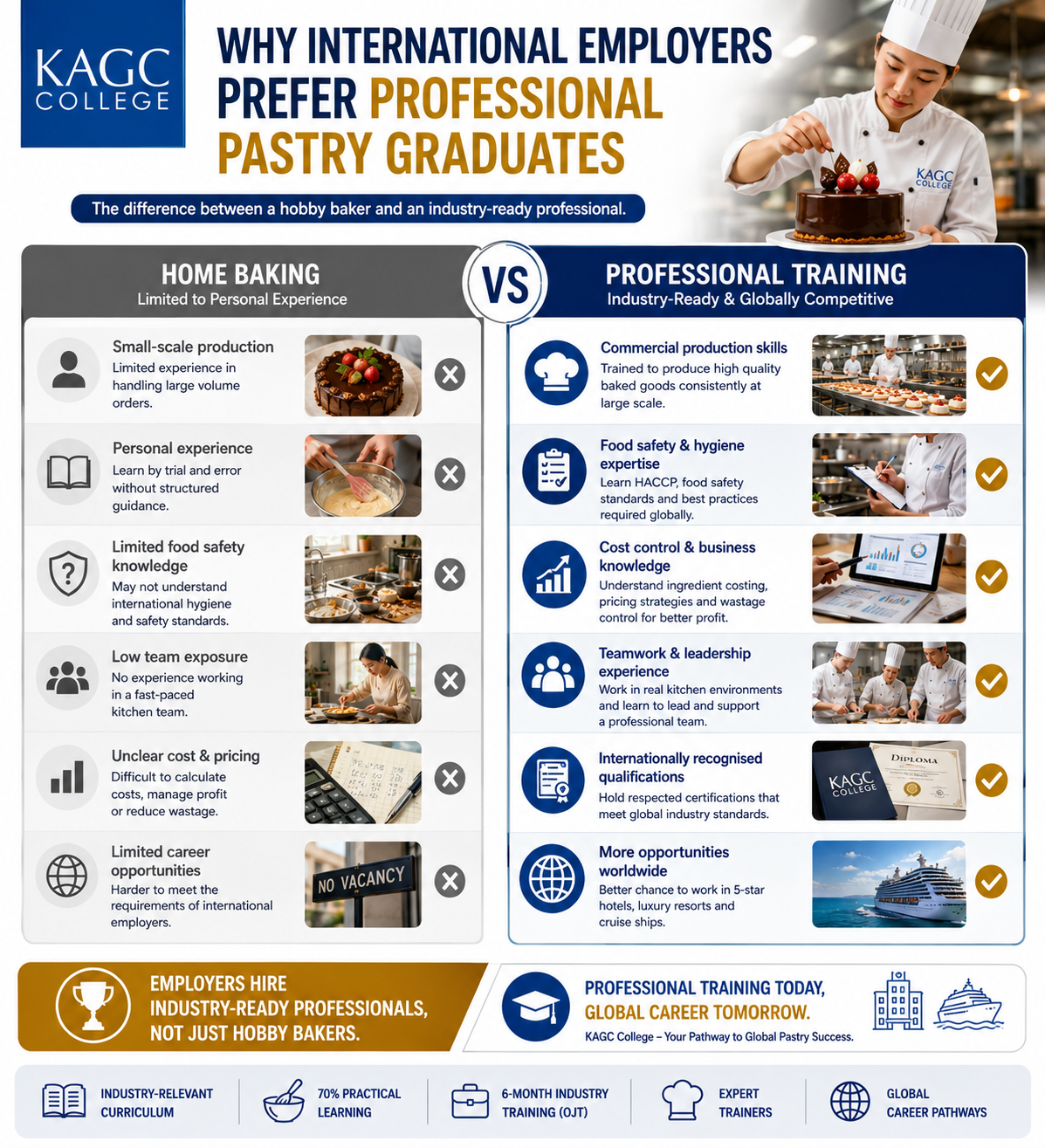
Many students assume that employers primarily focus on qualifications.
While qualifications are important, global hospitality employers evaluate candidates using multiple criteria.
Technical Competence
Employers expect candidates to demonstrate strong pastry fundamentals, including bread production, cakes, desserts, and viennoiserie.
Food Safety Knowledge
Understanding HACCP principles and food hygiene standards is often essential.
Consistency
The ability to produce the same quality product repeatedly is highly valued.
Professional Attitude
Reliability, discipline, and teamwork are critical in hospitality environments.
Industry Experience
Hands-on industry exposure often provides a significant advantage during recruitment.
Adaptability
International hospitality environments require professionals who can work effectively with diverse teams and operating procedures.
A qualification may open the door, but practical skills and professionalism often determine long-term success.
Why International Qualifications Can Strengthen Career Opportunities
When applying for international opportunities, employers may not always be familiar with every local institution.
However, qualifications linked to recognised international education frameworks can provide additional confidence regarding the standard of training received.
Internationally recognised qualifications often help employers understand:
- Curriculum quality
- Assessment standards
- Technical competencies
- Learning outcomes
Combined with practical training and industry experience, such qualifications can strengthen a candidate’s professional profile when pursuing global opportunities.
Building an International Career Starts Long Before Graduation
Many successful international pastry professionals begin preparing for overseas opportunities while they are still students.
Important areas of preparation include:
Technical Excellence
Developing strong foundations across multiple pastry disciplines.
Industry Experience
Gaining exposure through internships and practical placements.
Professional Portfolio
Documenting products, projects, and achievements.
Communication Skills
Building confidence in professional workplace environments.
Adaptability
Learning to work effectively with people from different backgrounds.
These experiences often help graduates transition more smoothly into international hospitality careers.
How KAGC Prepares Students for Global Hospitality Careers
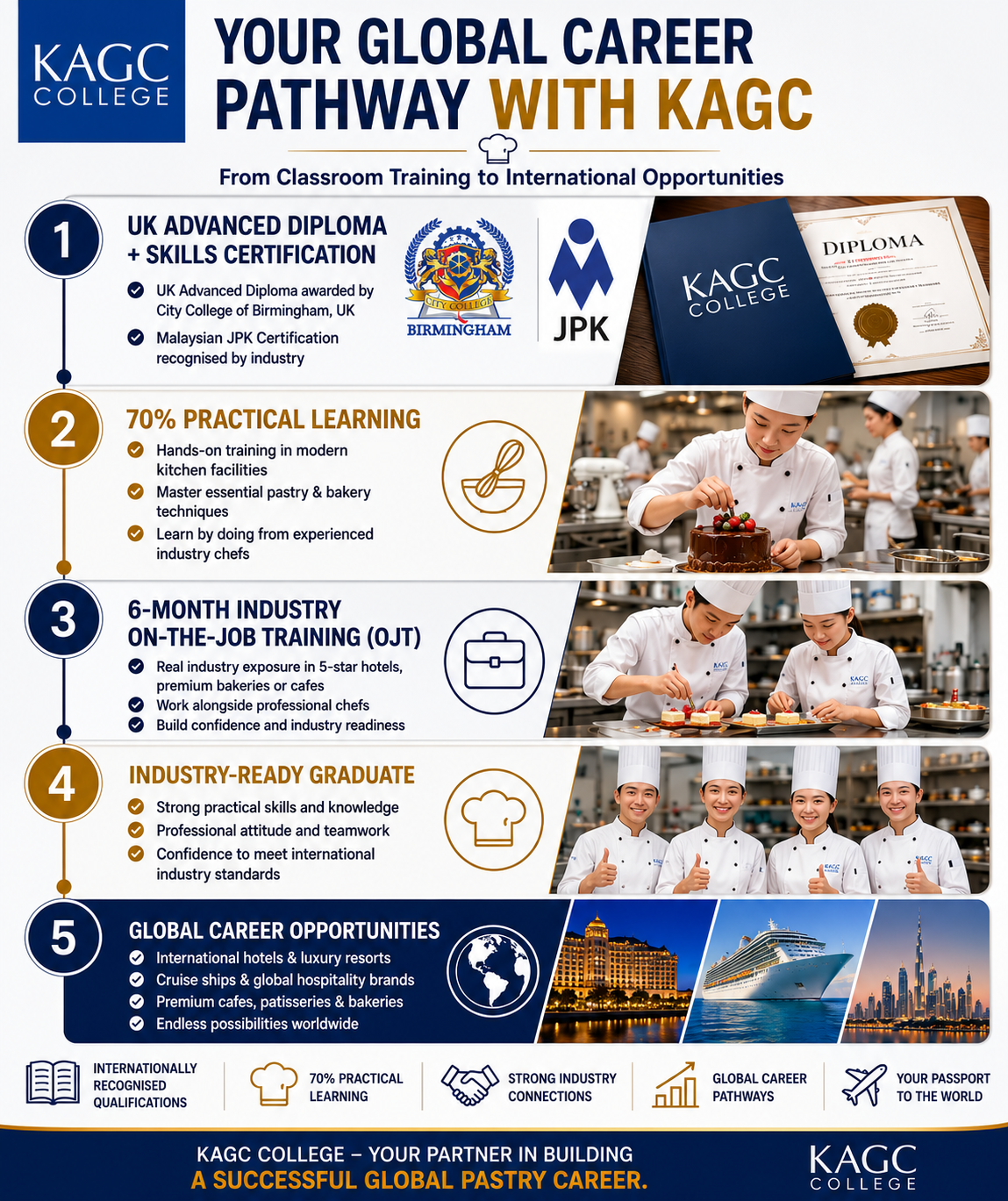
KAGC College’s Advanced Diploma in Pastry & Bakery is designed to prepare students for both local and international opportunities.
The programme combines practical technical training with industry-focused learning.
Students develop competencies in:
- Artisan breads
- Viennoiserie
- Cakes and desserts
- Chocolate and confectionery
- Food safety practices
- Commercial kitchen operations
- Food costing and profitability
- Bakery management
- Professional workplace skills
In addition, students benefit from extensive practical training and industry exposure that helps bridge the gap between classroom learning and professional employment.
This combination of technical expertise and real-world experience supports graduates as they pursue opportunities in bakeries, hotels, resorts, cruise ships, and entrepreneurial ventures.
A Pastry Career Can Take You Further Than You Think
The modern pastry industry offers far more opportunities than many people realise.
From luxury hotels and international resorts to cruise ships and premium bakery brands, skilled pastry professionals are increasingly in demand across the global hospitality sector.
The journey often begins with mastering technical skills, developing professionalism, and gaining practical experience.
From there, opportunities can emerge in places that many aspiring pastry professionals never imagined.
For students who dream of combining creativity, craftsmanship, travel, and career growth, the pastry industry offers a pathway that can extend well beyond local borders.
A pastry qualification is not simply preparation for a job.
It can be the foundation for a career that spans countries, cultures, and some of the world’s most exciting hospitality destinations.
Frequently Asked Questions
Can pastry chefs work overseas?
Yes. Pastry and bakery skills are highly transferable and can create opportunities in hotels, resorts, bakeries, cruise ships, and hospitality businesses worldwide.
Do cruise ships hire pastry chefs?
Yes. Cruise lines employ pastry chefs, bakers, and dessert specialists to support large-scale foodservice operations serving thousands of guests.
What qualifications do international hotels look for?
Employers typically look for professional training, technical competence, food safety knowledge, industry experience, and a strong professional attitude.
Is a pastry diploma recognised internationally?
Internationally recognised qualifications can help employers better understand the standard of training received and may strengthen employment opportunities abroad.
What careers can a pastry diploma lead to?
Graduates may pursue careers as pastry chefs, bakers, bakery supervisors, pastry sous chefs, executive pastry chefs, product development specialists, entrepreneurs, and hospitality professionals.
Explore More Pastry & Bakery Resources
Interested in learning more about the profession?