

Beyond the Kitchen: How Food Costing and Menu Engineering Save Bakeries from Bankruptcy
Great Baking Skills Alone Do Not Guarantee Business Success
Many people dream of opening a bakery.
They imagine customers lining up for artisan croissants, signature cakes, freshly baked sourdough, and beautifully crafted desserts. Social media often showcases the creative side of the industry, making bakery ownership appear both exciting and rewarding.
However, the reality of running a successful bakery is very different.
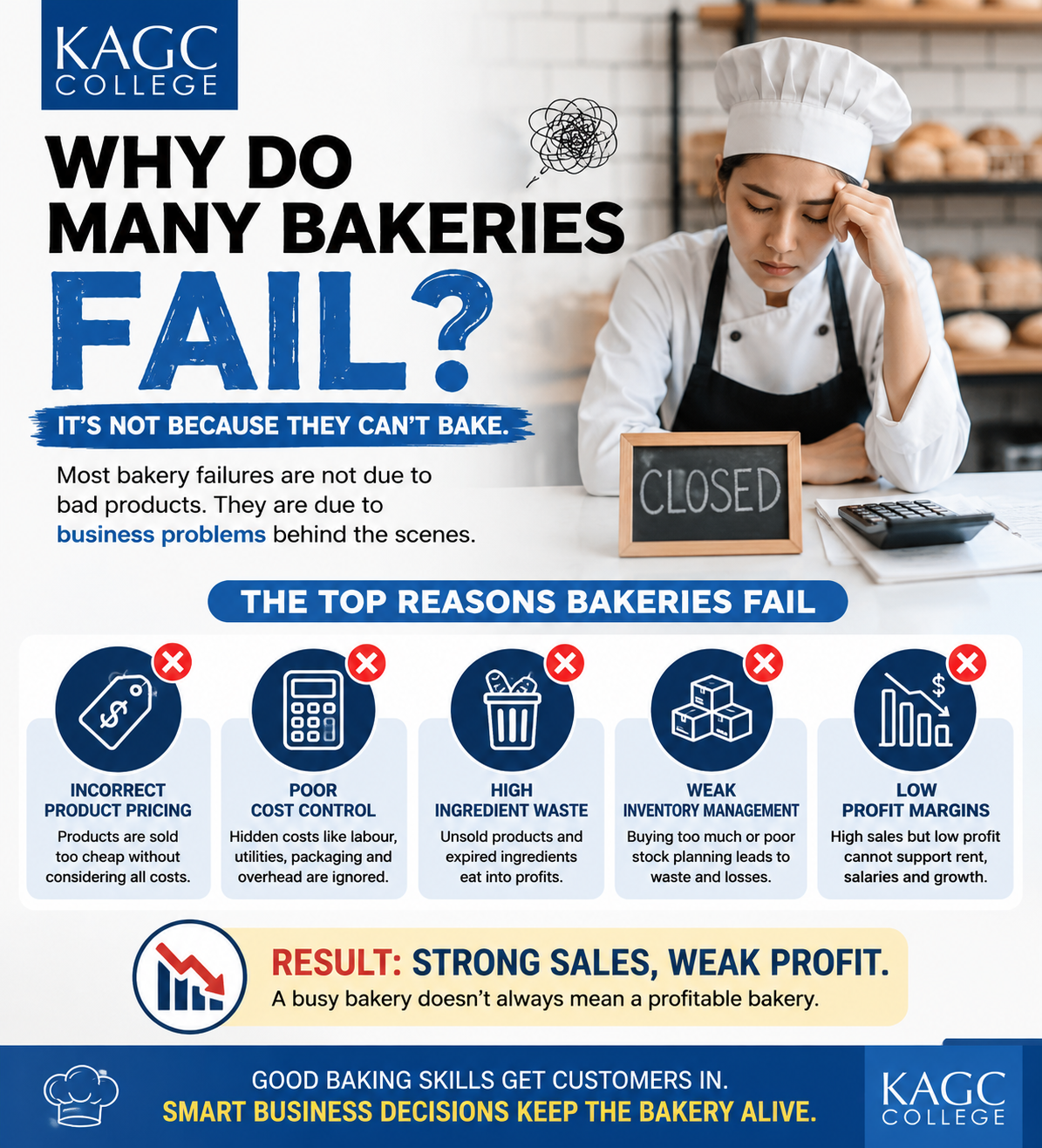
Across the world, many bakery businesses close not because their products are poor, but because they struggle to manage profitability.
A bakery can be busy every day, receive positive customer reviews, and still lose money.
Why?
Because success in the bakery industry requires more than producing great products.
It requires understanding the numbers behind the products.
This is where food costing and menu engineering become critical.
The bakeries that survive and grow are often not those with the most creative recipes, but those that understand how to balance quality, customer demand, and profitability.
Why Do Many Bakeries Fail?
When people think about business failure, they often assume the problem is poor product quality.
In reality, many bakery owners face challenges that have little to do with baking itself.
Common reasons bakeries struggle include:
- Incorrect product pricing
- Poor food costing
- Excessive ingredient waste
- Weak inventory management
- Low profit margins
- Rising operating costs
- Inconsistent sales performance
Many bakery owners price products based solely on what competitors charge or what customers are willing to pay.
Unfortunately, this approach often ignores the actual cost of producing the product.
The result is a business that generates sales but struggles to generate profit.
A bakery can be busy every day and still operate at a loss if pricing decisions are not based on accurate financial calculations.
What Is Food Costing?
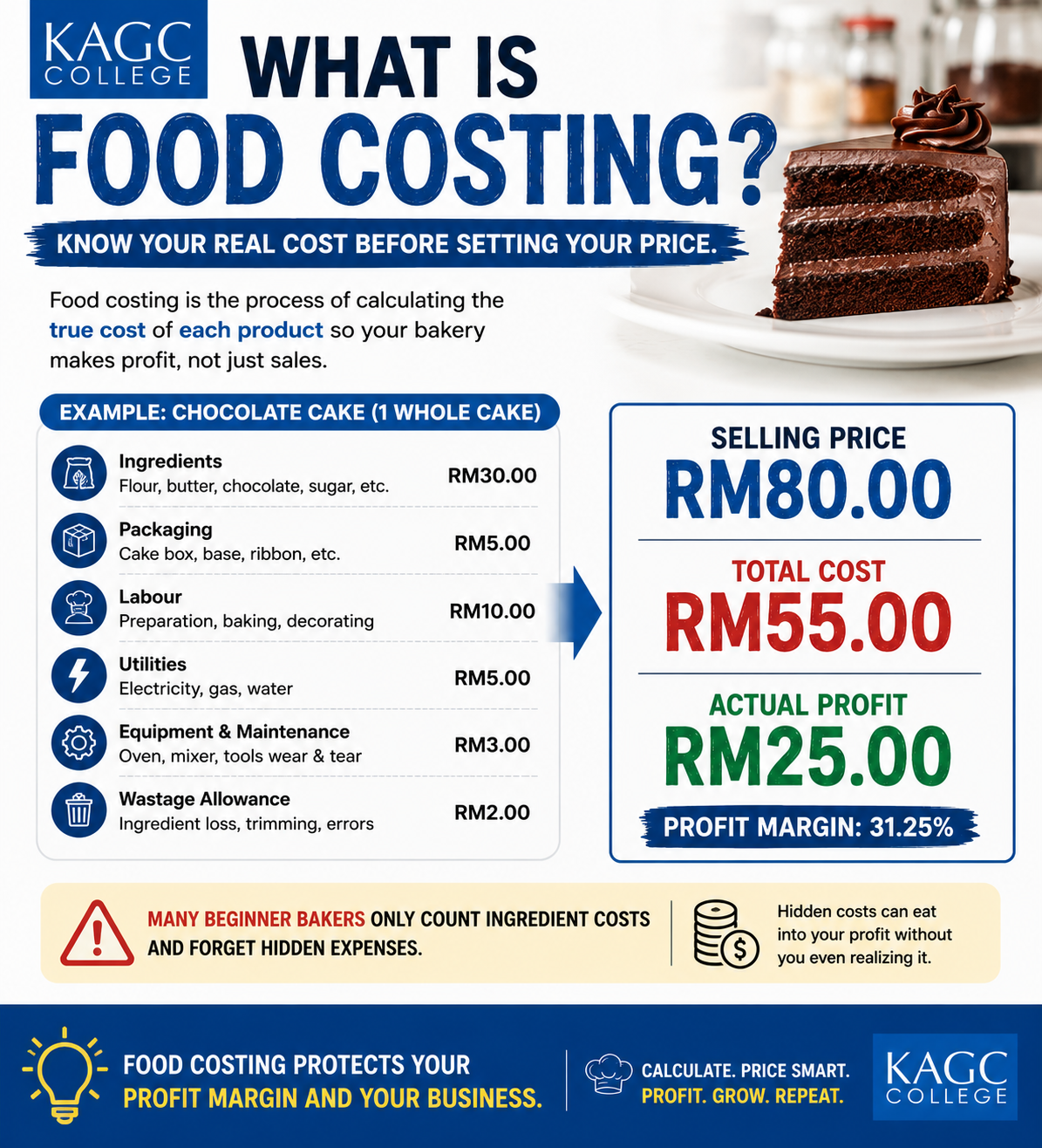
Food costing is the process of calculating the true cost of producing a menu item before determining its selling price.
Many beginners assume food costing only involves ingredients.
In reality, professional food costing considers all expenses associated with producing a product.
These include:
Direct Costs
- Flour
- Butter
- Chocolate
- Sugar
- Eggs
- Cream
- Fruits
Indirect Costs
- Packaging
- Labour
- Utilities
- Equipment maintenance
- Cleaning supplies
- Rental costs
- Wastage allowances
Professional bakery operators understand that every product must contribute to covering these expenses while generating sufficient profit for business growth.
Without accurate food costing, pricing decisions become little more than guesswork.
A Real Example of Bakery Food Costing
Consider a bakery selling a chocolate cake for RM80.
At first glance, the bakery owner may believe the product is highly profitable.
However, a closer analysis reveals a different story.
| Cost Component | Amount |
| Ingredients | RM30 |
| Packaging | RM5 |
| Labour | RM10 |
| Utilities | RM5 |
| Equipment Maintenance | RM3 |
| Wastage Allowance | RM2 |
| Total Cost | RM55 |
Selling Price: RM80
Actual Profit: RM25
Profit Margin: 31.25%
Many new bakery owners only consider ingredient costs and overlook hidden expenses.
As a result, they may assume they are earning RM50 when their actual profit is much lower.
This is one reason why professional food costing is essential for long-term sustainability.
Why Low Prices Can Be Dangerous
Many bakery owners fear charging higher prices.
They worry customers may choose competitors offering cheaper alternatives.
However, underpricing products often creates bigger problems.
Low prices can result in:
- Reduced profit margins
- Cash flow challenges
- Difficulty hiring staff
- Limited business growth
- Inability to invest in equipment
- Increased financial stress
A bakery that sells hundreds of products with minimal profit may struggle more than a bakery that sells fewer products at healthier margins.
The objective is not simply to increase sales.
The objective is to increase profitable sales.
Understanding this difference is one of the most important lessons for aspiring bakery entrepreneurs.
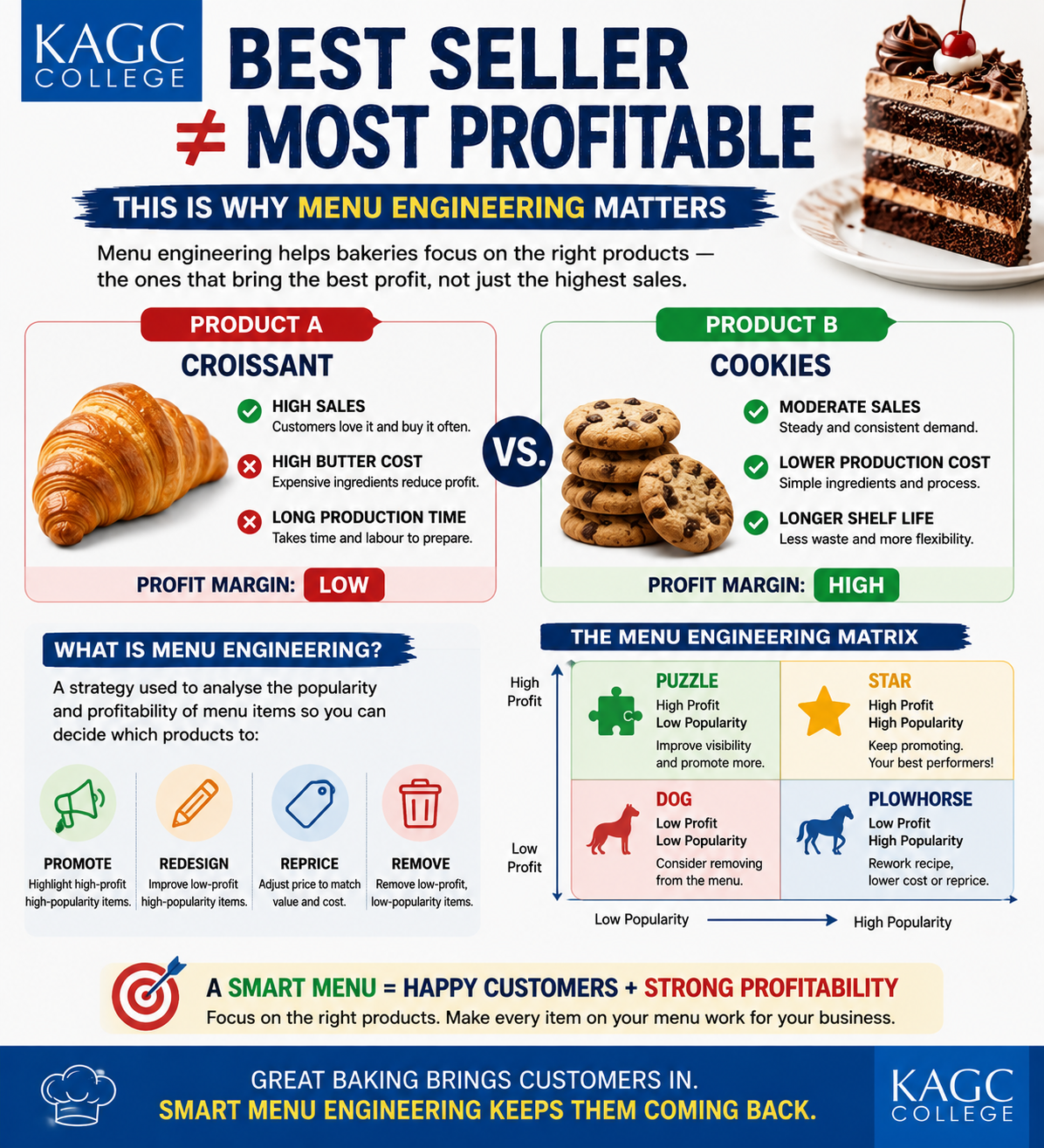
What Is Menu Engineering?
Many people assume their best-selling product is also their most profitable product.
This is often incorrect.
Menu engineering is the process of analysing products based on two factors:
- Popularity
- Profitability
The goal is to identify which products deserve greater promotion and which products may require adjustment.
For example:
| Product | Popularity | Profitability |
| Croissant | High | Low |
| Chocolate Cookie | Moderate | High |
| Artisan Sourdough | High | High |
| Specialty Cake | Low | Low |
Without menu engineering, bakery owners often spend too much effort promoting products that generate little profit.
Menu engineering helps businesses make smarter decisions that improve overall financial performance.
The Four Categories of Menu Engineering
Professional foodservice businesses commonly classify products into four categories.
Stars
High popularity and high profitability.
These products should receive maximum promotion and visibility.
Examples:
- Signature croissants
- Best-selling artisan cakes
- Specialty desserts
Plow Horses
High popularity but low profitability.
Customers love these products, but profit margins are weaker.
Solutions may include:
- Portion adjustments
- Recipe optimisation
- Price revisions
Puzzles
High profitability but low popularity.
These products generate strong margins but require better marketing or positioning.
Solutions may include:
- Improved menu placement
- Product bundling
- Better visual presentation
Dogs
Low popularity and low profitability.
These products often consume resources without generating sufficient returns.
Possible actions include:
- Repricing
- Reformulation
- Removal from the menu
Understanding these categories helps bakery operators make data-driven decisions rather than relying on assumptions.
Why Inventory Management Matters
Inventory management is another major factor affecting bakery profitability.
Every ingredient sitting unused on a shelf represents money that is not generating returns.
Poor inventory control often leads to:
- Expired ingredients
- Overstocking
- Production delays
- Increased wastage
- Cash flow issues
Successful bakeries carefully monitor:
- Purchasing schedules
- Ingredient usage
- Supplier relationships
- Storage conditions
- Stock turnover rates
Even small daily losses can accumulate into thousands of ringgit annually.
This is why inventory management is considered a core business skill within professional bakery operations.
Why Waste Control Directly Impacts Profit
Many bakery products have short shelf lives.
Unsold products often become waste.
Examples include:
- Bread
- Pastries
- Cakes
- Fresh desserts
Imagine a bakery discarding RM100 worth of products daily.
Over a year:
RM100 × 365 days = RM36,500
That is RM36,500 removed directly from potential profit.
Professional bakery operators use forecasting, production planning, and sales analysis to minimise unnecessary waste.
The ability to control waste often determines whether a bakery thrives or struggles.
Why Modern Bakers Need Business Skills
The bakery industry has evolved significantly.
Employers today seek professionals who can contribute beyond production.
Modern pastry professionals are increasingly expected to understand:
- Food costing
- Menu engineering
- Inventory management
- Waste control
- Profit margin analysis
- Business operations
- Customer behaviour
These skills make individuals more valuable to employers and better prepared for future leadership roles.
Whether working in a café, hotel, artisan bakery, or launching a business, understanding profitability creates significant career advantages.
How KAGC Prepares Future Bakery Entrepreneurs and Leaders
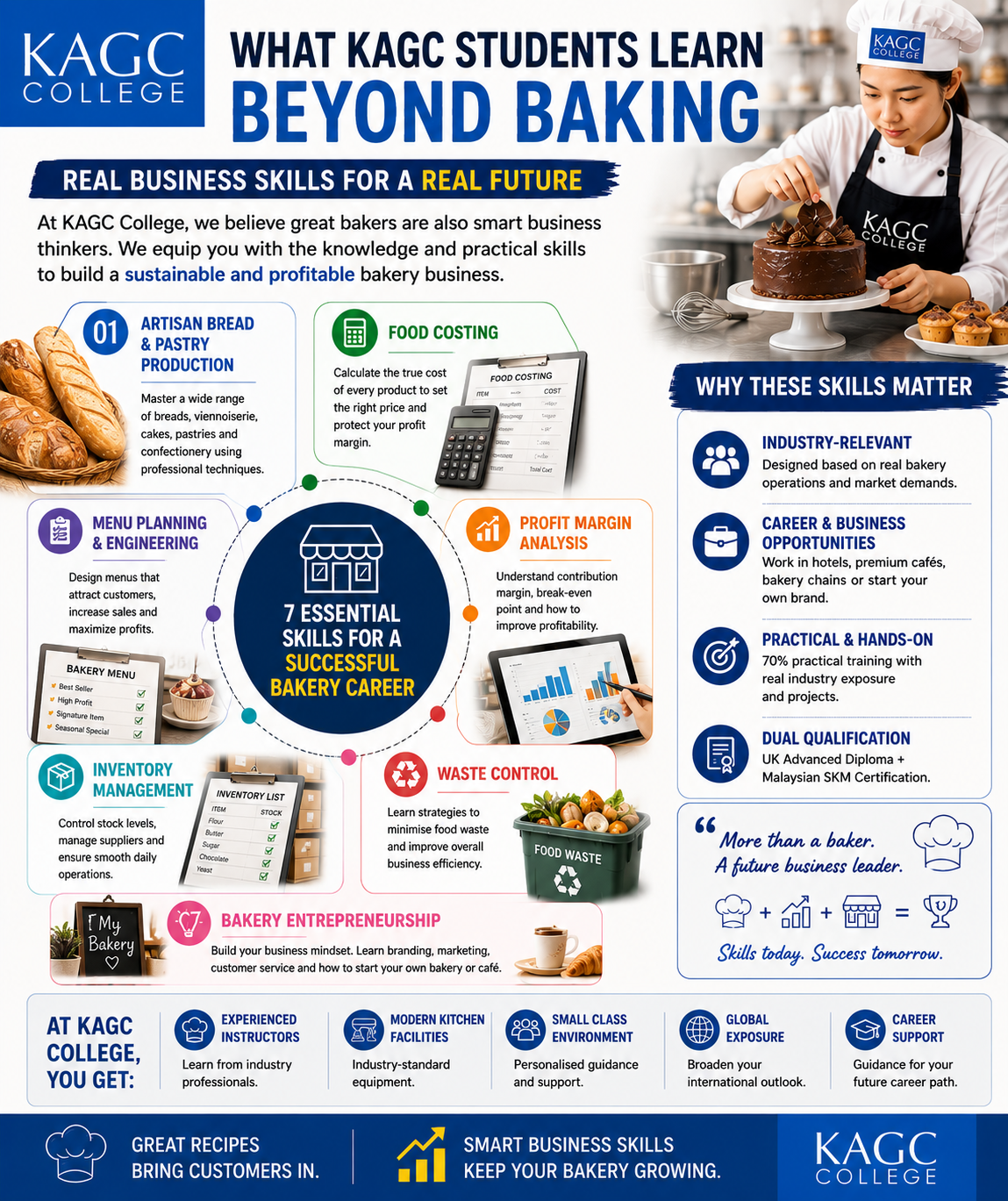
At KAGC College’s Advanced Diploma in Pastry & Bakery, students develop both technical and commercial competencies.
Beyond artisan breads, viennoiserie, cakes, and desserts, students are introduced to the business side of the bakery industry.
Key learning areas include:
- Food costing
- Menu engineering
- Profit margin analysis
- Inventory management
- Waste reduction strategies
- Bakery entrepreneurship
- Food safety and HACCP
- Commercial bakery operations
This combination helps graduates understand not only how to create products, but also how to contribute to sustainable business success.
The Most Profitable Bakeries Think Like Businesses
Great recipes attract customers.
Strong business decisions keep them coming back.
The most successful bakeries understand that profitability is not determined solely by how much they sell.
It is determined by how effectively they manage pricing, costs, inventory, production, and customer demand.
Food costing and menu engineering may not be as exciting as creating beautiful pastries or artisan breads, but they are often the difference between a bakery that survives and a bakery that closes.
For aspiring pastry professionals, learning these business skills is just as important as mastering baking techniques.
Because in today’s competitive foodservice industry, success requires both creativity and commercial understanding.
Frequently Asked Questions
What is food costing in a bakery?
Food costing is the process of calculating all costs involved in producing a bakery item, including ingredients, labour, packaging, utilities, and overhead expenses.
Why do bakery businesses fail?
Common reasons include poor pricing strategies, weak food costing, excessive waste, low profit margins, and poor inventory management.
What is menu engineering?
Menu engineering is the analysis of products based on popularity and profitability to help businesses optimise menu performance and increase profits.
Why is food costing important?
Food costing helps bakery operators set appropriate prices, maintain healthy profit margins, and make informed business decisions.
Do pastry chefs need business skills?
Yes. Modern pastry professionals increasingly benefit from understanding food costing, inventory management, menu engineering, and bakery operations.
Explore More Pastry & Bakery Resources
Interested in learning more about the profession?