

Why Portfolios, Certifications, and Real Experience Matter More Than Watching Tutorials
The internet has made learning digital marketing more accessible than ever. Today, anyone can watch YouTube videos, read blogs, join online communities, or complete short courses to learn topics such as Search Engine Optimisation (SEO), Google Ads, social media marketing, content marketing, and marketing analytics.
While self-learning is a valuable way to build knowledge, employers are increasingly looking for something more important than information: proof of competency.
When businesses hire digital marketing professionals, they are not simply asking:
“What do you know?”
They are asking:
“What can you do?”
In today’s competitive job market, organisations need individuals who can contribute from day one. They want marketers who can execute campaigns, analyse performance data, generate leads, optimise websites, improve conversion rates, and support business growth. As a result, professionally trained digital marketing graduates often enjoy a significant advantage because they can demonstrate their abilities through practical projects, industry certifications, professional portfolios, and workplace experience.
One of the biggest differences between trained graduates and self-taught learners is the ability to present a portfolio of real work. A digital marketing portfolio provides evidence that a candidate can apply knowledge in practical situations. It may include SEO projects, Google Ads campaigns, social media marketing strategies, content marketing plans, website optimisation exercises, analytics dashboards, and campaign performance reports. For employers, a portfolio is often far more convincing than simply listing skills on a résumé.
Professional certifications also play an important role in employability. Industry-recognised credentials such as the Google Ads Search Certification and Meta Certified Digital Marketing Associate demonstrate that a candidate has been trained using current platform standards and best practices. These certifications provide employers with additional confidence that a graduate understands the tools and technologies commonly used in modern marketing environments.
Beyond portfolios and certifications, workplace experience remains one of the most valuable assets a job seeker can possess. Internships, industry projects, freelance assignments, and on-the-job training expose learners to real business challenges, client expectations, campaign deadlines, and performance measurement. This practical exposure helps graduates develop both technical competency and professional confidence.
The digital marketing industry is ultimately a results-driven profession. Employers are less interested in where someone learned a skill and more interested in whether that person can generate measurable outcomes. Can they improve website traffic? Can they generate leads? Can they manage advertising budgets effectively? Can they analyse campaign performance and make strategic recommendations? These are the questions hiring managers are trying to answer during the recruitment process.
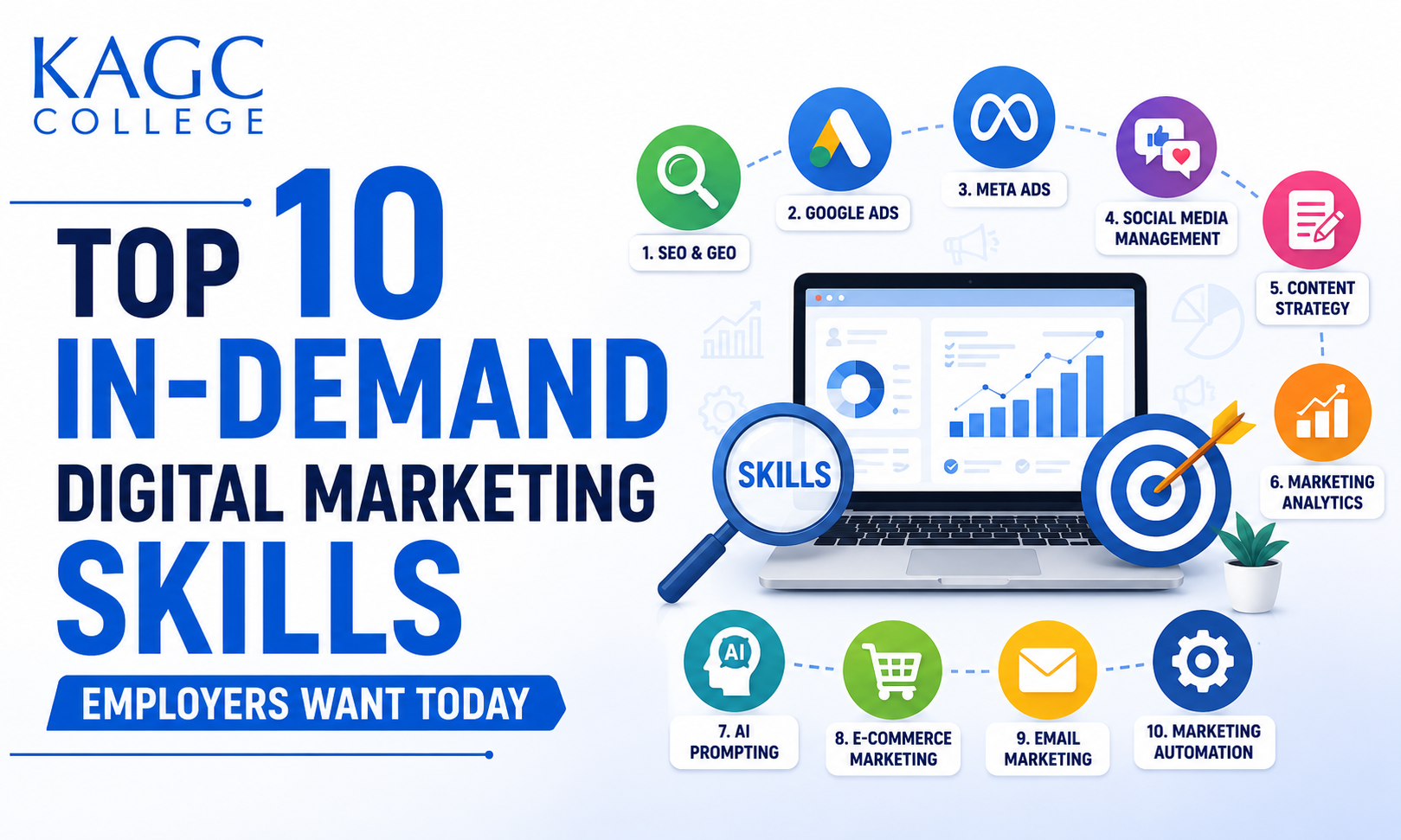
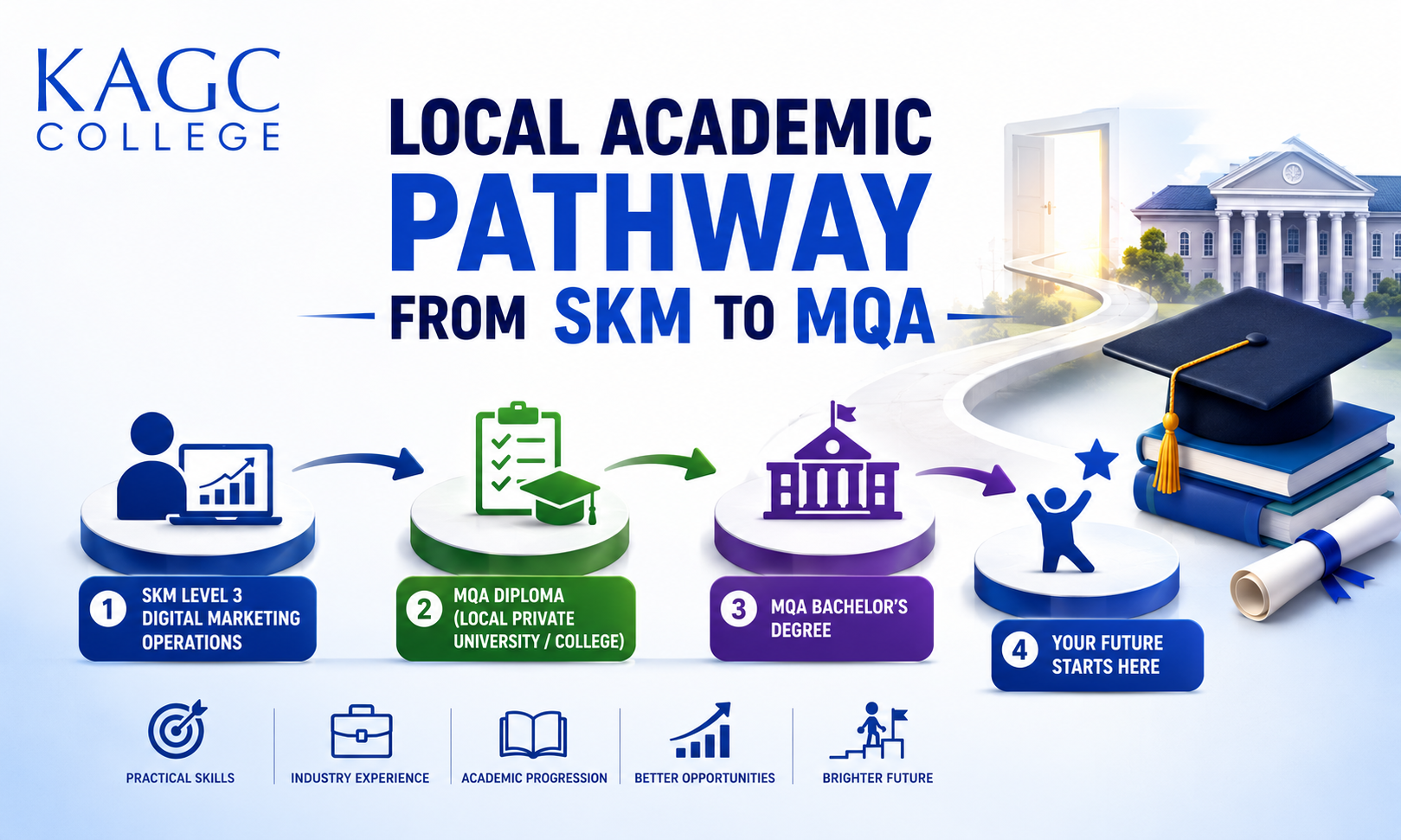
At KAGC College, the Extended Diploma in Digital Marketing is designed around this reality. Students develop practical competencies through an 80% hands-on learning approach that emphasises SEO, GEO, Google Ads, social media marketing, marketing analytics, content marketing, e-commerce marketing, AI-assisted marketing workflows, and campaign optimisation. Learners also build professional portfolios, prepare for industry certifications, and gain workplace exposure through industry projects and On-the-Job Training (OJT).
Ultimately, the question is not whether digital marketing can be learned online. The question is whether a candidate can demonstrate the practical skills, experience, certifications, and results that employers expect. For many organisations, the most attractive candidates are those who have already proven their capabilities through structured training, real-world projects, and professional portfolios.
Key Takeaway
Knowledge can be learned anywhere. Skills must be demonstrated. Employers hire digital marketers who can prove they can deliver results, not just explain marketing concepts.
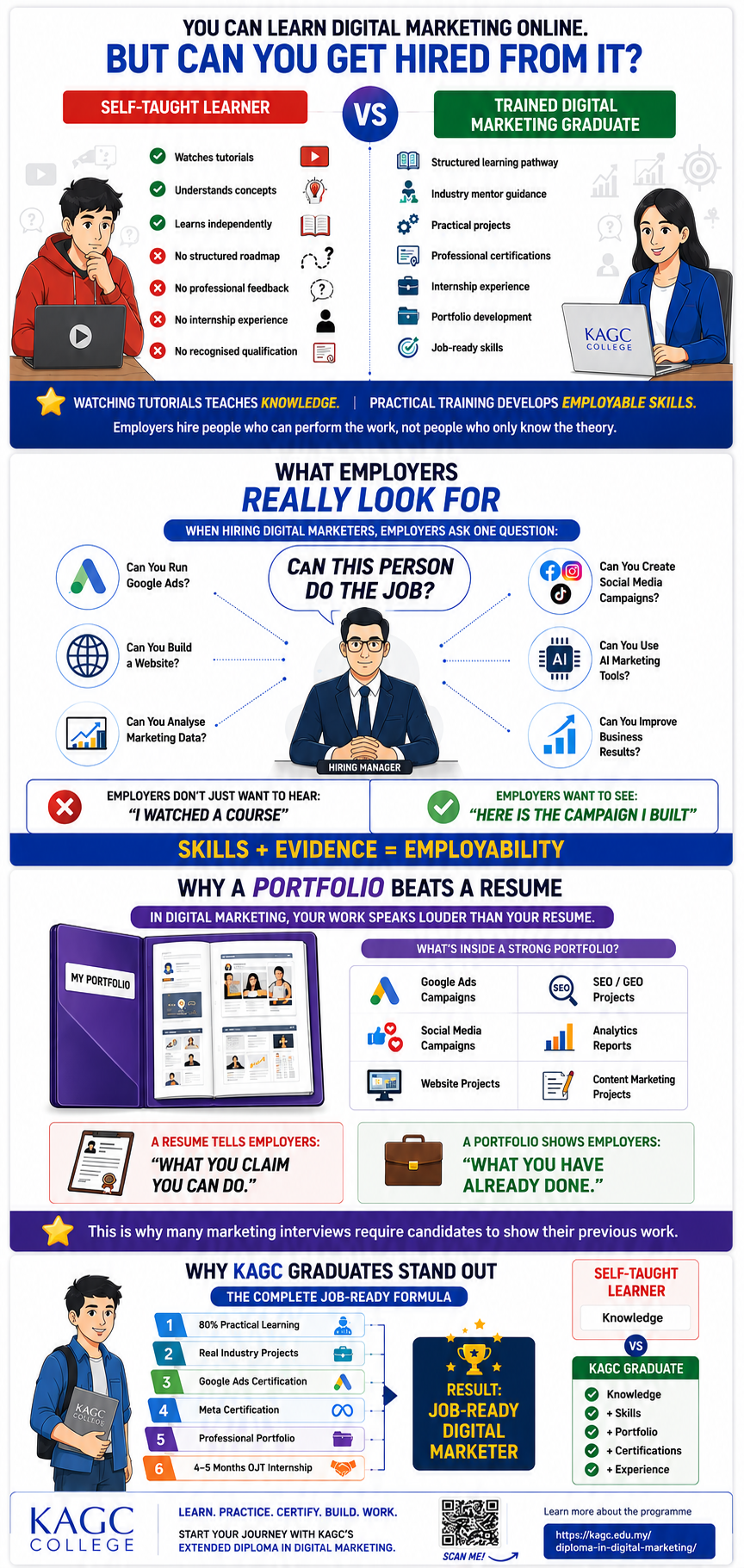
Information graph:
Explore More Digital Marketing Resources
Interested in learning more about the profession?