

What Employers Really Look For in Today’s Digital Marketing Industry
For decades, many people believed that earning a university degree was the only pathway to a successful career. However, the digital marketing industry has evolved differently from many traditional professions.
Today, businesses are less concerned about where you studied and more interested in whether you can deliver results.
This raises an important question that students, parents, and career changers frequently ask:
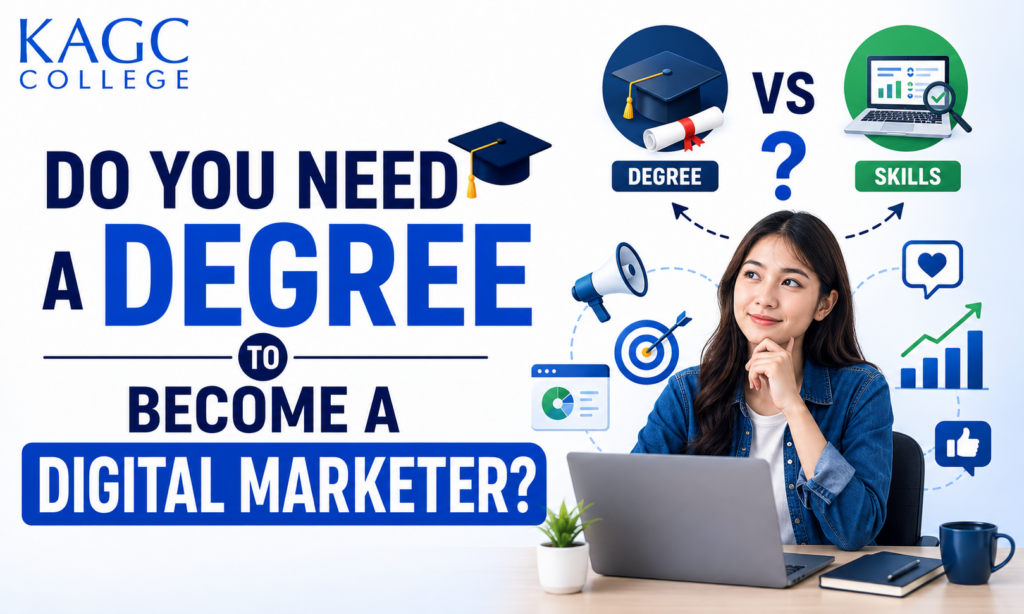
Do you really need a degree to become a digital marketer?
The short answer is:
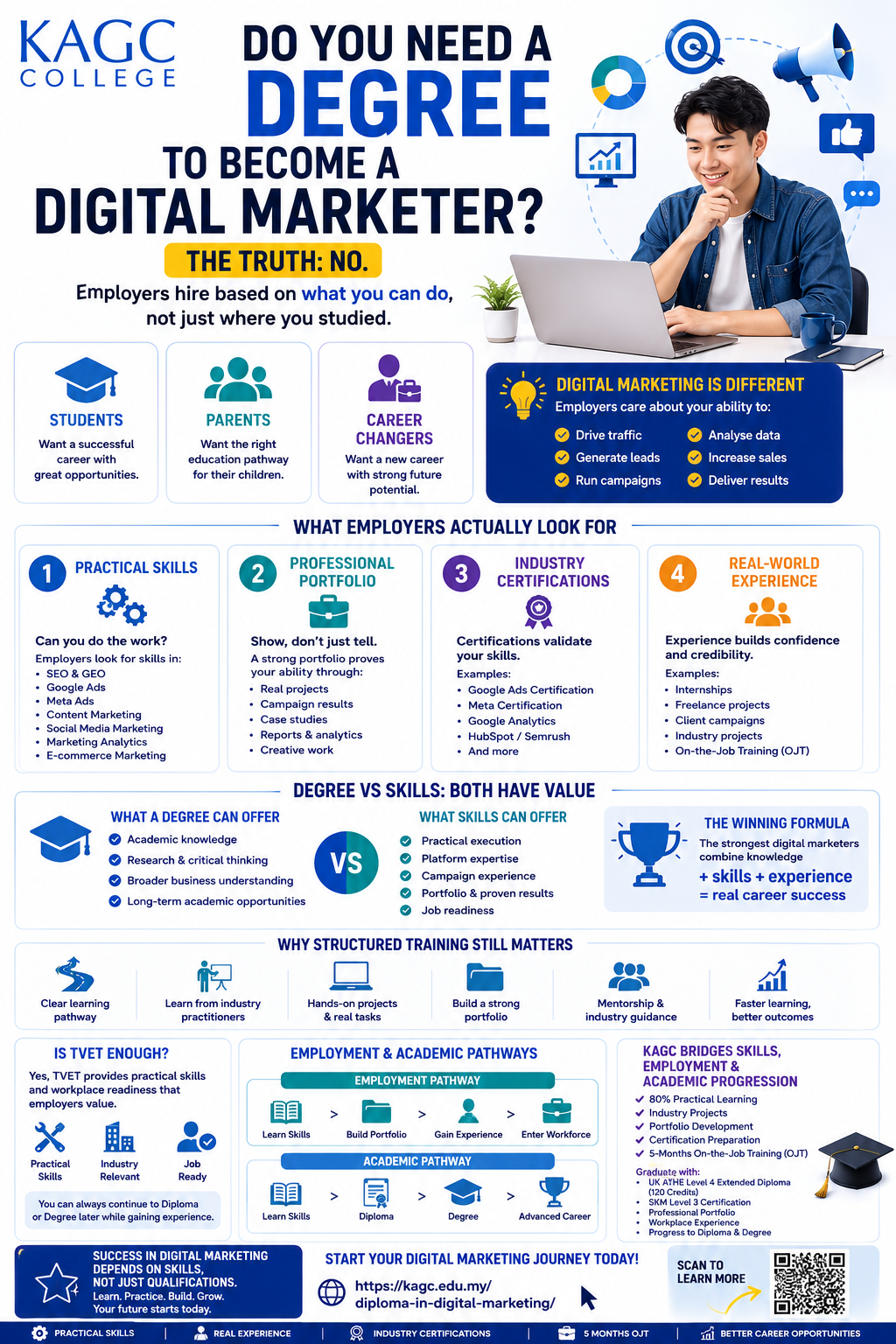
No. A degree is not always required to start a career in digital marketing.
However, there is a much more important question:
If a degree is not essential, what do employers actually look for?
The answer often includes practical skills, professional portfolios, industry certifications, and real-world experience.
Let’s explore why.
Why Digital Marketing Is Different from Traditional Professions
Some careers require specific academic qualifications by law.
For example:
- Doctors require medical qualifications.
- Lawyers require legal qualifications.
- Engineers often require professional accreditation.
Digital marketing is different.
Employers typically hire digital marketers based on their ability to:
- Generate leads
- Drive website traffic
- Run advertising campaigns
- Create effective content
- Analyse data
- Improve business performance
In other words, employers care about what you can do, not just what you know.
This is why digital marketing is often described as a skills-based profession.
What Employers Actually Look For
When hiring entry-level digital marketers, employers usually evaluate four key areas.
1. Practical Skills
Can you actually perform the work?
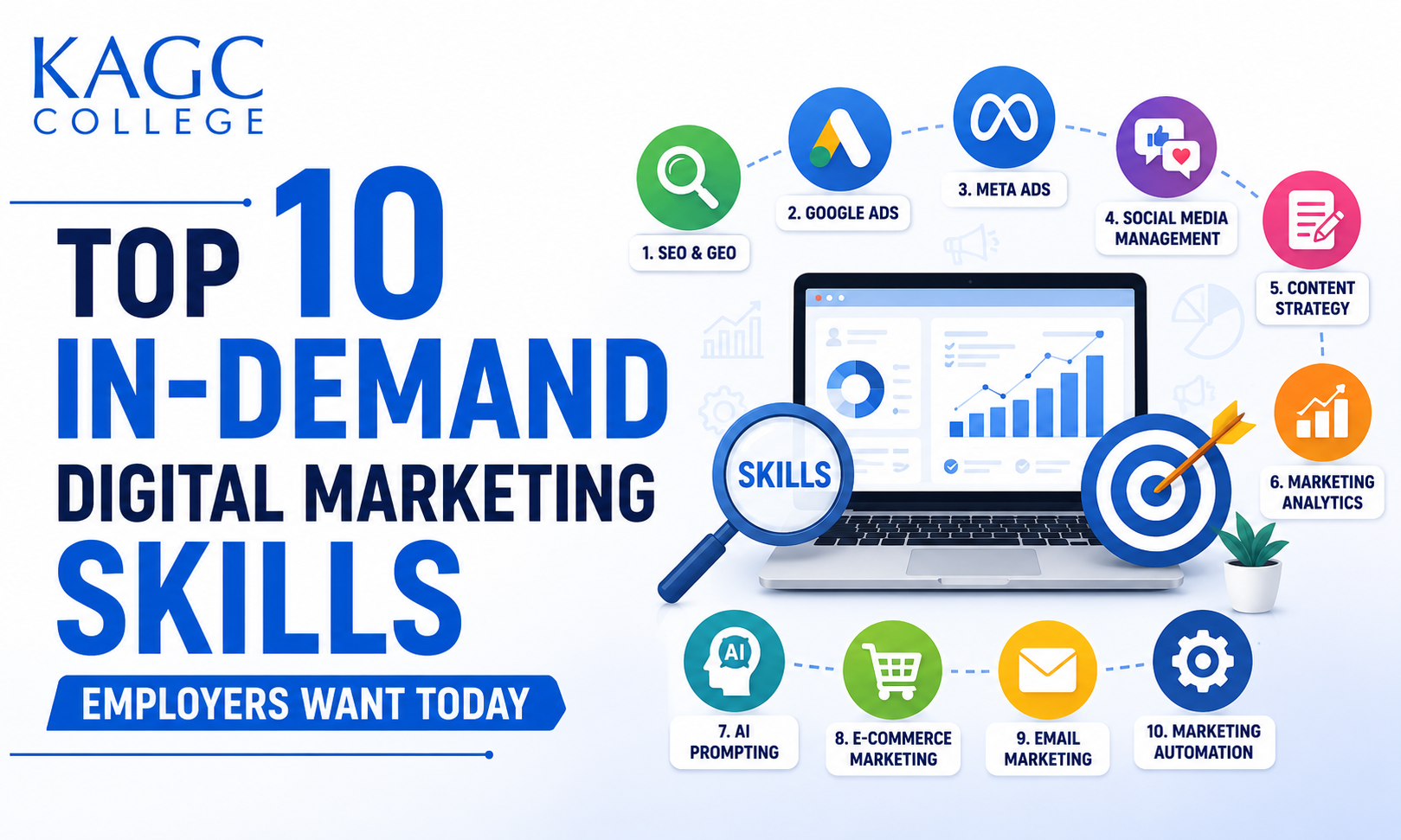
Employers want candidates who understand:
- SEO
- GEO
- Google Ads
- Social Media Marketing
- Content Marketing
- Marketing Analytics
- E-Commerce Marketing
The ability to execute tasks often matters more than the ability to explain marketing theories.
2. Professional Portfolio
A portfolio provides evidence of your capabilities.
Instead of saying:
“I understand SEO.”
You can show:
- SEO audits
- Optimised web pages
- Ranking improvements
- Content strategies
Instead of claiming:
“I know social media marketing.”
You can show:
- Content calendars
- Campaign results
- Engagement reports
A strong portfolio demonstrates real competency.
3. Industry Certifications
Professional certifications provide third-party validation of your skills.
Examples include:
- Google Ads Search Certification
- Meta Certified Digital Marketing Associate
- Google Analytics Certifications
- Digital Marketing Platform Credentials
Certifications show employers that you have learned industry-recognised best practices and can work with real marketing platforms.
4. Real-World Experience
Employers value candidates who have already experienced workplace environments.
This may include:
- Internships
- Industry projects
- Freelance assignments
- Business simulations
- Client campaigns
Experience reduces onboarding time and increases employability.
Degree vs Skills: Which Is More Important?
The reality is that employers prefer candidates who possess both.
A degree can provide:
- Academic knowledge
- Research skills
- Critical thinking
- Broader business understanding
Practical skills provide:
- Execution capability
- Platform expertise
- Campaign experience
- Portfolio evidence
- Job readiness
The strongest candidates often combine theoretical understanding with practical competency.
The challenge is that some graduates complete academic programmes with limited exposure to actual digital marketing platforms and campaigns.
As a result, employers frequently need to retrain them before they can contribute effectively.
Can You Become a Digital Marketer Without a Degree?
Yes.
Many successful digital marketers have built their careers through:
- Professional certifications
- Skills-based programmes
- TVET education
- Self-directed learning
- Industry experience
Digital marketing remains one of the few professions where capability often outweighs academic pedigree.
However, learning entirely on your own can present challenges.
The Challenge of Being Self-Taught
The internet offers unlimited learning resources.
Thousands of free videos, articles, and tutorials are available online.
While this sounds attractive, many aspiring marketers face common problems:
Information Overload
There is too much information and no clear learning sequence.
Lack of Structure
Learners often jump between topics without mastering fundamentals.
No Industry Feedback
Mistakes go uncorrected.
No Portfolio Guidance
Many learners struggle to build meaningful project work.
No Workplace Exposure
Employers often prefer candidates with some level of practical experience.
This is why structured training remains valuable.
Why Structured Training Still Matters
A structured programme provides a guided learning journey.
Instead of guessing what to learn next, students follow a curriculum designed around industry requirements.
Benefits include:
Clear Learning Pathway
Skills are developed progressively.
Experienced Trainers
Students receive guidance from industry practitioners.
Practical Projects
Learning is reinforced through hands-on activities.
Portfolio Development
Students build evidence of competency throughout their studies.
Professional Mentorship
Learners receive feedback that helps accelerate growth.
A structured programme can significantly reduce the learning curve.
Why Portfolios Matter More Than Certificates
Imagine two job applicants.
Applicant A
- Holds a qualification
- Has no portfolio
- Has never managed a campaign
Applicant B
- Has a qualification
- Has SEO projects
- Has advertising campaigns
- Has analytics reports
- Has social media case studies
Which candidate would an employer likely choose?
In most cases, Applicant B.
A portfolio transforms claims into evidence.
It demonstrates:
- Technical skills
- Problem-solving ability
- Creativity
- Execution capability
This is why portfolio development has become increasingly important in modern digital marketing education.
Why Industry Certifications Matter
Marketing platforms evolve constantly.
Employers value certifications because they indicate current platform knowledge.
For example:
Google Ads Certification
Demonstrates understanding of paid search advertising.
Meta Certification
Validates competency in Facebook and Instagram advertising.
Analytics Certifications
Demonstrate data interpretation capabilities.
These certifications often strengthen a graduate’s employability and credibility.
Why Internships Matter
Internships bridge the gap between learning and employment.
Students gain exposure to:
- Workplace expectations
- Team collaboration
- Real campaigns
- Client requirements
- Business processes
Many employers view internship experience as evidence that a graduate can adapt to professional environments.
This often makes internship experience one of the most valuable assets on a graduate’s résumé.
Is TVET Enough for a Digital Marketing Career?
The answer depends on your career goals.
If your goal is to become employable quickly and build practical skills, TVET can provide a highly effective pathway.
TVET programmes focus on:
- Practical competency
- Technical skills
- Industry relevance
- Workplace readiness
For many digital marketing roles, employers place significant value on these attributes.
In fact, many employers would prefer a candidate who can actively manage campaigns, analyse performance data, and optimise results over someone who only possesses theoretical knowledge.
However, TVET does not prevent future academic progression.
Many TVET graduates continue their studies later through diploma and degree pathways while gaining industry experience along the way.
Employment Pathway vs Academic Pathway
One of the biggest misconceptions is that learners must choose between employment and further education.
In reality, many students pursue both.
Employment Pathway
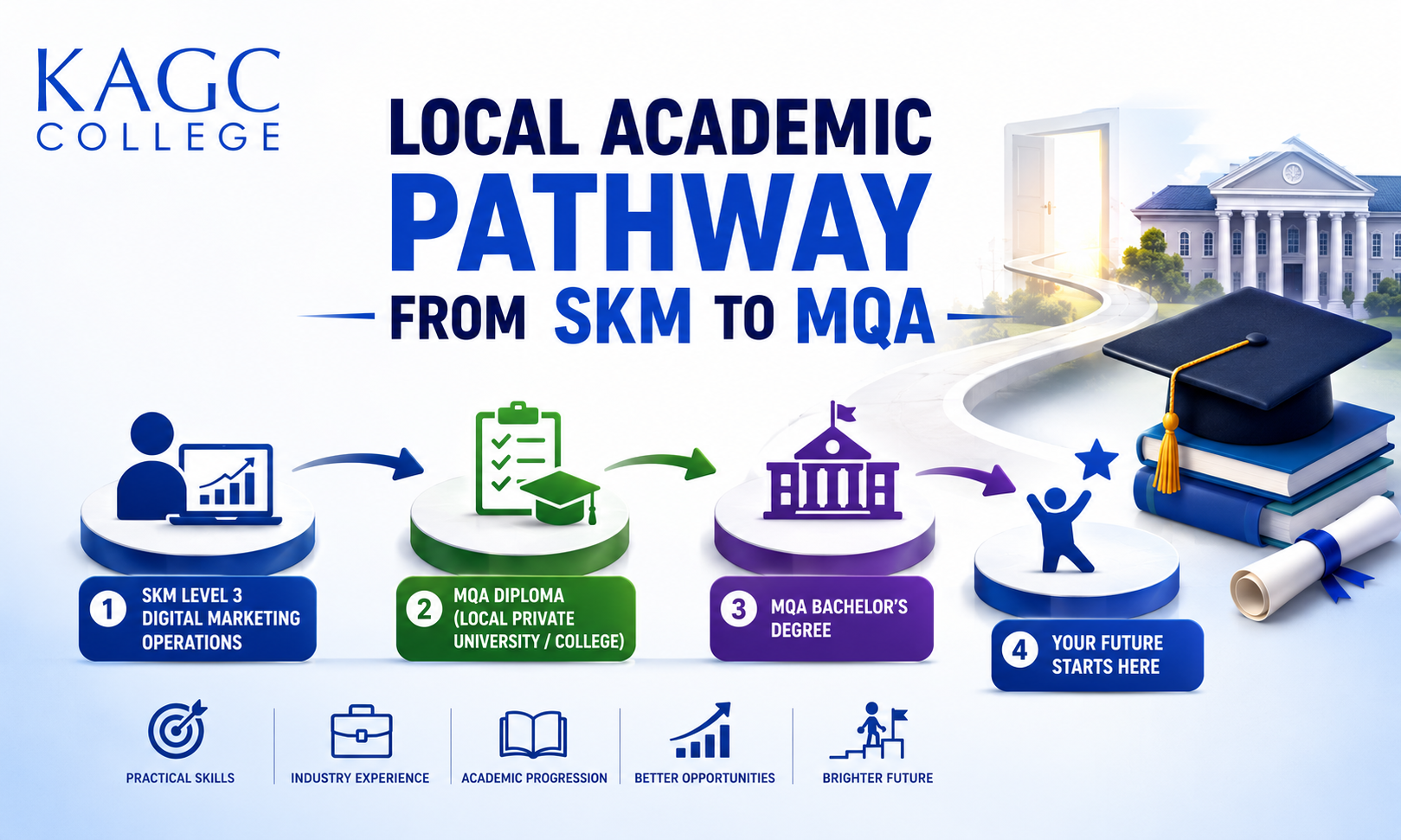
Learn skills → Build portfolio → Gain experience → Enter workforce
Academic Pathway
Learn skills → Continue to diploma → Progress to degree → Pursue advanced qualifications
Both pathways remain open.
The key advantage is having practical skills from the beginning.
How KAGC Bridges Skills, Employment, and Academic Progression
KAGC College’s Extended Diploma in Digital Marketing is designed around a simple philosophy:
Learn by Doing. Graduate Job-Ready. Progress to a Degree.
Students develop practical competencies through:
- SEO and GEO
- Google Ads
- Meta Ads
- Social Media Marketing
- Content Marketing
- E-Commerce Marketing
- Marketing Analytics
- AI Applications
The programme also includes:
- 80% practical learning
- Industry projects
- Portfolio development
- Professional certification preparation
- 5-month On-the-Job Training (OJT)
Graduates receive:
- UK ATHE Level 4 Extended Diploma (120 Credits)
- Malaysian SKM Level 3 Certification
- Professional portfolio
- Workplace experience
- Local and international progression opportunities
This enables learners to enter employment confidently while preserving future academic options.
Conclusion: Success Depends on Skills, Not Just Qualifications
The question is no longer:
“Do I need a degree to become a digital marketer?”
The better question is:
“Do I have the skills employers need?”
In today’s digital economy, employers increasingly evaluate candidates based on their ability to execute, solve problems, generate results, and adapt to changing technologies.
A degree can be valuable.
A diploma can be valuable.
A certification can be valuable.
But skills, portfolios, and experience are what ultimately transform education into employability.
For aspiring digital marketers, the most effective pathway is often one that combines structured learning, practical experience, industry certifications, and continuous development.
Frequently Asked Questions (FAQ)
Can I become a digital marketer without a degree?
Yes. Many employers hire based on practical skills, portfolio quality, certifications, and experience rather than degree qualifications alone.
Is a degree better than a diploma for digital marketing?
Both have value. However, employers often prioritise practical skills and proven competency alongside educational qualifications.
Do employers care about digital marketing certifications?
Yes. Certifications from Google, Meta, and other recognised platforms demonstrate current platform knowledge and practical competency.
Is TVET recognised by employers?
Yes. Many employers value TVET graduates because of their practical skills, technical competency, and workplace readiness.
What is more important: a degree or a portfolio?
For many digital marketing roles, a strong portfolio often provides more direct evidence of capability than qualifications alone.
Can I continue to a degree after studying through a TVET pathway?
Yes. Many TVET graduates progress to diploma and degree programmes while building industry experience and professional skills.
Explore More Digital Marketing Resources
Interested in learning more about the profession?