
Quick answer
If you like marketing, content and technology, compare programmes by the work they prepare you to do and the way they teach it. A marketing degree, diploma, TVET or skills-based programme, and a specialised digital-marketing route can all be legitimate choices. Start with the work that interests you, then compare curriculum, learning method, qualification, progression options and the evidence of work you could produce.
Finishing SPM or UEC can make the next decision feel deceptively simple: find a course with “marketing” in its name and apply. But course titles alone tell you very little about what you will spend your time learning, how you will be assessed or what you will be able to show at the end.
A better starting point is to connect four things: what you enjoy, the work that interest may lead to, what you would need to learn, and the education route that fits you.
What do your interests actually tell you?
Your interests are clues, not a career test. Enjoying TikTok does not automatically mean you will enjoy planning a content calendar, interpreting campaign data or revising an advertisement after it performs poorly. Digital marketing involves making and improving work, not only consuming it.
Here is what several common interests may point towards:
| If you enjoy | Marketing work you could explore | What you may need to learn |
| Writing, video and storytelling | Copywriting, video production, content planning and content strategy | Audience research, messaging, production, editing and measurement |
| Social media | Community management, organic content, creator work and paid social | Planning, platform formats, audience behaviour, moderation and campaign analysis |
| Advertising | Campaign planning, search ads, social ads and optimisation | Targeting, offers, budgets, testing, conversion measurement and responsible claims |
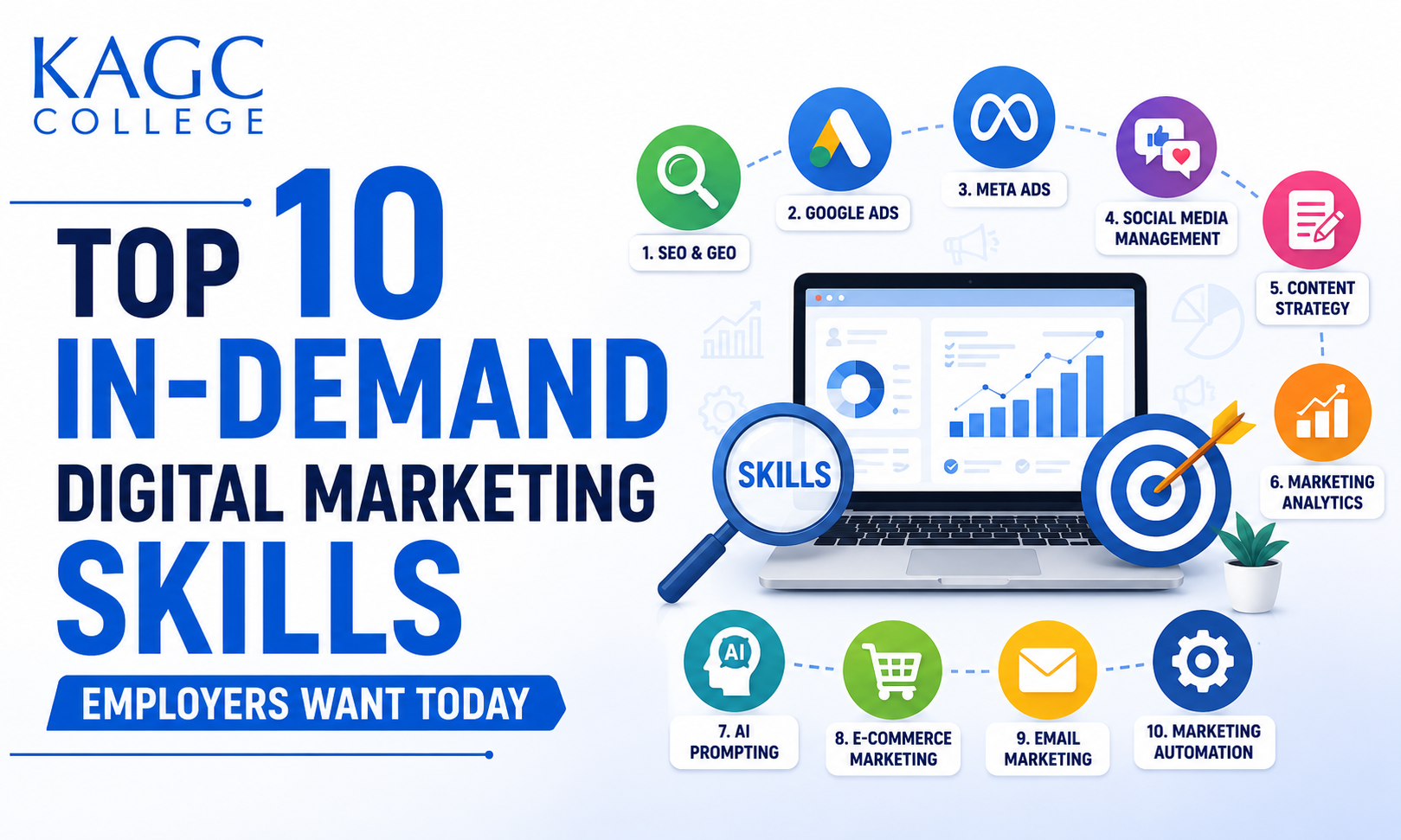
| Technology and AI | Marketing tools, automation, search, analytics and AI-assisted workflows | Tool selection, prompting, verification, data handling and human judgement |
| Business | Customer research, positioning, e-commerce and growth planning | Markets, customer needs, value propositions, revenue logic and decision-making |
| Data | Analytics, conversion testing, reporting and performance marketing | Metrics, spreadsheets, dashboards, experimentation and interpretation |
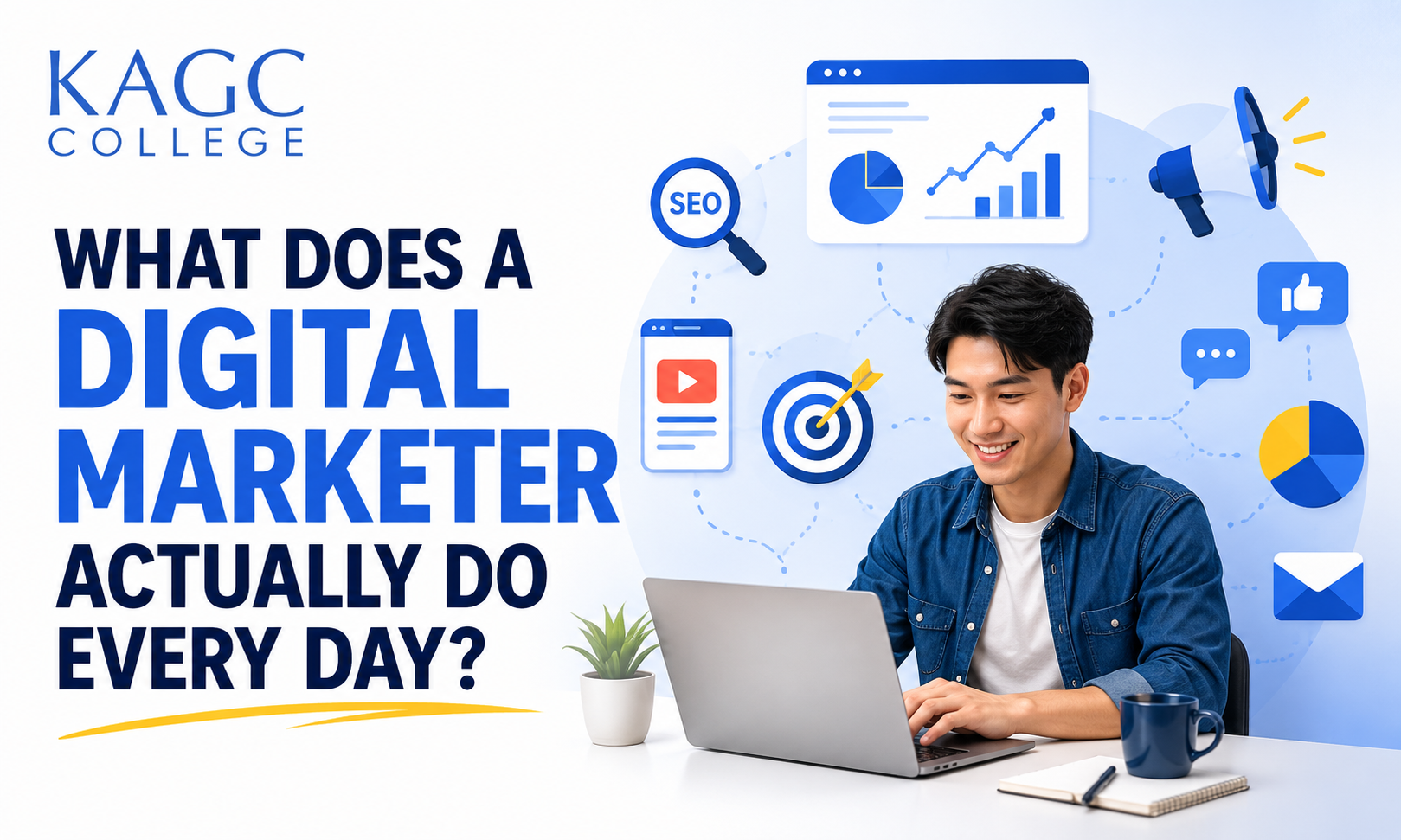
Malaysia’s MYFutureJobs occupation profile for an online marketer lists a similarly broad mix of activities, including social media, email, mobile marketing, copywriting, data analysis, market research, budgets, content-management systems, image and video editing, conversion testing and project management. That is a useful reality check: digital marketing is not one job and it is not just posting.
Before choosing a course, try a small piece of the work. Write two versions of an advertisement. Plan a one-week content calendar for a local business. Compare why one landing page is easier to understand than another. Look at basic campaign results and decide what you would change. Pay attention to whether you enjoy the thinking, revision and measurement as well as the creative output.
Marketing and digital marketing are related, not opposing subjects
Marketing is the wider discipline of understanding customers, creating value, choosing markets, positioning an offer, communicating it and supporting business goals. Digital marketing applies that thinking through digital channels and tools such as websites, search, social platforms, email, e-commerce, online advertising, analytics and automation.
A broad marketing programme may spend more time on areas such as consumer behaviour, research, branding, strategy and business foundations. A specialised digital-marketing programme may introduce channel execution, content production, platforms, campaign measurement and optimisation earlier. Many programmes combine both. The useful question is not which label sounds more modern. It is whether the curriculum gives you the foundation, practice and future options you need.
What can you study after SPM or UEC?
Malaysia’s official post-SPM guidance recognises that students can continue through different routes based on interests, talents and career goals. The route names matter because they can lead to different qualifications and progression conditions.
Pre-university followed by a bachelor’s degree
Routes such as STPM, matriculation, foundation or other pre-university programmes are commonly used before a bachelor’s degree. This can suit a student who wants a broad academic base, values the university experience, intends to pursue degree-level study from the outset or wants time before specialising.
The eventual degree might be in marketing, business, communications, advertising, media or a related area. Compare the actual modules and assessment methods because programmes with similar titles can differ substantially.
Diploma pathway
A diploma can be a direct post-SPM route. Malaysia’s government portal describes diploma programmes as offered by public universities, polytechnics, community colleges and private institutions, with entry requirements varying by programme and institution. A diploma may support entry to work or further study, but progression and credit transfer are not automatic. Verify them with the receiving institution.
Diploma programmes also vary. Some are broad business or marketing programmes. Others specialise earlier in digital marketing, communications, e-commerce or media.
TVET and skills-based pathway
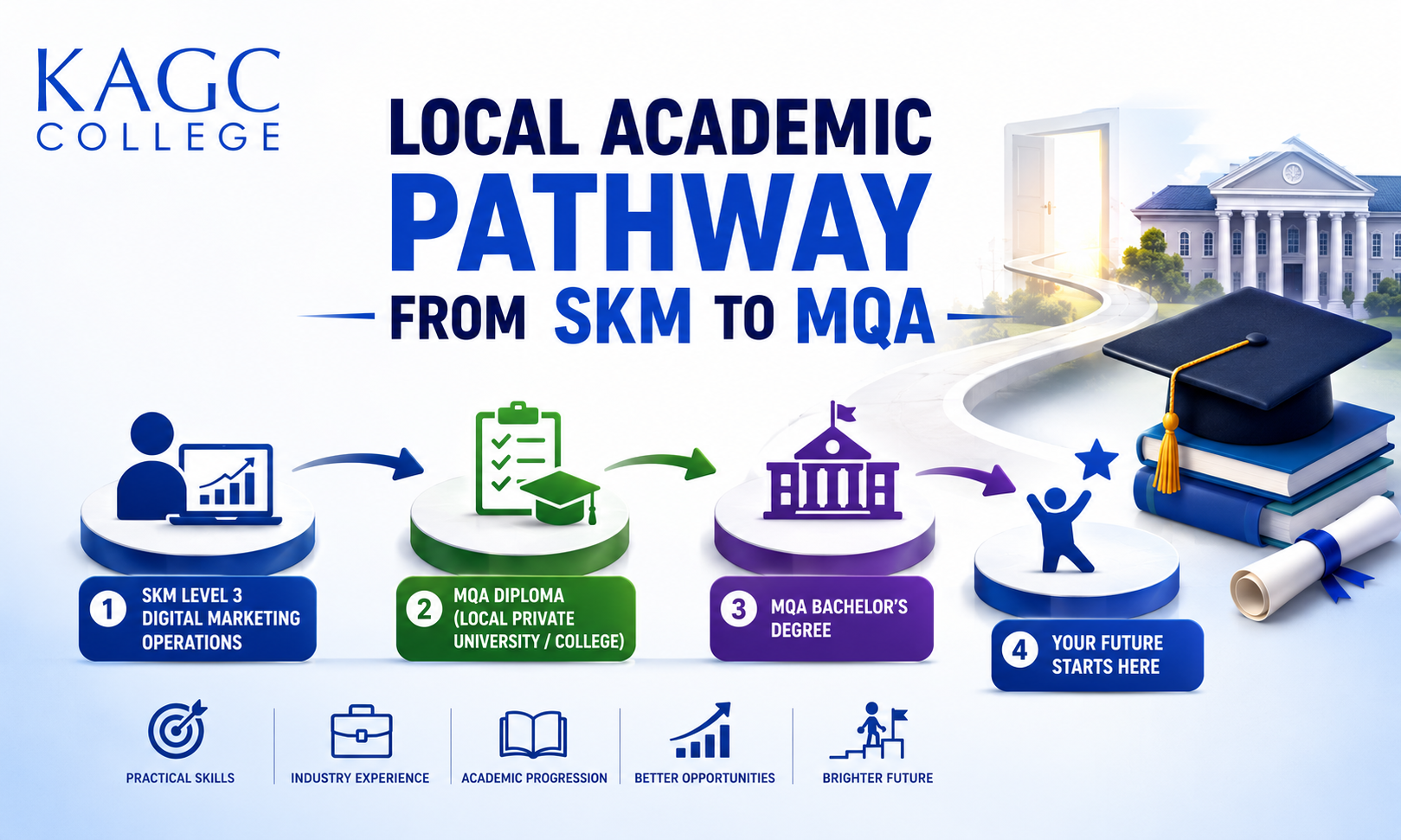
Technical and Vocational Education and Training focuses on occupational knowledge and skills, although it still includes theory. Malaysia’s Qualifications Framework includes both academic and TVET sectors, and the Department of Skills Development lists Digital Marketing Operation at Level 3, Digital Marketing Planning and Implementation at Level 4, and Digital Marketing Management at Level 5 in the National Occupational Skills Standard register.
This route may suit a learner who prefers structured practice, competency-based assessment and earlier exposure to work tasks. Do not treat every short course, certificate or provider that uses the word “skills” as equivalent. Check the exact qualification, awarding body and level.
Specialised digital-marketing programme
A specialised programme may be delivered as an academic qualification, a skills qualification, a professional course or a combination. It can suit students who already want substantial exposure to content, search, advertising, e-commerce and analytics.
Specialising early can give you more time with digital tools and projects. The trade-off is that you must check whether the programme also teaches durable marketing principles, business thinking, communication and research. Platforms change; the ability to understand a customer, frame a problem, test an idea and interpret evidence remains valuable.
Short courses and self-directed learning
Short courses are useful for testing an interest or learning a specific tool. Self-directed projects can also show initiative. For a school leaver, however, they do not automatically replace a recognised qualification, structured feedback, a coherent curriculum or progression route. Use them as a trial or supplement unless you have carefully evaluated the consequences of relying on them as your main route.
The more useful question is how you want to learn
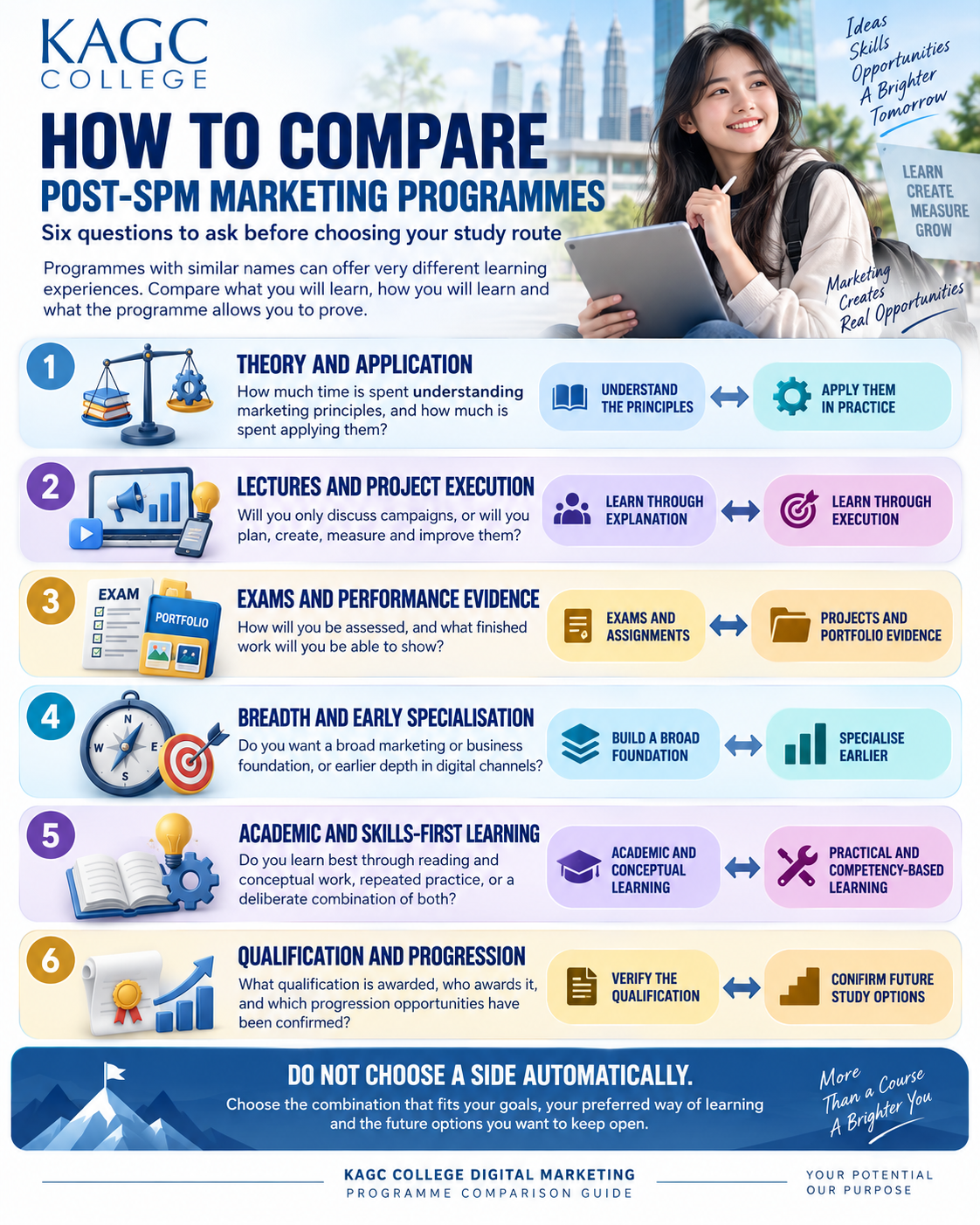
Routes sit on dimensions rather than in stereotypes. Universities can include practical projects. Skills-based programmes still need theory. A portfolio can accompany exams, and an academically oriented course can use real briefs.
Compare each programme on these questions:
| Decision dimension | Questions to ask |
| Theory and application | How much time is spent understanding principles, and how much is spent applying them? |
| Lectures and project execution | Will I only discuss campaigns, or will I plan, create, measure and improve them? |
| Exams and performance evidence | How am I assessed? What finished work can I show without breaching confidentiality? |
| Breadth and early specialisation | Do I want a broad marketing or business foundation, or earlier depth in digital channels? |
| Academic and skills-first orientation | Do I learn best through reading and conceptual work, repeated practice, or a deliberate mix? |
| Qualification and progression | What exactly is awarded, who awards it, and what further-study claims have the receiving institutions confirmed? |
Do not choose the right-hand or left-hand side automatically. Choose the combination that fits your goals and keeps the options you care about open.
Use the Interest to Evidence pathway
KAGC developed this five-step framework for students comparing post-SPM marketing routes. Its purpose is to improve the decision, not to direct every learner to one institution.
- Interest: What do you repeatedly choose to make, solve or understand?
- Work: Which real marketing tasks connect to that interest?
- Learning: Do you prefer academic study, guided practice, project execution or a mix?
- Evidence: What do you want to be able to explain, create, measure or show by graduation?
- Route: Which programmes can demonstrate that learning outcome while meeting your qualification and progression needs?
For example, “I like social media” becomes more useful when you turn it into: “I want to learn how to research an audience, plan content, create ads, respond to a community and use results to improve a campaign.” You can now compare curricula and assessments instead of relying on a course title.
Parent checkpoint: what should you verify?
Before paying a deposit or accepting a progression claim, ask every institution:
- What is the exact qualification title and level?
- Who awards the qualification?
- Which official register can we use to verify it, where applicable?
- What will the student actually learn and practise?
- How is the practical and academic balance calculated?
- Can we see examples of assessed student work, with permission?
- What further-study options exist, and which are conditional?
- Has the receiving institution confirmed entry or credit arrangements in writing?
- What should the student be able to do by graduation?
Qualification recognition, qualification levels and progression deserve a careful explanation of their own. The next article in this series will show parents how to verify these claims in Malaysia rather than relying on a logo or brochure statement.
Where KAGC’s Extended Diploma in Digital Marketing may fit
KAGC offers an Extended Diploma in Digital Marketing for learners who want to investigate a specialised, skills-first route. Its current public programme page describes learning across areas such as content, search, online advertising, social media, e-commerce and analytics, with practical projects and workplace exposure.
Those features may be relevant if you already want to explore digital execution and prefer to learn through guided application. They do not make the programme the automatic choice for every student. A student who wants a conventional university experience, a broader academic programme or a different field may reasonably choose another route.
Before enrolment, ask KAGC for the current evidence pack confirming the exact qualifications, awarding bodies, duration, practical-learning calculation, workplace component and progression conditions. This is the same standard you should apply to any provider.
Next step: Explore the KAGC Extended Diploma in Digital Marketing and use the parent checkpoint above when you speak with the admissions team.
What should you do next?
- Try two or three real marketing tasks and note which parts you enjoy.
- Turn your interests into skills you want to build.
- Shortlist programmes by curriculum, not title alone.
- Compare the learning model and assessment method.
- Verify the qualification, awarding body and progression conditions.
- Ask to see the standard of work students produce.
- Choose the route that fits both your present learning needs and your future options.
You do not need to decide your entire career now. You do need to make the next choice with clearer evidence than “marketing sounds interesting.”
Frequently asked questions
Is digital marketing a good course after SPM?
It can be a suitable choice if you enjoy the work behind digital campaigns: research, writing, production, planning, analysis, testing and improvement. Try small projects first, then compare recognised routes, curricula, assessment and progression instead of judging the field from social-media use alone.
Should I study marketing or digital marketing?
Choose based on curriculum and learning outcomes. Marketing is the broader discipline; digital marketing applies marketing through digital channels, content, platforms, data and technology. A broad marketing route may suit you if you want wider business and strategic foundations. A specialised route may suit you if you want earlier digital execution. Strong programmes can combine both.
Do I need a degree to become a digital marketer?
There is no single rule across every employer and role. Some jobs require or prefer a degree; others focus heavily on skills and evidence of work. A degree, diploma, skills qualification and portfolio are not interchangeable. Check current job requirements for roles you are considering and choose an education route that does not close options you value.
Is digital marketing only about social media?
No. It can include websites, search, online advertising, email, e-commerce, content, analytics, conversion testing, automation, customer research and campaign planning. Social media is one part of a larger field.
Can I continue to a degree later?
Possibly, but it depends on your qualification and the receiving institution’s entry and credit decisions. Do not treat “degree pathway” as a guarantee. Ask for the exact degree, institution, entry requirements, credit exemptions, remaining duration and written confirmation. Article #2 will provide a detailed verification guide.
Will AI replace digital marketers?
AI is changing tasks such as drafting, research support, analysis and production, but no responsible course can guarantee which jobs will or will not be replaced. Students should learn to use AI while also developing customer understanding, strategy, judgement, verification, communication, experimentation and accountability.
Sources
- Malaysia Government, “Education Opportunities After SPM,” updated 16 March 2026: https://www.malaysia.gov.my/en/topics/peluang-pendidikan-selepas-spm
- Malaysia Government, “Diploma Programme,” accessed 15 September 2026: https://www.malaysia.gov.my/categories/sekolah–pendidikan/program-pra-universiti/program-diploma
- Malaysian Qualifications Agency, “Malaysian Qualifications Framework 2nd Edition,” accessed 15 September 2026: https://www.mqa.gov.my/new/mqf.cfm
- Department of Skills Development, “Daftar Standard Versi 27 Ogos 2024,” accessed 15 September 2026: https://www.skillsmalaysia.gov.my/images/03-perkhidmatan/noss/Daftar_Standard_Versi_27_Ogos_2024.pdf
- MYFutureJobs, “Online Marketer,” accessed 15 September 2026: https://myfuturejobs.gov.my/online-marketer/
- TalentCorp, “MyMahir Malaysia Critical Occupations List 2024/2025,” 2026: https://www.talentcorp.com.my/images/uploads/publication/204/MyMahir-Malaysia-Critical-Occupations-List-MyCOL20242025-1773385490.pdf
- KAGC College, “Extended Diploma in Digital Marketing,” accessed 15 September 2026: https://kagc.edu.my/extended-diploma-in-digital-marketing/
Explore More Digital Marketing Resources
Interested in learning more about the profession?