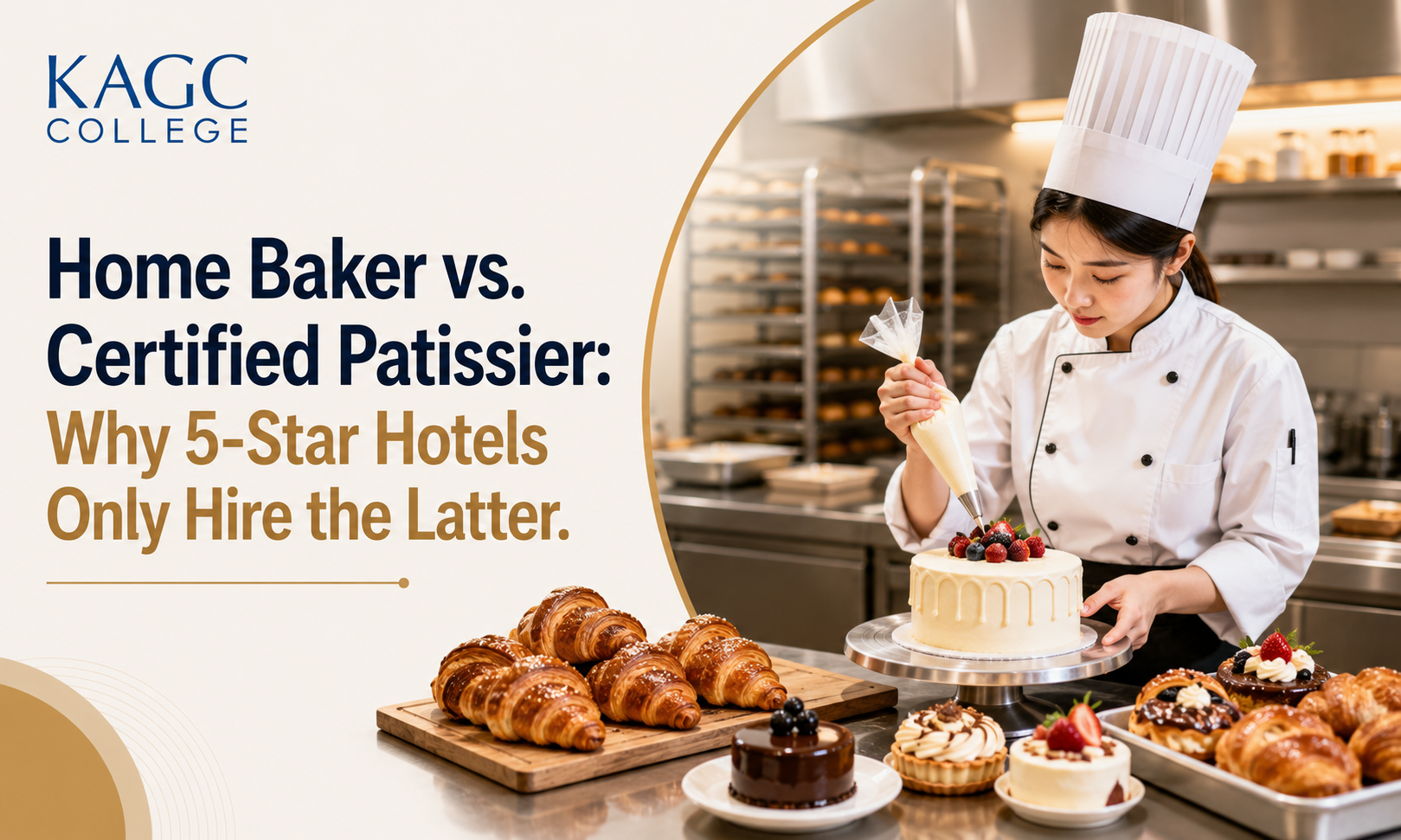


Home Baker vs. Certified Patissier. Why 5-Star Hotels Only Hire the Latter
Passion Can Start a Baking Journey, But Professional Training Builds a Career
The rise of social media has inspired thousands of Malaysians to explore baking as a hobby. From beautifully decorated cakes to handcrafted pastries and artisan breads, home bakers today can produce products that rival those found in many commercial bakeries.
This often leads aspiring bakers to ask an important question:
If I can already bake at home, do I really need professional pastry training?
The answer depends on your career goals.
If your objective is simply to bake for family, friends, or occasional customers, home baking skills may be sufficient.
However, if your goal is to work in a luxury hotel, international resort, premium bakery, cruise ship, or eventually manage your own pastry operation, the requirements are very different.
The difference between a home baker and a certified patissier extends far beyond recipes. It involves food safety, production management, consistency, cost control, business knowledge, and the ability to perform in a professional kitchen environment.
This is why 5-star hotels rarely hire based on passion alone.
They hire professionals who can consistently deliver results.
Home Baker vs. Certified Patissier – What’s the Difference?
Although both may create delicious pastries and desserts, their training, responsibilities, and capabilities are often significantly different.
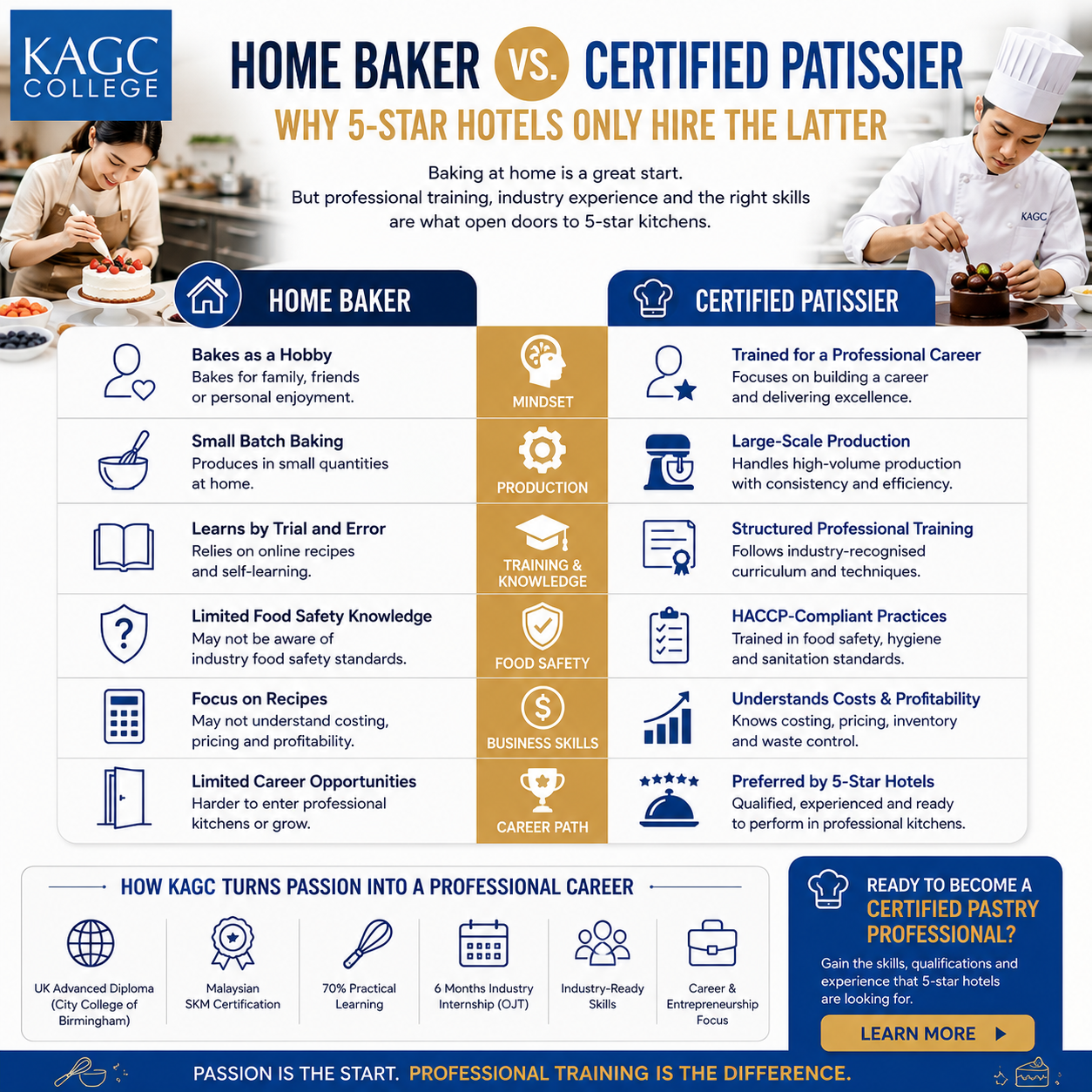
| Skill Area | Home Baker | Certified Patissier |
| Baking Knowledge | Self-taught or informal learning | Structured professional training |
| Production Volume | Small batches | Large-scale commercial production |
| Food Safety Standards | Basic awareness | HACCP and industry standards |
| Recipe Consistency | Varies by experience | Standardised production |
| Cost Control | Limited | Professional food costing |
| Inventory Management | Minimal | Commercial inventory planning |
| Menu Development | Personal preference | Strategic menu engineering |
| Commercial Equipment | Limited exposure | Industry-standard equipment |
| Team Collaboration | Usually individual | Professional kitchen operations |
| Career Advancement | Limited | Structured career pathways |
A certified patissier is trained not only to produce high-quality products but also to understand how a pastry department functions within a commercial business.
This broader skill set is what makes them valuable to hospitality employers.
Why 5-Star Hotels Have Different Hiring Requirements
Luxury hotels operate at a completely different scale from home kitchens.
A hotel pastry department may be responsible for:
- Breakfast pastries
- Restaurant desserts
- Afternoon tea service
- Banquet functions
- Wedding events
- VIP guest amenities
- Seasonal promotions
- Room service desserts
On any given day, a pastry team may produce hundreds or even thousands of items while maintaining consistent quality standards.
Because of this, hotels cannot rely solely on talent or creativity.
They require professionals who understand systems, processes, and operational discipline.
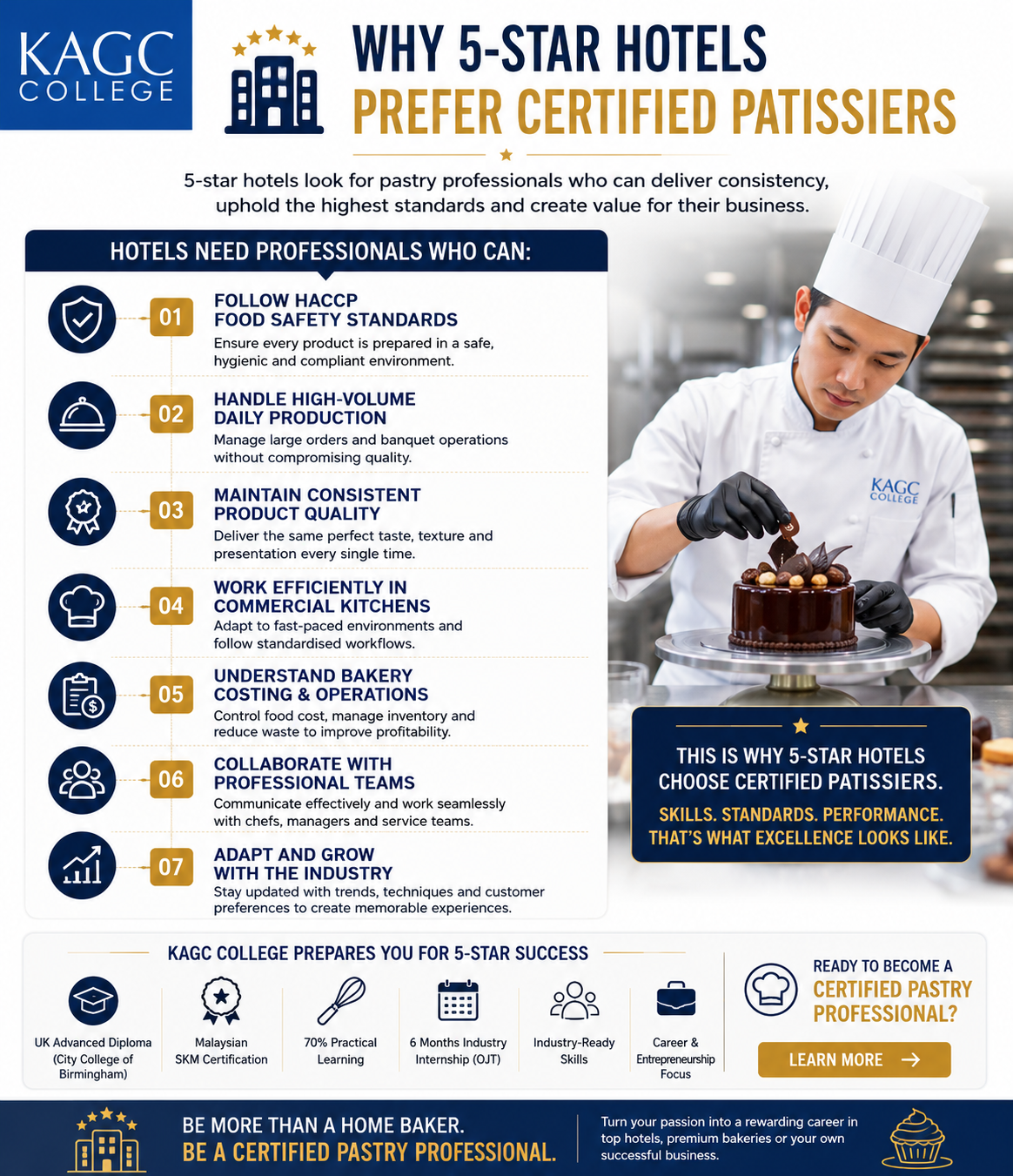
Employers look for individuals who can:
- Follow standard operating procedures
- Maintain strict food safety compliance
- Work under pressure
- Meet production deadlines
- Minimise wastage
- Manage ingredient inventory
- Work effectively within a team
These skills are rarely developed through home baking alone.
Consistency Is More Important Than Creativity
One of the biggest misconceptions about professional pastry work is that employers primarily seek creativity.
While creativity is important, consistency is often valued even more.
A guest who orders a chocolate tart in Kuala Lumpur today expects the same quality and presentation as a guest who orders the same dessert tomorrow.
Professional kitchens depend on repeatability.
This requires:
- Precise measurements
- Standardised recipes
- Controlled production processes
- Quality assurance procedures
A certified patissier understands how to maintain consistency across every batch, every shift, and every service period.
This reliability is one of the most important reasons why luxury hospitality employers prefer professionally trained graduates.
Food Safety Is Non-Negotiable in Professional Kitchens
In a home environment, food safety mistakes may affect only a small number of people.
In a hotel, bakery, or resort environment, the consequences can be much more serious.
Professional pastry chefs must understand:
- HACCP principles
- Cross-contamination prevention
- Temperature control
- Allergen management
- Personal hygiene standards
- Food storage procedures
- Traceability requirements
Many hospitality employers consider food safety knowledge just as important as technical baking skills.
A candidate who understands both production and food safety presents significantly lower operational risk to the business.
Professional Bakers Understand Profit, Not Just Pastry
One of the biggest differences between hobby bakers and professional pastry professionals is their understanding of business operations.
A home baker may focus primarily on creating attractive products.
A certified patissier understands how every product affects profitability.
Professional pastry training often includes:
- Food costing
- Yield management
- Inventory control
- Waste reduction
- Menu engineering
- Production planning
Consider a premium croissant selling for RM12.
A professional baker evaluates:
- Ingredient costs
- Labour costs
- Packaging costs
- Utility expenses
- Equipment depreciation
- Expected profit margin
Without this knowledge, even a bakery with strong sales can struggle financially.
This business mindset is one of the reasons employers value professionally trained pastry graduates.
Can a Home Baker Become a Professional Patissier?
Absolutely.
In fact, many successful pastry professionals began as passionate home bakers.
The difference is that they chose to formalise their skills and learn the professional side of the industry.
Professional training helps bridge the gap between:
- Baking for enjoyment
- Baking as a profession
It provides structured exposure to:
- Artisan bread production
- Viennoiserie
- Cake artistry
- Chocolate work
- Modern desserts
- Commercial kitchen operations
- Food safety management
- Bakery entrepreneurship
Rather than relying on years of trial and error, aspiring pastry professionals can develop these competencies through guided learning and industry experience.
The Career Opportunities Available to Certified Patissiers
Professional pastry qualifications can open doors to a wide range of career opportunities.
Examples include:
Hospitality & Hotels
- Pastry Chef
- Commis Pastry Chef
- Pastry Sous Chef
- Executive Pastry Chef
Premium Bakeries
- Artisan Baker
- Bakery Supervisor
- Product Development Specialist
Foodservice & Catering
- Dessert Production Specialist
- Catering Pastry Chef
- Bakery Operations Executive
Entrepreneurship
- Bakery Owner
- Café Owner
- Micro-Bakery Entrepreneur
- Online Pastry Business Operator
International Opportunities
- Cruise Ship Pastry Chef
- Resort Pastry Chef
- International Hotel Pastry Professional
As Malaysia’s café culture and hospitality sectors continue to expand, demand for professionally trained pastry professionals continues to grow.
How KAGC Helps Transform Passion Into Professional Competence
At KAGC College’s Advanced Diploma in Pastry & Bakery, students learn far more than recipes.
The programme combines technical pastry skills with commercial and operational knowledge required by today’s hospitality industry.
Students develop competencies in:
- Artisan breads and viennoiserie
- Cakes and desserts
- Chocolate and confectionery
- Food costing
- Menu engineering
- Inventory management
- Bakery entrepreneurship
- HACCP food safety practices
Through extensive practical training and six months of industry exposure, graduates gain valuable experience before entering the workforce.
This combination of technical expertise and real-world experience helps prepare students for professional pastry careers both in Malaysia and internationally.
The Real Difference Between a Hobby and a Profession
A home baker can create beautiful pastries.
A certified patissier can create beautiful pastries consistently, safely, profitably, and at commercial scale.
That distinction is what separates hobbyists from professionals.
In today’s competitive hospitality industry, employers are not simply looking for people who love baking.
They are looking for individuals who understand how to contribute to quality, efficiency, customer satisfaction, and business success.
For aspiring pastry professionals, professional training is not about replacing passion.
It is about transforming passion into a sustainable and rewarding career.
Frequently Asked Questions
Do 5-star hotels hire home bakers?
Most luxury hotels prefer candidates with professional training, industry experience, and knowledge of food safety and commercial kitchen operations.
What is a certified patissier?
A certified patissier is a professionally trained pastry specialist who has acquired formal education and practical experience in pastry production, food safety, and commercial kitchen operations.
Can I become a pastry chef without a diploma?
While it is possible to enter the industry through experience, professional qualifications often provide faster career progression and broader employment opportunities.
Why do hotels prefer professionally trained pastry chefs?
Hotels require consistency, food safety compliance, production efficiency, and operational discipline, which are typically developed through professional training.
Is pastry and bakery a good career in Malaysia?
Yes. The growth of cafés, bakeries, hotels, resorts, and tourism continues to create demand for skilled pastry professionals across Malaysia and internationally.
Explore More Pastry & Bakery Resources
Interested in learning more about the profession?