

Digital Marketing Is More Than Social Media Posts and Viral Videos
When people hear the term digital marketing, many immediately picture someone creating TikTok videos, posting on Instagram, or designing social media graphics. While these activities are part of the profession, they represent only a small portion of what digital marketers actually do.
Modern digital marketers are responsible for helping businesses attract customers, generate leads, increase sales, and build lasting relationships using digital channels. They combine creativity, business strategy, technology, analytics, and consumer psychology to achieve measurable business outcomes.
In today’s digital economy, companies need professionals who can understand customer behaviour, manage online advertising campaigns, analyse data, optimise websites, improve search visibility, and drive business growth. This is why digital marketing has become one of the most in-demand career fields across Malaysia and around the world.
Why Digital Marketing Matters in Today’s Business World
Whether you are ordering food through an app, shopping on Shopee, searching for a restaurant on Google, or watching videos on YouTube, digital marketing is working behind the scenes.
Businesses now compete for attention online. Without digital marketing, even the best products and services can remain invisible to potential customers.
Today, organisations across almost every industry rely on digital marketers to:
- Generate leads and sales
- Increase brand awareness
- Improve customer engagement
- Build online communities
- Launch new products
- Grow e-commerce revenue
- Understand customer behaviour through data
This demand extends beyond technology companies. Digital marketers are needed in healthcare, education, tourism, hospitality, retail, finance, manufacturing, and government-linked organisations.
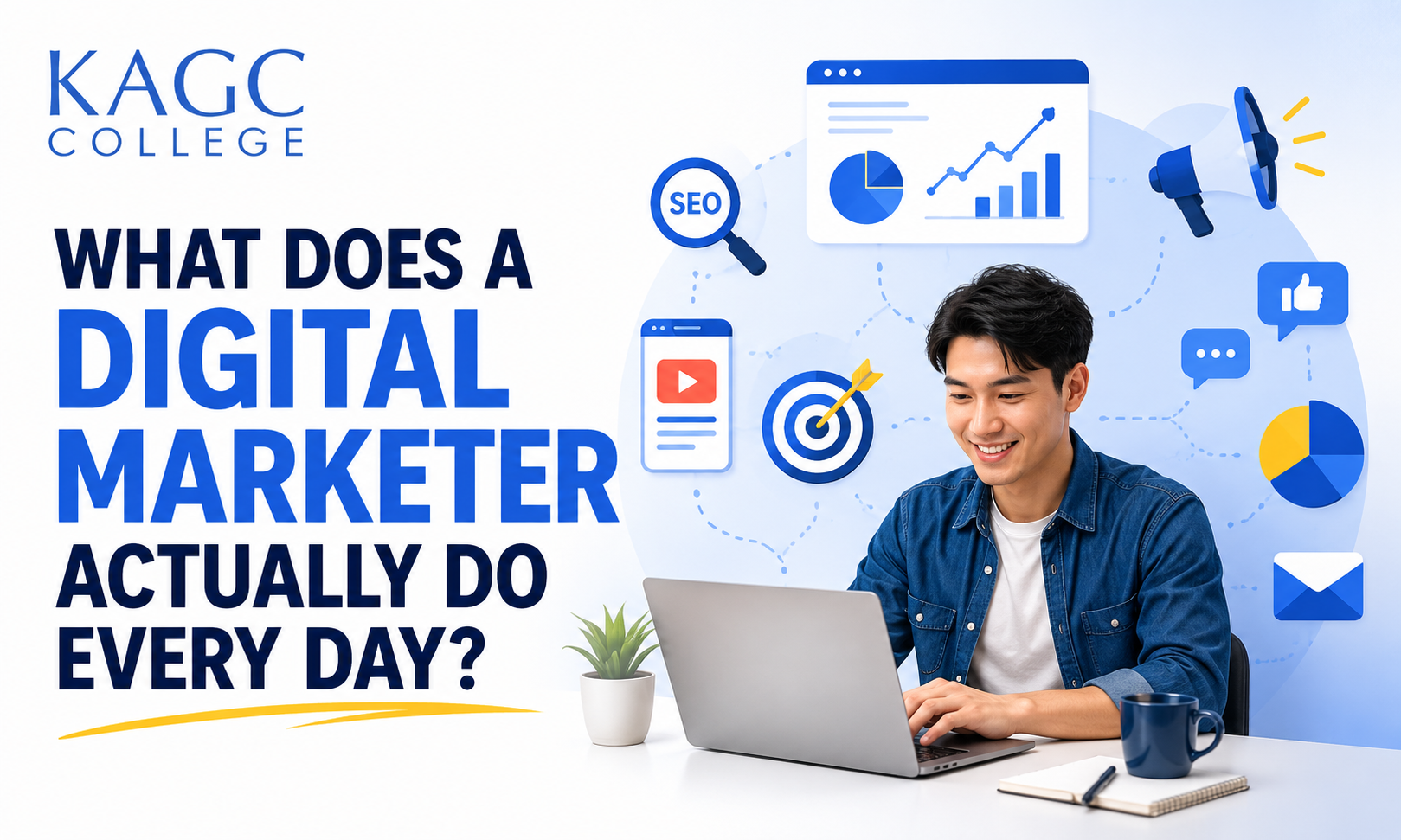
A Day in the Life of a Digital Marketer
No two days are exactly the same for a digital marketer. However, most professionals spend their time balancing strategy, execution, optimisation, and reporting.
A typical workday may include:
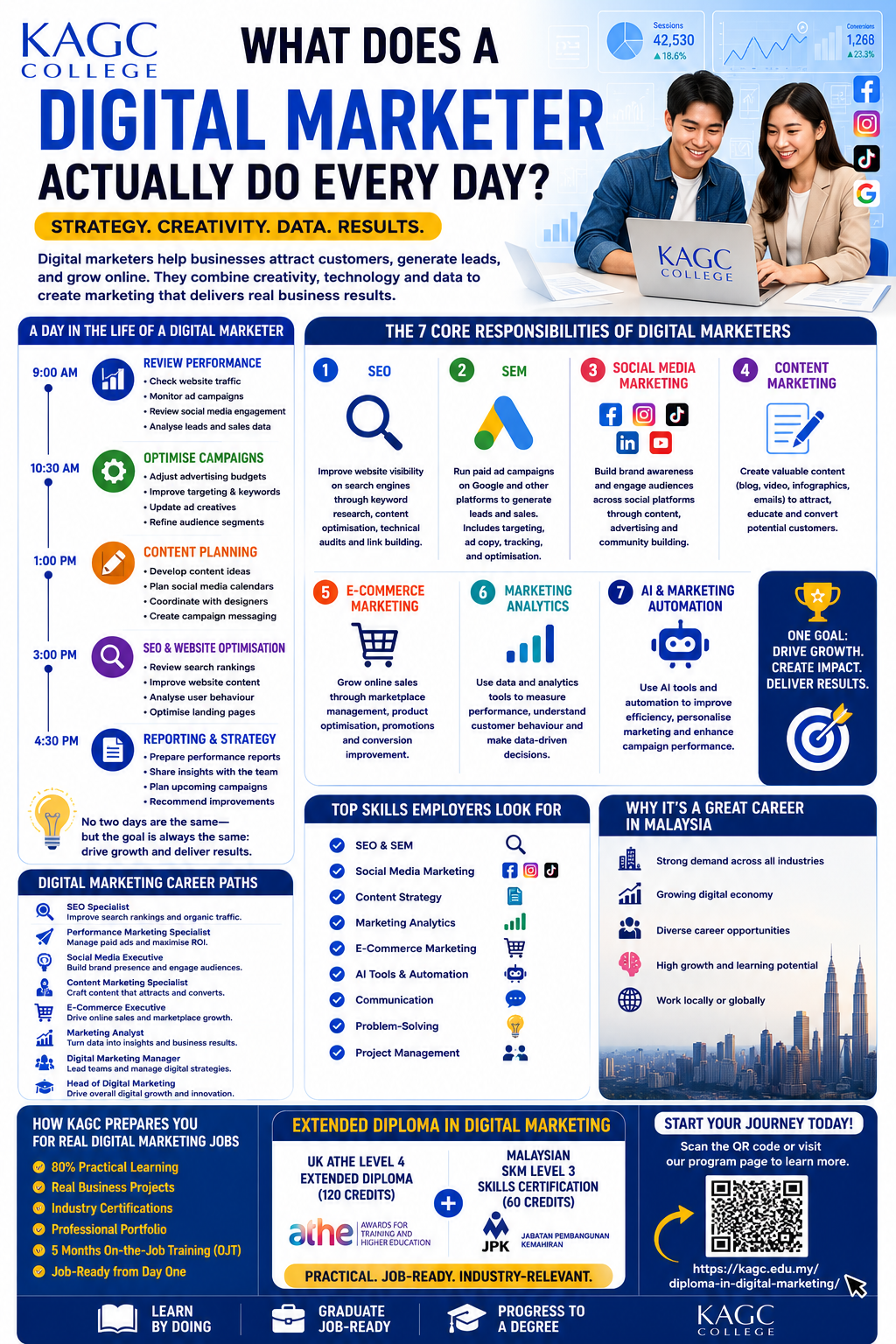
9:00 AM – Review Marketing Performance
- Check website traffic
- Monitor Google Ads campaigns
- Review social media engagement
- Analyse sales and lead generation metrics
10:30 AM – Optimise Marketing Campaigns
- Adjust advertising budgets
- Improve keyword targeting
- Update campaign creatives
- Refine audience segments
1:00 PM – Content Planning
- Develop content ideas
- Coordinate with designers and content creators
- Plan social media calendars
- Create campaign messaging
3:00 PM – SEO & Website Optimisation
- Review search rankings
- Improve website content
- Analyse user behaviour
- Optimise landing pages
4:30 PM – Reporting & Strategy
- Present performance reports
- Discuss business goals
- Plan future campaigns
- Recommend improvements
The role combines both creative thinking and analytical decision-making, making it suitable for individuals who enjoy solving problems and working with technology.
The 7 Core Responsibilities of Digital Marketers
1. Search Engine Optimisation (SEO)
SEO involves improving a website’s visibility on search engines such as Google and AI-powered search platforms.
Digital marketers perform tasks such as:
- Keyword research
- Content optimisation
- Technical website audits
- Link-building strategies
- Search performance analysis
The goal is to help businesses appear when customers search for relevant products or services online.
2. Search Engine Marketing (SEM)
SEM focuses on paid advertising through platforms such as Google Ads.
Responsibilities include:
- Creating advertising campaigns
- Keyword targeting
- Writing ad copy
- Budget management
- Conversion tracking
- Performance optimisation
A successful SEM campaign can generate qualified leads and sales within hours of launch.
3. Social Media Marketing
Social media marketing goes beyond simply posting content.
Digital marketers must:
- Develop content strategies
- Manage advertising campaigns
- Build communities
- Analyse engagement metrics
- Generate leads through social platforms
Popular platforms include Facebook, Instagram, LinkedIn, TikTok, YouTube, and X.
4. Content Marketing
Content remains a critical component of digital marketing.
Professionals create:
- Blog articles
- Videos
- Landing pages
- Infographics
- Email newsletters
- Educational resources
The objective is to attract, educate, and convert potential customers.
5. E-Commerce Marketing
With the growth of online shopping, e-commerce marketing has become a specialised field.
Responsibilities include:
- Managing online storefronts
- Running marketplace promotions
- Optimising product listings
- Increasing online conversions
- Improving customer retention
Platforms commonly used include Shopee, Lazada, Shopify, and WooCommerce.
6. Marketing Analytics
Every marketing activity generates data.
Digital marketers use tools such as:
- Google Analytics
- Google Search Console
- Looker Studio
- Meta Business Suite
They analyse performance to answer questions such as:
- Which campaigns generated the most sales?
- Which content performed best?
- Where did website visitors come from?
- How can marketing ROI be improved?
7. AI and Marketing Automation
Artificial Intelligence is rapidly becoming part of the digital marketer’s toolkit.
Professionals now use AI to:
- Generate content ideas
- Analyse data faster
- Automate repetitive tasks
- Improve customer targeting
- Enhance campaign performance
Rather than replacing marketers, AI is helping them become more productive and strategic.
Different Types of Digital Marketing Careers
Digital marketing offers multiple career pathways depending on individual interests and strengths.
SEO Specialist
Focuses on improving website visibility and organic search performance.
Performance Marketing Specialist
Manages paid advertising campaigns across Google, Meta, and other platforms.
Social Media Executive
Builds brand presence and engagement through social channels.
Content Marketing Specialist
Creates and manages educational and promotional content.
E-Commerce Executive
Supports online sales growth through digital platforms and marketplaces.
Marketing Analyst
Uses data to improve marketing decisions and business outcomes.
Digital Marketing Manager
Leads marketing teams and oversees overall digital strategy.
Head of Digital Marketing
Develops organisational digital growth strategies and manages large-scale campaigns.
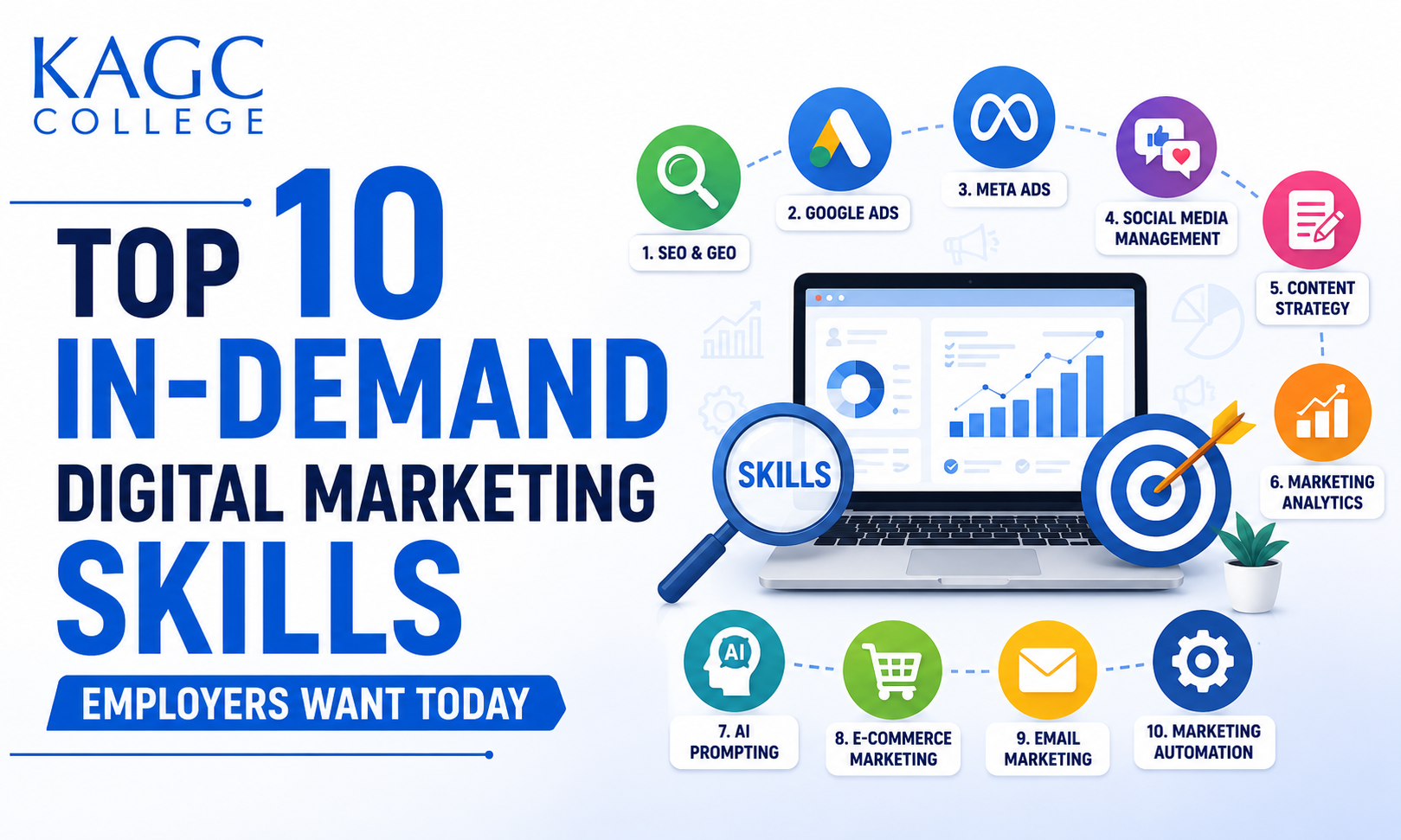
What Skills Do Employers Look For?
Employers increasingly seek professionals who can demonstrate practical skills rather than simply theoretical knowledge.
The most valuable skills include:
- Search Engine Optimisation (SEO)
- Google Ads Management
- Social Media Marketing
- Content Strategy
- Marketing Analytics
- E-Commerce Marketing
- AI Tools & Automation
- Communication Skills
- Problem-Solving
- Project Management
Many employers also value industry-recognised certifications and evidence of real-world project experience.
Is Digital Marketing a Good Career in Malaysia?
Digital marketing continues to be one of the fastest-growing professional fields in Malaysia.
Several factors contribute to this demand:
Growing Digital Economy
Businesses are investing heavily in digital transformation initiatives.
Expanding E-Commerce Sector
Online retail continues to grow year after year.
Talent Shortage
Many organisations struggle to find qualified digital marketing professionals with practical skills.
Industry-Wide Demand
Digital marketers are needed in virtually every sector, including:
- Hospitality
- Tourism
- Education
- Healthcare
- Finance
- Manufacturing
- Retail
This creates diverse employment opportunities and long-term career growth potential.
What Makes a Digital Marketing Graduate Job-Ready?
Employers rarely hire based on qualifications alone.
They want evidence that candidates can execute real marketing tasks and contribute immediately.
A job-ready graduate should possess:
- A professional portfolio
- Real campaign experience
- Website optimisation skills
- Advertising platform knowledge
- Data analysis capabilities
- Industry certifications
- Workplace exposure
The combination of practical experience and technical competency often determines employability more than academic theory alone.
How KAGC Prepares Students for Real Digital Marketing Jobs
KAGC College’s Extended Diploma in Digital Marketing is designed around a practical learning philosophy that reflects how the industry actually operates.
Students gain hands-on experience in:
- Search Engine Optimisation (SEO)
- Search Engine Marketing (SEM)
- Social Media Marketing
- Content Marketing
- E-Commerce Marketing
- Marketing Analytics
- AI Applications in Marketing
The programme incorporates:
- 80% practical learning
- Real business projects
- Portfolio development
- Google Ads preparation
- Meta Certification preparation
- Industry-relevant assignments
- 5-month On-the-Job Training (OJT)
Students graduate with:
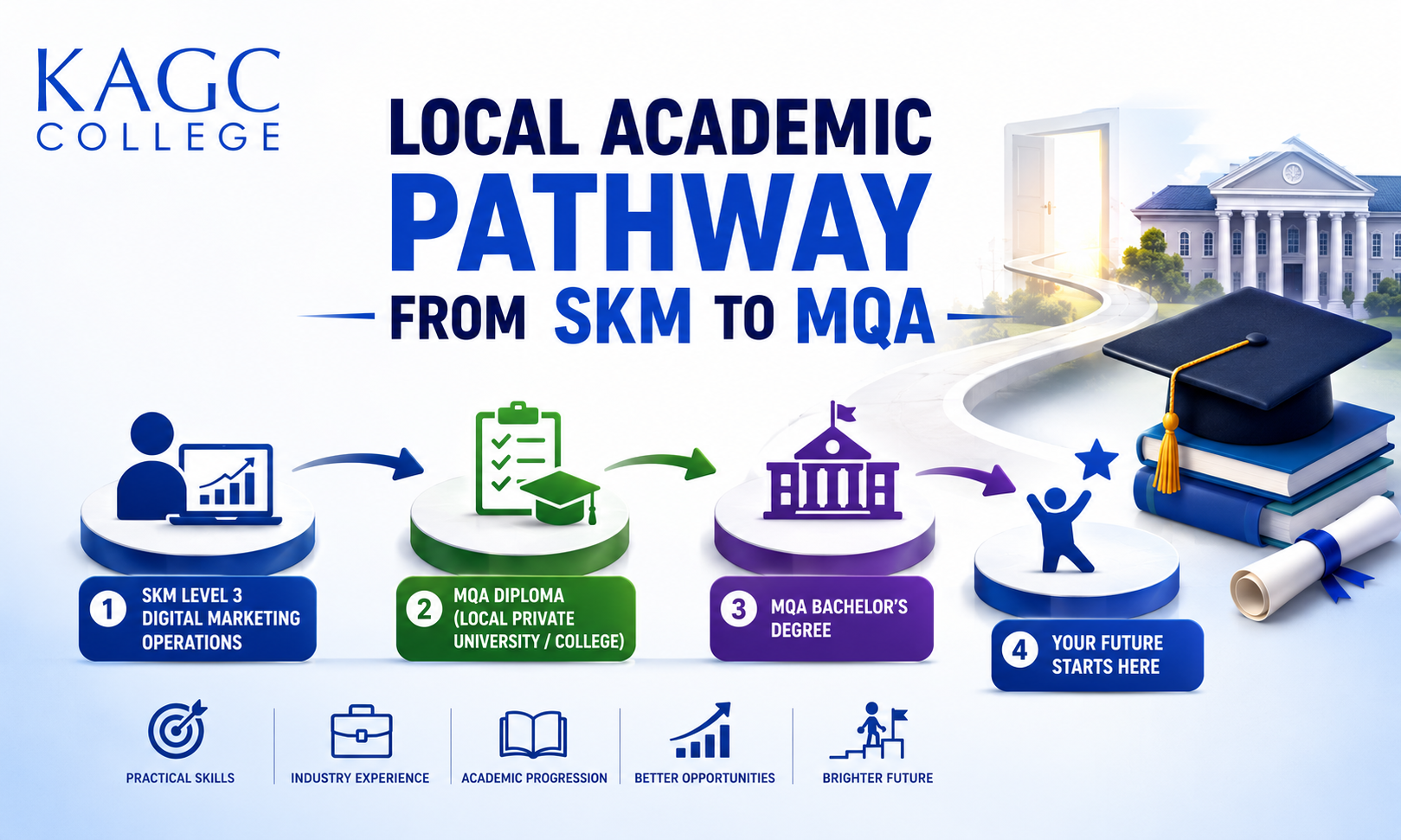
- UK ATHE Level 4 Extended Diploma (120 Credits)
- Malaysian SKM Level 3 Skills Certification (60 Credits)
- Industry portfolio
- Workplace experience
- Pathways to employment or degree progression
This practical approach helps learners build confidence, competency, and employability before entering the workforce.
Conclusion: Digital Marketing Is a Career Built on Execution
Digital marketing is not simply about posting on social media or creating content. It is a multidisciplinary profession that combines technology, creativity, strategy, business knowledge, and data-driven decision-making.
As businesses continue to embrace digital transformation, skilled digital marketers will remain essential to organisational growth and success.
For individuals seeking a career that offers strong demand, continuous learning opportunities, diverse specialisations, and long-term growth potential, digital marketing remains one of the most future-ready professions available today.
Frequently Asked Questions (FAQ)
Is digital marketing only about social media?
No. Social media is only one component of digital marketing. The field also includes SEO, SEM, content marketing, e-commerce, analytics, email marketing, and digital strategy.
Do I need to be good at design to become a digital marketer?
Not necessarily. While creativity helps, many roles focus on strategy, analytics, advertising, SEO, and business growth rather than design.
Is digital marketing a good career in Malaysia?
Yes. The increasing digitalisation of businesses and growth of e-commerce continue to create strong demand for skilled digital marketing professionals.
Can I become a digital marketer without a degree?
Many employers prioritise skills, certifications, portfolios, and practical experience. Structured training and industry exposure can significantly improve employability.
What is the starting salary for digital marketers in Malaysia?
Entry-level digital marketing professionals typically earn between RM2,800 and RM4,500 per month, with opportunities for progression into management and specialist roles as experience grows.
Can digital marketers work internationally?
Yes. Digital marketing skills are highly transferable and in demand globally, making it possible to work with international companies, agencies, or freelance clients worldwide.
Explore More Digital Marketing Resources
Interested in learning more about the profession?