

What Employers Really Look For When Hiring Digital Marketing Graduates
For decades, many students and parents believed that a university degree was the safest and most reliable route to career success. While higher education remains valuable, the digital economy has fundamentally changed how employers evaluate talent.
Today’s hiring managers are no longer asking only:
“What qualification do you have?”
They are increasingly asking:
“What can you actually do?”
In digital marketing, employers operate in a results-driven environment. Businesses invest in marketing to generate leads, increase sales, improve brand visibility, attract customers, and drive business growth. As a result, organisations are actively seeking candidates who can demonstrate practical skills, platform competency, campaign execution experience, and measurable outcomes.
This shift has led to a growing emphasis on portfolios, industry certifications, internships, and real-world project experience. Employers increasingly value evidence of execution because it provides stronger proof of workplace readiness than academic qualifications alone.
The four visual guides below explain why practical skills have become one of the most important forms of career currency in the digital marketing industry and how modern TVET pathways are designed to bridge the gap between education and employment.
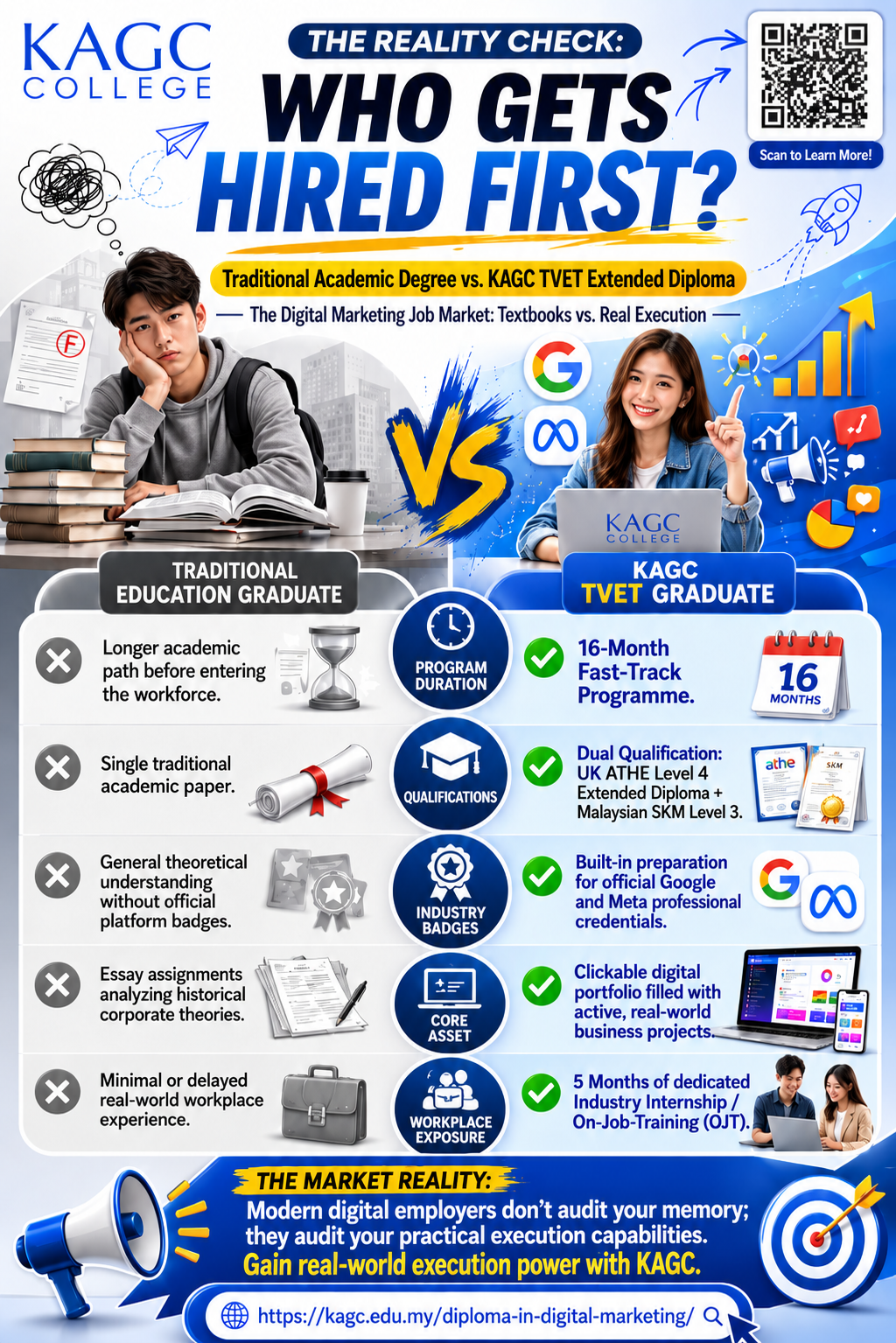
Infographic 1: Who Gets Hired First?
The first infographic examines one of the most important questions facing students today:
Who is more likely to secure employment faster: a graduate with theoretical knowledge or a graduate with practical execution skills?
Many traditional academic programmes focus heavily on lectures, examinations, essays, and theoretical understanding. While these components contribute to knowledge development, employers often need additional evidence that a candidate can operate digital marketing platforms, manage campaigns, analyse performance data, and contribute immediately to business objectives.
In contrast, TVET programmes focus on competency-based learning, where students develop practical skills through real projects, industry-standard tools, professional certifications, and workplace exposure.
For digital marketing employers, a portfolio containing live websites, SEO projects, Google Ads campaigns, analytics dashboards, content strategies, and social media campaigns often provides more insight into a candidate’s capabilities than examination results alone.
The reality is simple:
Employers hire people to solve business problems. Portfolios provide evidence that those problems can be solved.
Infographic 2: Why Practical Learning Creates Job-Ready Graduates
One of the most common concerns among employers is the gap between academic knowledge and workplace performance.
Many graduates understand marketing concepts but have never:
- Managed a Google Ads campaign
- Optimised a website for SEO
- Analysed marketing performance data
- Built an e-commerce funnel
- Managed social media campaigns
- Used AI-powered marketing tools
This is why practical learning has become increasingly important.
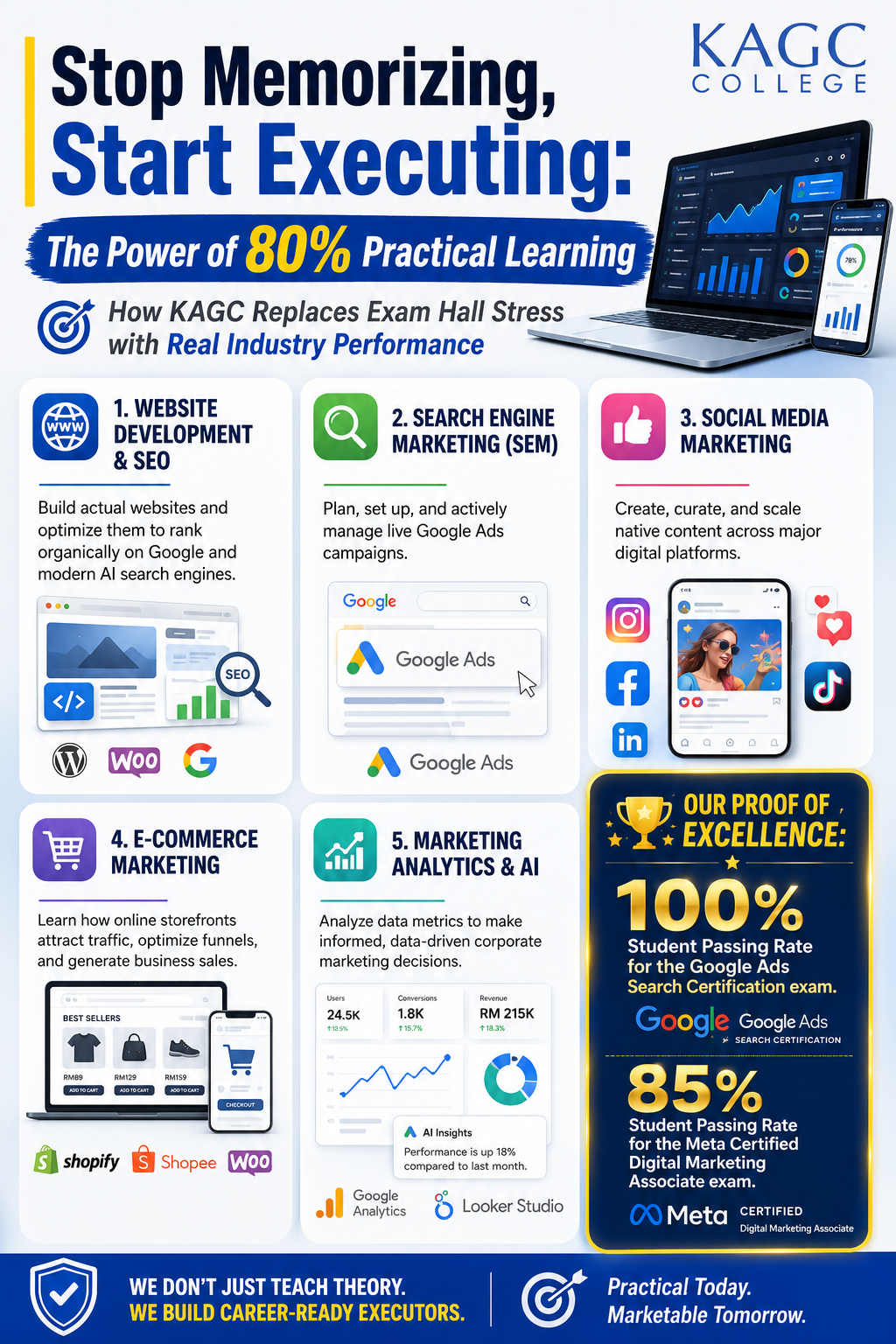
The second infographic illustrates how hands-on learning develops workplace competency by allowing students to practise the same activities they will encounter in professional environments.
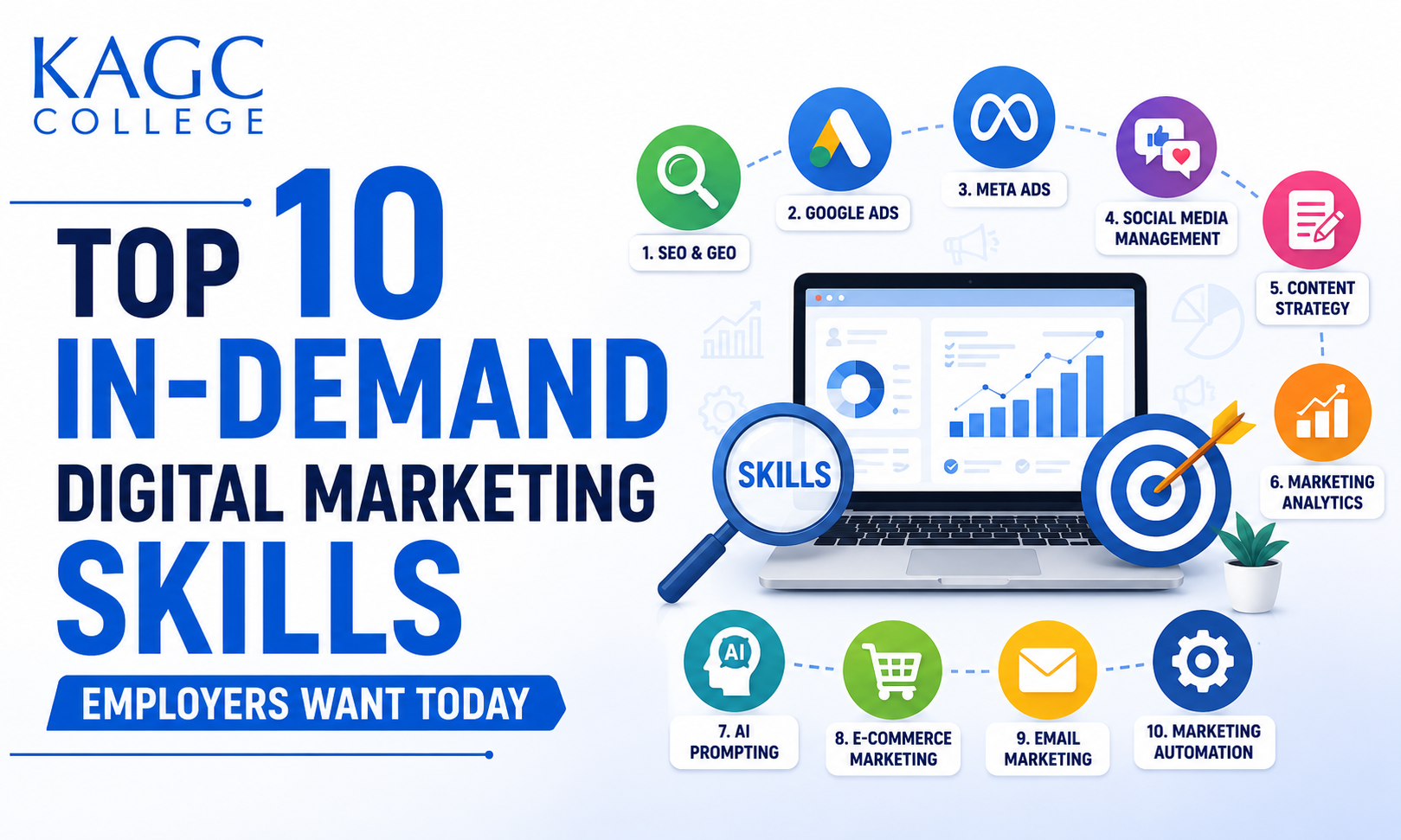
Areas such as:
- Website Development & SEO
- Search Engine Marketing (SEM)
- Social Media Marketing
- E-Commerce Marketing
- Marketing Analytics & AI
represent the core skills employers actively seek in today’s digital marketing workforce.
The objective is not simply to understand marketing theory, but to develop the ability to execute marketing activities confidently and effectively.
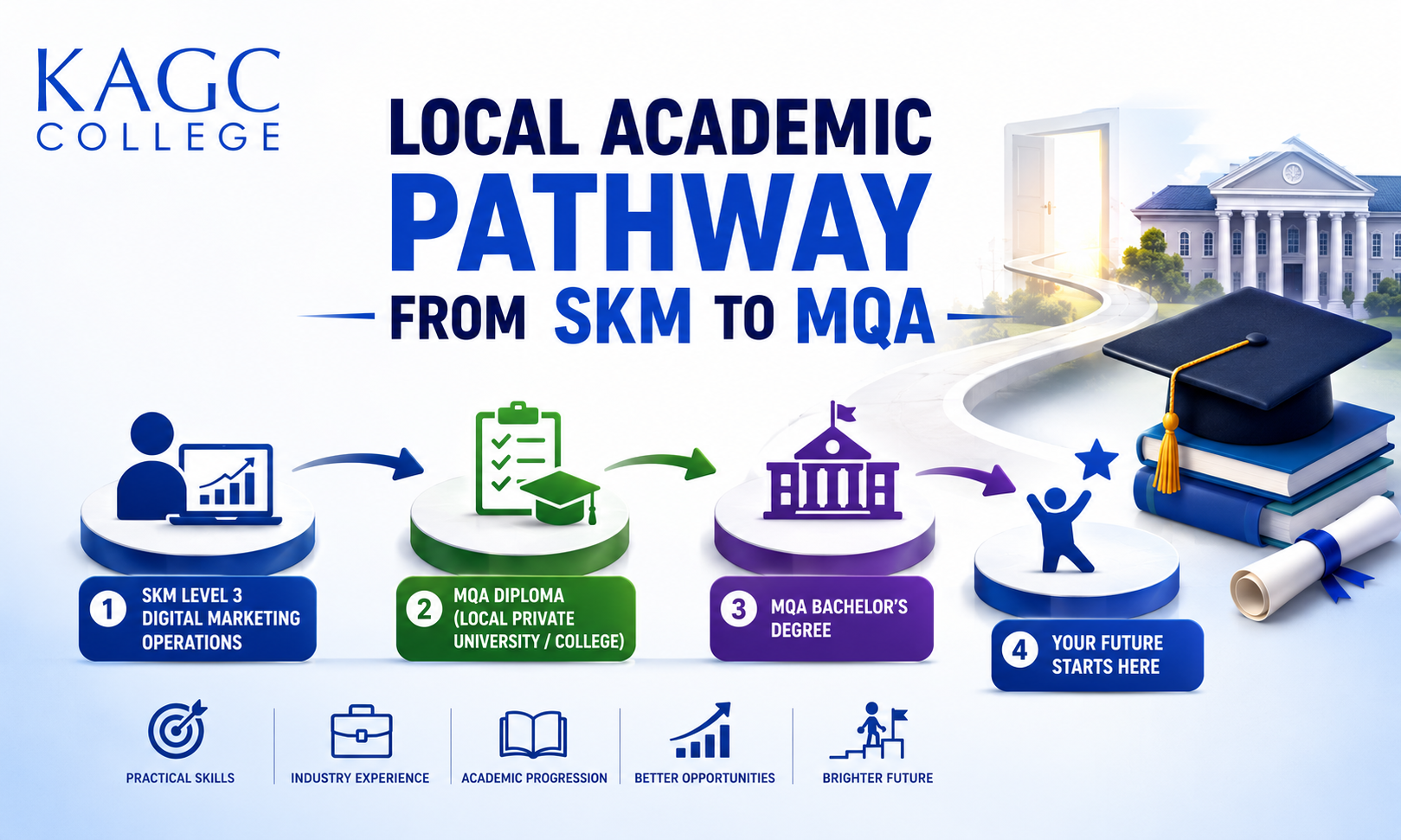
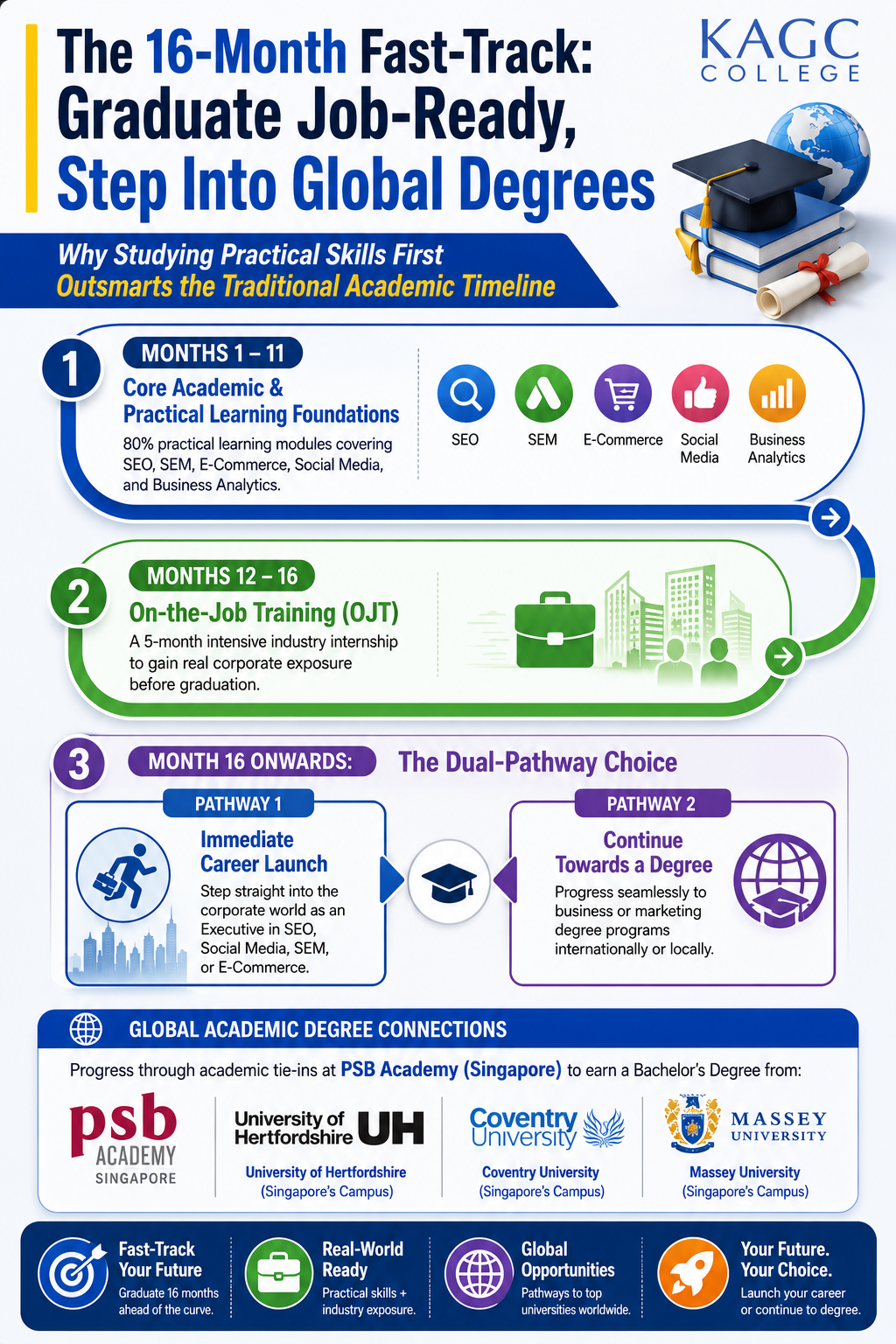
Infographic 3: The Fast-Track Pathway to Employment and Degree Progression
A common misconception is that students must choose between practical skills and academic progression.
In reality, modern TVET pathways increasingly offer both.
The third infographic demonstrates how learners can first develop practical competency, workplace experience, and professional portfolios before deciding whether to enter employment or continue towards a degree.
This dual-pathway approach offers several advantages:
- Earlier workforce exposure
- Faster employability
- Stronger professional portfolios
- Continued academic flexibility
- Lower opportunity cost
Rather than delaying practical experience until after graduation, students begin building career-ready competencies from the start of their educational journey.
This creates a foundation that supports both immediate employment and long-term academic advancement.
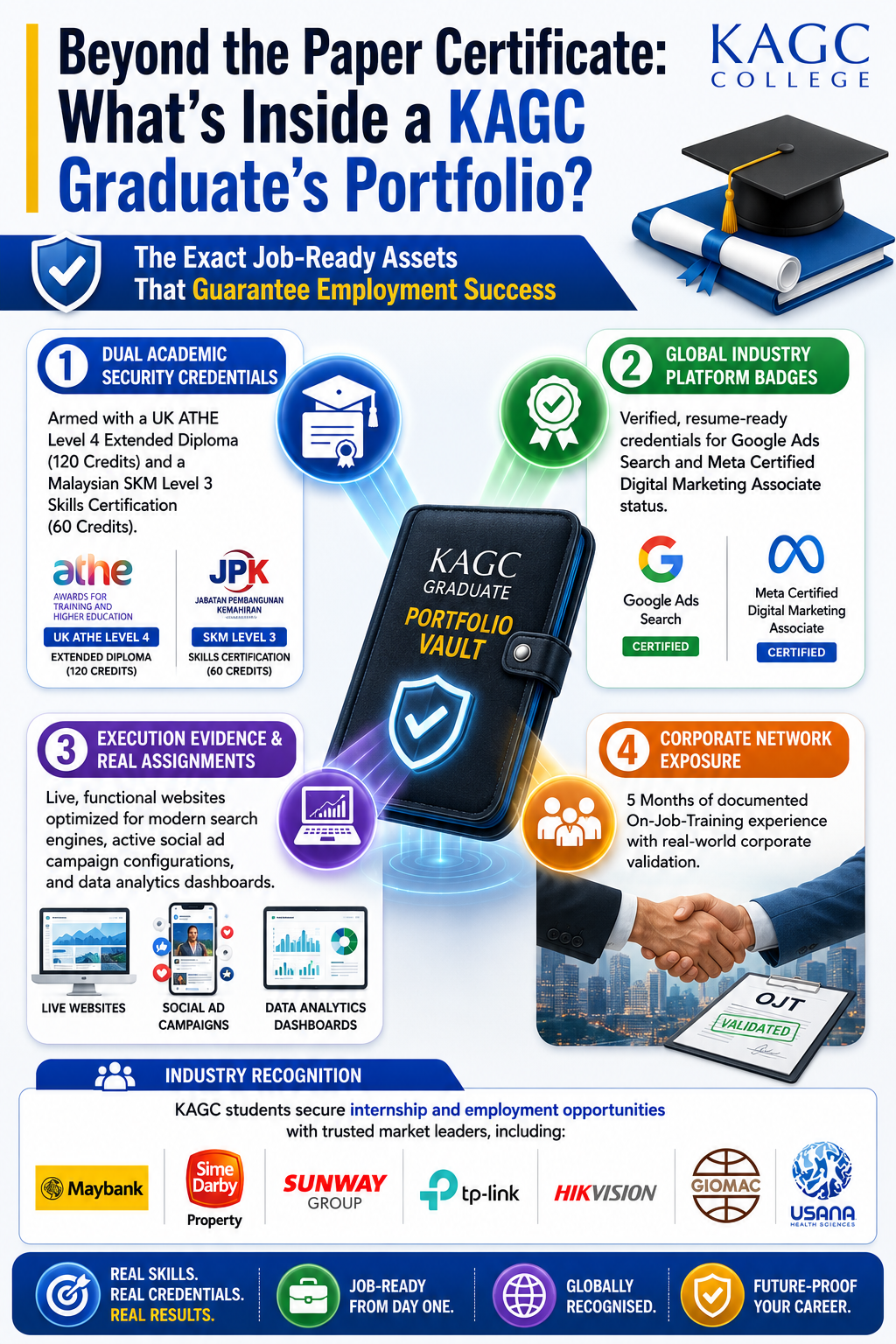
Infographic 4: What Is Actually Inside a Job-Ready Portfolio?
One of the most misunderstood aspects of digital marketing education is the role of portfolios.
A portfolio is more than a collection of coursework.
It is evidence of competency.
The fourth infographic highlights the components that employers frequently evaluate when assessing candidates for digital marketing positions.
Examples include:
Professional Qualifications
Industry-recognised credentials help validate technical knowledge and platform competency.
Industry Certifications
Certifications such as Google Ads and Meta credentials demonstrate familiarity with widely used marketing platforms.
Execution Evidence
Live websites, SEO projects, advertising campaigns, analytics reports, and content strategies show practical application of knowledge.
Workplace Experience
Internships and On-the-Job Training (OJT) provide exposure to real business environments and client expectations.
Together, these assets create a more complete picture of a candidate’s readiness for professional employment.
Why Employers Are Prioritising Skills-Based Hiring
Across industries, employers are increasingly adopting skills-based hiring practices.
This trend is particularly visible in digital marketing because technology, consumer behaviour, advertising platforms, and AI tools evolve rapidly.
Businesses need professionals who can:
- Adapt quickly
- Learn continuously
- Execute effectively
- Analyse data
- Solve problems
- Deliver measurable results
A qualification remains valuable, but it is often the combination of qualifications, certifications, portfolios, and practical experience that makes a candidate stand out.
The Future of Digital Marketing Careers
The future of digital marketing belongs to professionals who can combine:
Technical Skills
- SEO & GEO
- Google Ads
- Meta Advertising
- Analytics
- Marketing Automation
Strategic Thinking
- Campaign planning
- Customer acquisition
- Conversion optimisation
- Business growth
Human Skills
- Communication
- Creativity
- Problem-solving
- Leadership
These are precisely the competencies employers seek when building modern marketing teams.
Key Takeaway
Degrees demonstrate education. Portfolios demonstrate capability.
In today’s digital marketing industry, the most employable candidates are often those who can combine academic knowledge with practical execution skills, professional certifications, workplace experience, and a portfolio of real work.
That is why more employers are moving toward skills-based hiring—and why practical TVET pathways continue to gain recognition as an effective route to employment, career progression, and lifelong learning.
Explore More Digital Marketing Resources
Interested in learning more about the profession?