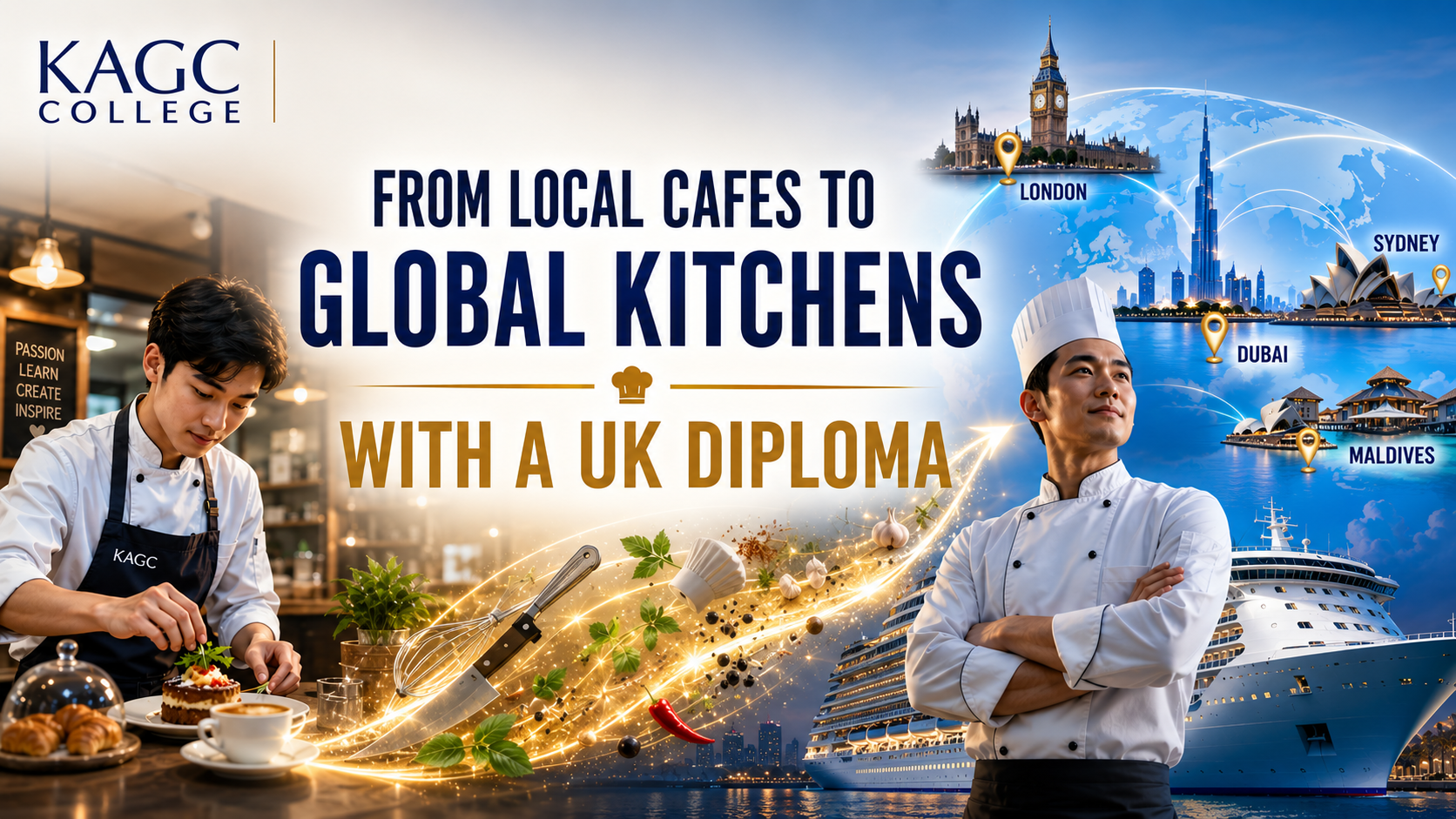


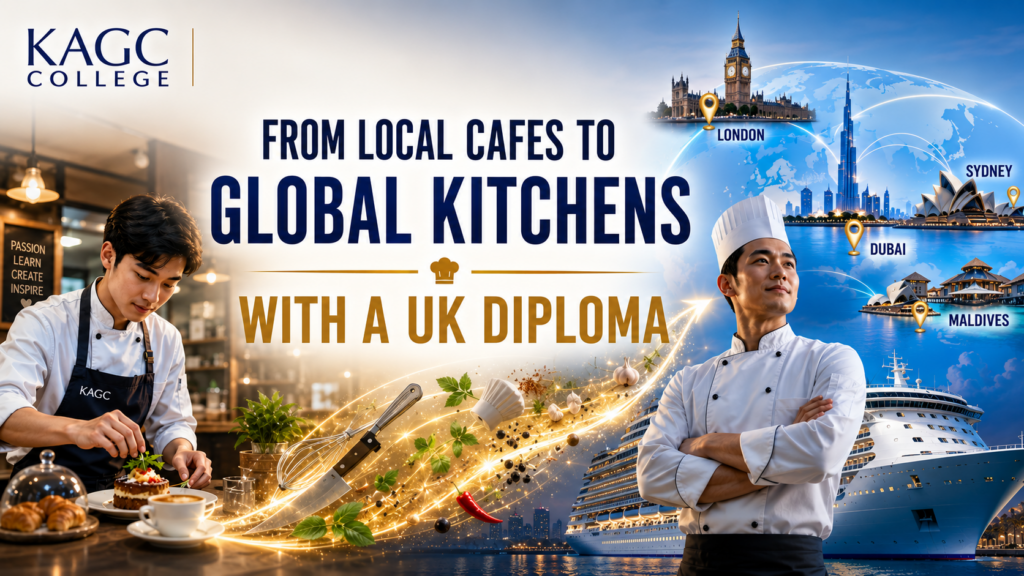
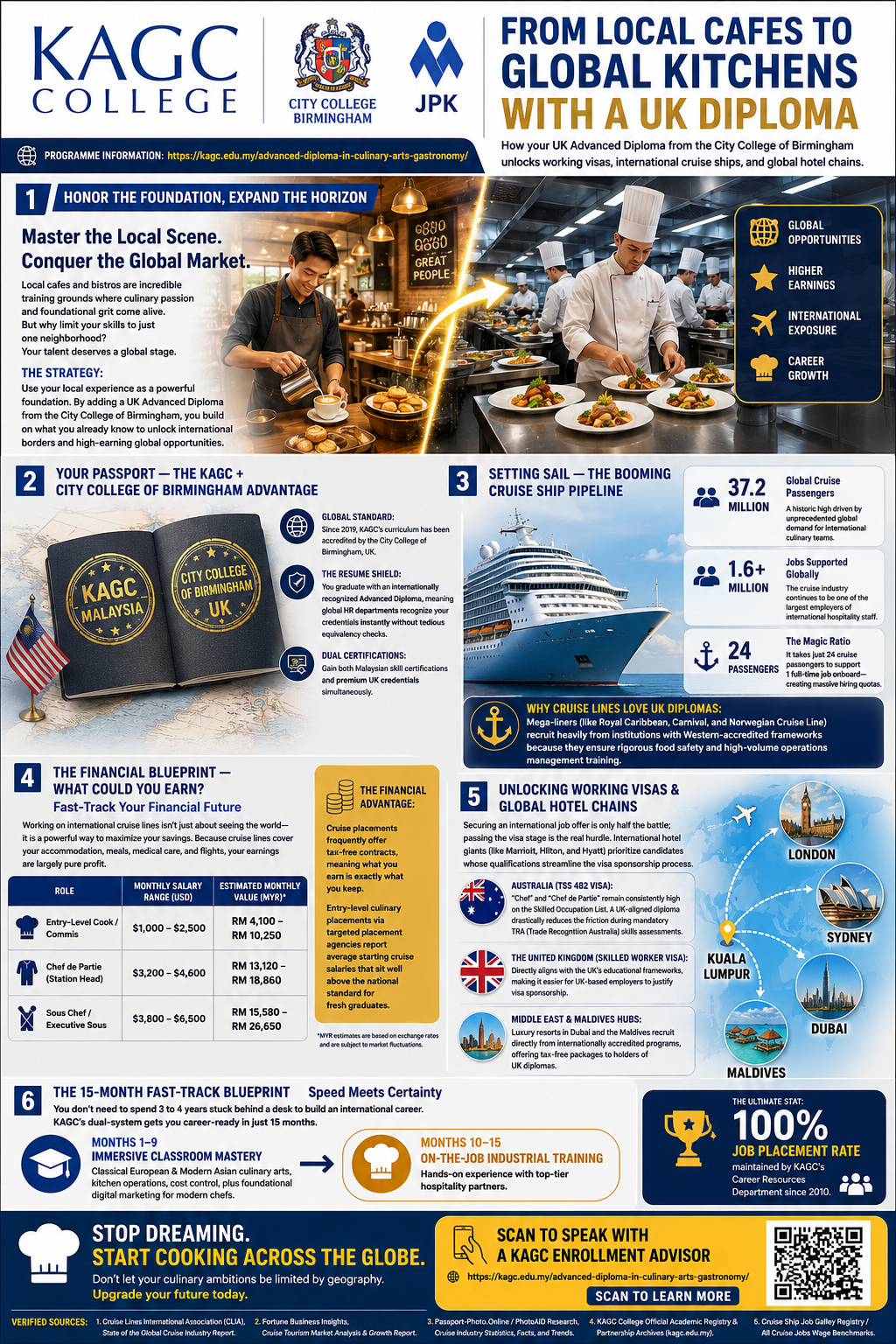
From Local Cafés to Global Kitchens: How a UK Culinary Diploma Can Open International Career Opportunities
Discover How Internationally Recognised Qualifications, Industry Experience, and Practical Skills Can Expand Your Culinary Career Beyond Malaysia
For many aspiring chefs, the dream begins in a local café, bakery, restaurant, or hotel kitchen.
It is where they first develop their passion for food, learn professional discipline, and discover the excitement of working in a fast-paced culinary environment.
However, today’s hospitality industry extends far beyond local opportunities.
The modern culinary profession has become increasingly global. Luxury hotels in Dubai, international resorts in the Maldives, cruise ships travelling across continents, and hospitality groups operating across Asia-Pacific are continuously searching for skilled culinary professionals who can meet international standards.
As global tourism continues to recover and expand, demand for qualified chefs remains strong in many parts of the world.
For ambitious culinary professionals, the question is no longer:
“Can I become a chef?”
The real question is:
“How far can my culinary career take me?”
The Culinary Industry Is No Longer Limited by Geography
Unlike many professions that are tied to local regulations or national licensing requirements, culinary skills are highly transferable across international markets.
A chef who understands professional kitchen operations, food safety standards, culinary techniques, cost control, and team management can often apply those skills anywhere in the world.
This is one reason why hospitality remains one of the most internationally mobile industries.
Today, chefs can build careers in:
- Luxury hotels
- International resorts
- Fine dining restaurants
- Cruise ships
- Airline catering companies
- Theme parks and integrated resorts
- International restaurant groups
- Private culinary services
As tourism continues to grow globally, skilled culinary professionals remain essential to delivering exceptional guest experiences.
Why Employers Look Beyond Cooking Skills
Many aspiring chefs assume that technical cooking ability alone is enough to secure international opportunities.
While culinary skills are essential, international employers often evaluate candidates based on a much broader set of competencies.
Global hospitality employers typically seek individuals who demonstrate:
Professional Kitchen Experience
Employers want chefs who understand real commercial kitchen environments and can perform consistently under pressure.
International Food Safety Standards
Food safety, hygiene, and operational compliance are critical requirements across global hospitality organisations.
Teamwork and Communication Skills
International kitchens often employ multicultural teams where communication and collaboration are essential.
Cost Control and Operational Awareness
Modern employers value chefs who understand profitability, food costing, inventory management, and operational efficiency.
Adaptability and Professionalism
Working overseas often requires individuals to adapt to different cuisines, cultures, customer expectations, and workplace environments.
This is why many international employers prefer candidates who possess both practical experience and recognised qualifications.
Why Internationally Recognised Qualifications Matter
One of the biggest challenges aspiring chefs face when applying for overseas opportunities is demonstrating that their skills meet internationally accepted standards.
Employers receiving applications from around the world need a way to assess candidates objectively.
Recognised qualifications help bridge this gap.
An internationally recognised culinary qualification provides employers with greater confidence that a candidate has received structured training in:
- Culinary techniques
- Kitchen operations
- Food safety
- Hospitality standards
- Professional kitchen management
This can strengthen employability when competing against candidates from different countries.
While qualifications alone do not guarantee employment, they often serve as an important foundation that supports career progression and international mobility.
The Growing Demand for Culinary Professionals Worldwide
The global hospitality industry continues to create opportunities for qualified culinary talent.
Several sectors remain particularly active in recruiting chefs:
Luxury Hotels and Resorts
International hotel brands regularly seek trained culinary professionals to support their restaurants, banquet operations, and specialty dining concepts.
Destinations such as:
- Dubai
- Singapore
- Maldives
- Australia
- New Zealand
- United Kingdom
often require skilled chefs with professional training and relevant experience.
Cruise Ship Industry
The cruise industry employs thousands of culinary professionals across various kitchen departments.
Cruise ship roles provide opportunities to:
- Gain international experience
- Work with multicultural teams
- Learn large-scale food production
- Travel while building a career
For many young chefs, cruise ships serve as a gateway into global hospitality careers.
International Restaurant Groups
Many multinational restaurant brands continue expanding throughout Asia-Pacific, the Middle East, and Europe.
These organisations frequently seek culinary professionals who can contribute to maintaining consistent quality standards across multiple locations.
Building a Foundation for International Opportunities
While overseas employment may seem like a distant goal for some students, preparation begins much earlier than many realise.
International employers often look for candidates who possess a combination of:
Technical Culinary Competence
Strong cooking fundamentals remain the foundation of every successful culinary career.
Industry Experience
Hands-on workplace experience demonstrates the ability to apply knowledge in real operational environments.
Professional Qualifications
Recognised certifications help validate technical and professional competencies.
Workplace Readiness
Employers value candidates who can communicate effectively, solve problems, and contribute positively to team performance.
The strongest candidates typically combine all four elements.
Why Practical Training Matters
Many hospitality employers place significant emphasis on practical experience.
This is because commercial kitchens operate differently from classroom environments.
Professional kitchens require individuals who can:
- Work efficiently under pressure
- Follow standard operating procedures
- Collaborate with team members
- Maintain quality consistency
- Manage time effectively
Practical industry exposure allows learners to develop these workplace competencies before entering the job market.
As a result, graduates who possess both formal training and industry experience often transition more smoothly into professional roles.
From Student to Global Culinary Professional
Many internationally successful chefs begin their careers in local kitchens.
What separates them is often their willingness to invest in developing broader skills, gaining recognised qualifications, and pursuing opportunities beyond their comfort zones.
The pathway may begin with:
- Formal culinary education
- Practical kitchen training
- Industry placements
- Local hospitality experience
- International opportunities
Each stage builds upon the previous one.
Over time, local experience can evolve into regional opportunities, and regional experience can open doors to global careers.
Why KAGC College’s Advanced Diploma in Culinary Arts & Gastronomy Supports Global Career Development
KAGC College’s Advanced Diploma in Culinary Arts & Gastronomy is designed to prepare learners for today’s modern hospitality industry.
The programme combines:
Dual Qualification Pathway
- UK Advanced Diploma awarded through City College of Birmingham
- Malaysian Skills Certification (SKM)
Practical Skills Development
- Professional culinary techniques
- International cuisine preparation
- Modern gastronomy exposure
- Food safety and kitchen operations
Business & Leadership Skills
- Food costing
- Inventory management
- Menu engineering
- Kitchen operations management
Industry-Based Learning
- Extensive practical training
- Structured On-the-Job Training (OJT)
- Exposure to real hospitality environments
This combination helps graduates develop the technical, operational, and professional competencies valued by employers both locally and internationally.
The World Is Bigger Than One Kitchen
A culinary career no longer needs to be confined to a single city, restaurant, or country.
The hospitality industry offers opportunities to work across cultures, cuisines, and continents.
Whether your ambition is to work in a luxury resort in the Maldives, join an international cruise line, contribute to a Michelin-starred kitchen, or build a career with a global hospitality group, the journey often begins with the right education, practical experience, and professional foundation.
Today’s local culinary student can become tomorrow’s global hospitality professional.
The question is not whether international opportunities exist.
The question is whether you are prepared when those opportunities arrive.
Frequently Asked Questions (FAQ)
Can Malaysian chefs work overseas?
Yes. Many Malaysian chefs pursue opportunities in hotels, resorts, cruise ships, restaurants, and hospitality groups across Asia, the Middle East, Europe, and Oceania.
Do I need a diploma to work overseas as a chef?
While some employers prioritise experience, recognised qualifications can strengthen employability and help demonstrate professional competency to international employers.
What countries hire culinary professionals?
Common destinations include Singapore, Australia, New Zealand, Dubai, the Maldives, the United Kingdom, and international cruise lines.
Is a UK culinary qualification recognised internationally?
UK qualifications are widely recognised and can help support employment applications in various international hospitality markets, depending on employer requirements and local regulations.
What skills do international hospitality employers look for?
Employers typically seek candidates with culinary competence, food safety knowledge, workplace professionalism, teamwork skills, operational awareness, and relevant industry experience.
Can a culinary diploma help me work on a cruise ship?
A culinary qualification combined with practical industry experience can strengthen applications for cruise ship culinary positions and demonstrate readiness for professional kitchen environments.
Explore More Culinary Arts & Gastronomy Resources
Interested in learning more about the profession?