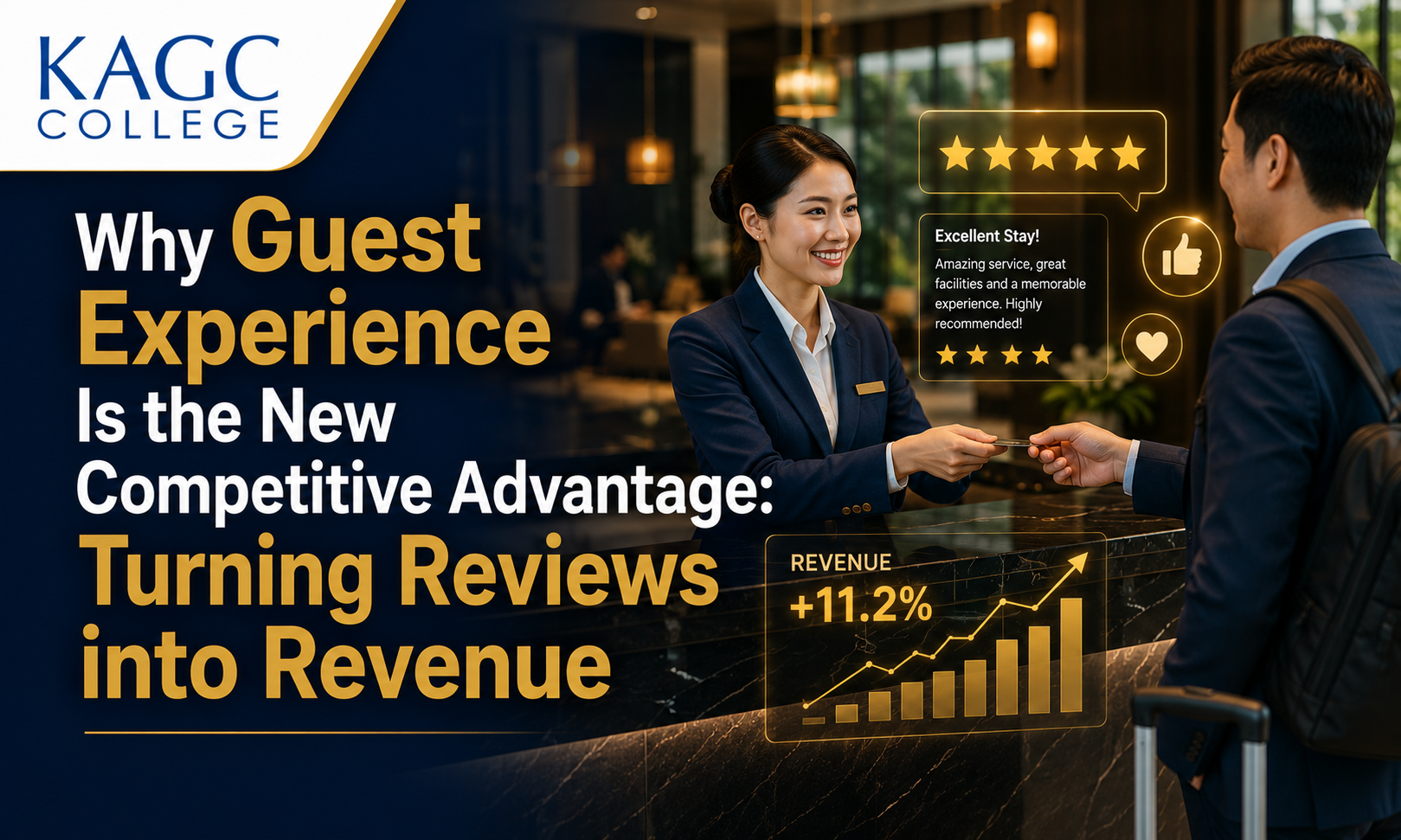


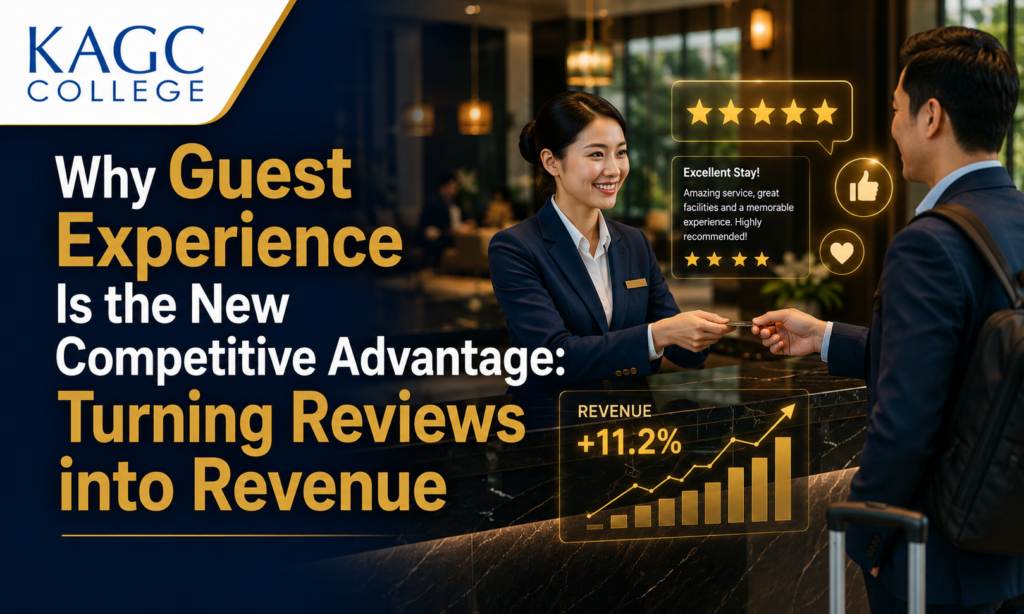
Why Guest Experience Is the New Competitive Advantage
For decades, the hospitality industry operated under a simple golden rule: smile, greet the guest warmly, and keep the lobby clean. If your frontline staff excelled at basic, face-to-face customer service, your hotel succeeded.
But that traditional script has been completely flipped.
Today’s travelers are more digitally independent, highly connected, and far less forgiving of friction points. They expect check-ins to happen via smartphones, room environments to adjust automatically, and service breakdowns to be resolved before they even pack their bags.
Because of this shift, guest experience management (GX) is no longer just an operational duty left to front-of-house staff—it has evolved into a highly technical, data-driven commercial strategy. Properties across the global tourism sector no longer compete solely on physical luxury or prime real estate. They compete on how flawlessly they map, measure, and optimize every digital and physical interaction a traveler has with their brand.
1. Customer Service vs. Guest Experience Management (GX)
To understand why this field has become a core competitive weapon, we must first clear up a major piece of industry misinformation: Customer Service and Guest Experience are not the same thing.
- Customer Service is transactional, reactive, and isolated. It focuses on human interactions at specific points in time—such as a receptionist processing a credit card or a waiter taking a food order. It answers the question: “Was the staff member polite when fixing a problem?”
- Guest Experience Management (GX) is holistic, proactive, and intensely data-driven. It encompasses the entire psychological and physical journey of the consumer, spanning from the moment they spot a travel video on TikTok to months after they return home. It integrates software, space design, operational workflows, and predictive analytics to answer the question: “Was the entire journey frictionless, memorable, and personalized?”
The Operational Breakdown
| Feature | Traditional Customer Service | Modern Guest Experience (GX) |
| Nature of Strategy | Reactive (Waiting for a guest to complain or make a request). | Proactive (Anticipating needs using data history and predictive profiles). |
| Data Utilization | Minimal. Relying on basic guest registration details on a paper log or simple PMS. | High. Merging CRM data, digital footprints, and automated sentiment tracking. |
| Friction Handling | In-person service recovery after a confrontational complaint at the desk. | Automated digital alerts that flag service lapses in real time before checkout. |
| Primary Goal | Operational compliance and baseline customer satisfaction. | Maximizing Customer Lifetime Value (CLV) and driving direct direct bookings. |
2. The Hard Math of Online Reputation Management (ORM)
Many legacy operators still treat guest satisfaction as a “soft” metric that looks good on a bulletin board but doesn’t affect the balance sheet. However, modern commercial analytics prove that a hotel’s online reputation directly dictates its pricing power and asset value.
The Cornell Benchmark
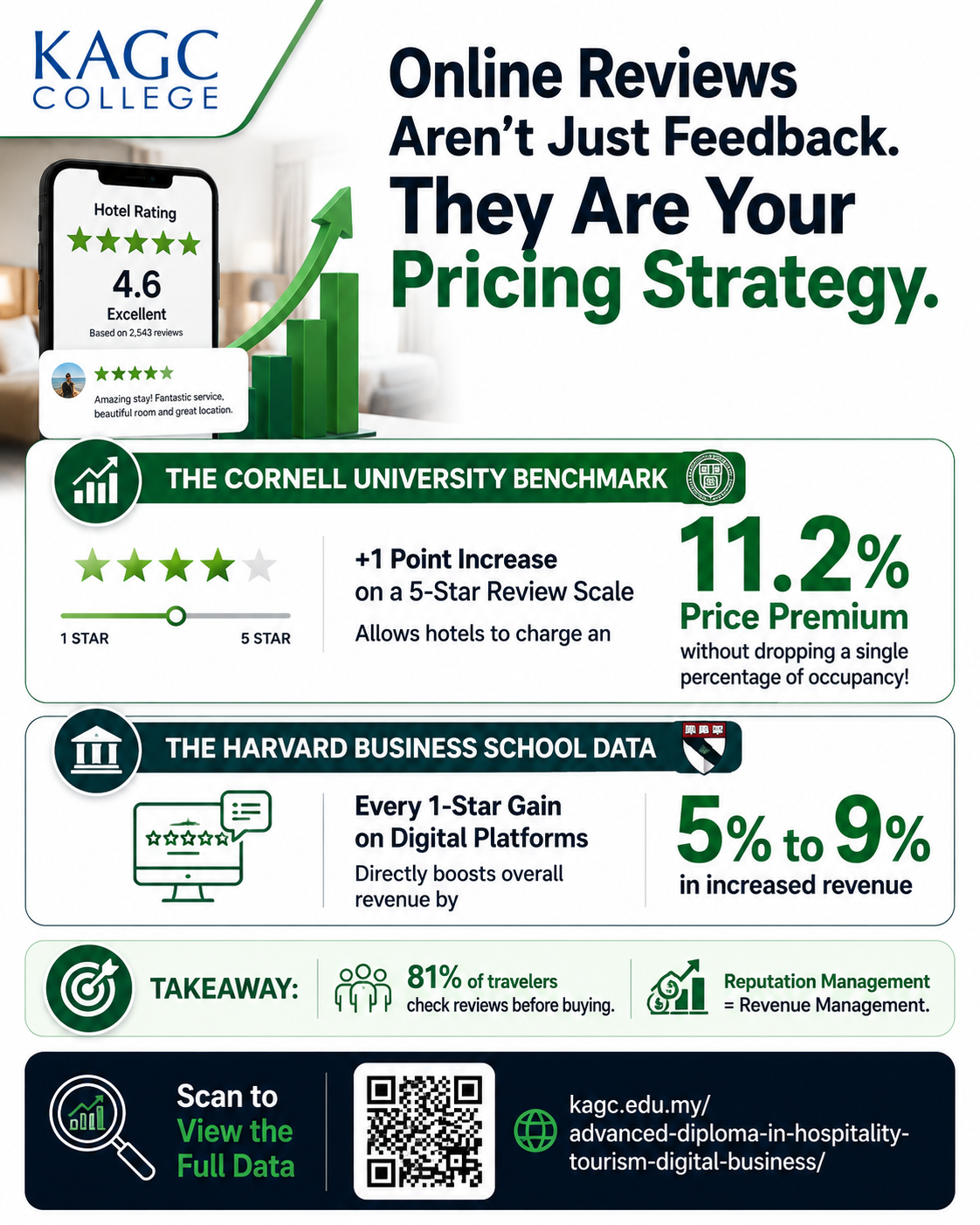
Global research from the Cornell University Center for Hospitality Research uncovered a direct link between digital sentiment and hotel financial performance. By cross-referencing millions of data points from online review aggregators with transactional hotel records, researchers established two baseline rules:
- The RevPAR Multiplier: A 1% increase in a hotel’s Global Review Index (GRI)—a proprietary metric that aggregates scores across platforms like Google, TripAdvisor, and Booking.com—correlates with up to a 1.42% increase in Revenue Per Available Room (RevPAR).
- The Price Premium Card: If a property improves its online review score by just 1 point on a 5-point scale (e.g., moving from an average rating of 3.3 to 4.3 on Google Maps), it can increase its room rates by a massive 11.2% without suffering a drop in occupancy or losing market share to competitors.
The Financial Cost of a 0.5-Star Drop
To see how this plays out in the real world, consider the financial trajectory of a mid-tier, 150-room boutique hotel in Kuala Lumpur operating with an average room rate of RM350 and a steady 70% occupancy rate.
Daily Rooms Sold: 150 rooms × 70% = 105 rooms occupied per night.
Annual Room Revenue Baseline: 105 rooms × RM350 × 365 days = RM13,413,750.
If severe service friction, slow Wi-Fi, or neglected maintenance causes the hotel’s public Google rating to drop from 4.2 down to 3.7, the property loses its competitive edge. Harvard Business School data shows a 1-star drop cuts top-line revenue by up to 9%. Even a conservative 5% revenue drop from negative reviews translates to an immediate loss of RM670,687 per year straight out of the hotel owner’s pocket.
With data confirming that 81% of global travelers read reviews before completing a booking, and nearly half flatly refuse to book a hotel with zero recent reviews, hotel online reputation management has officially shifted from a public relations task to a strict revenue discipline.
3. Deep-Dive: The 5-Stage Customer Journey Map
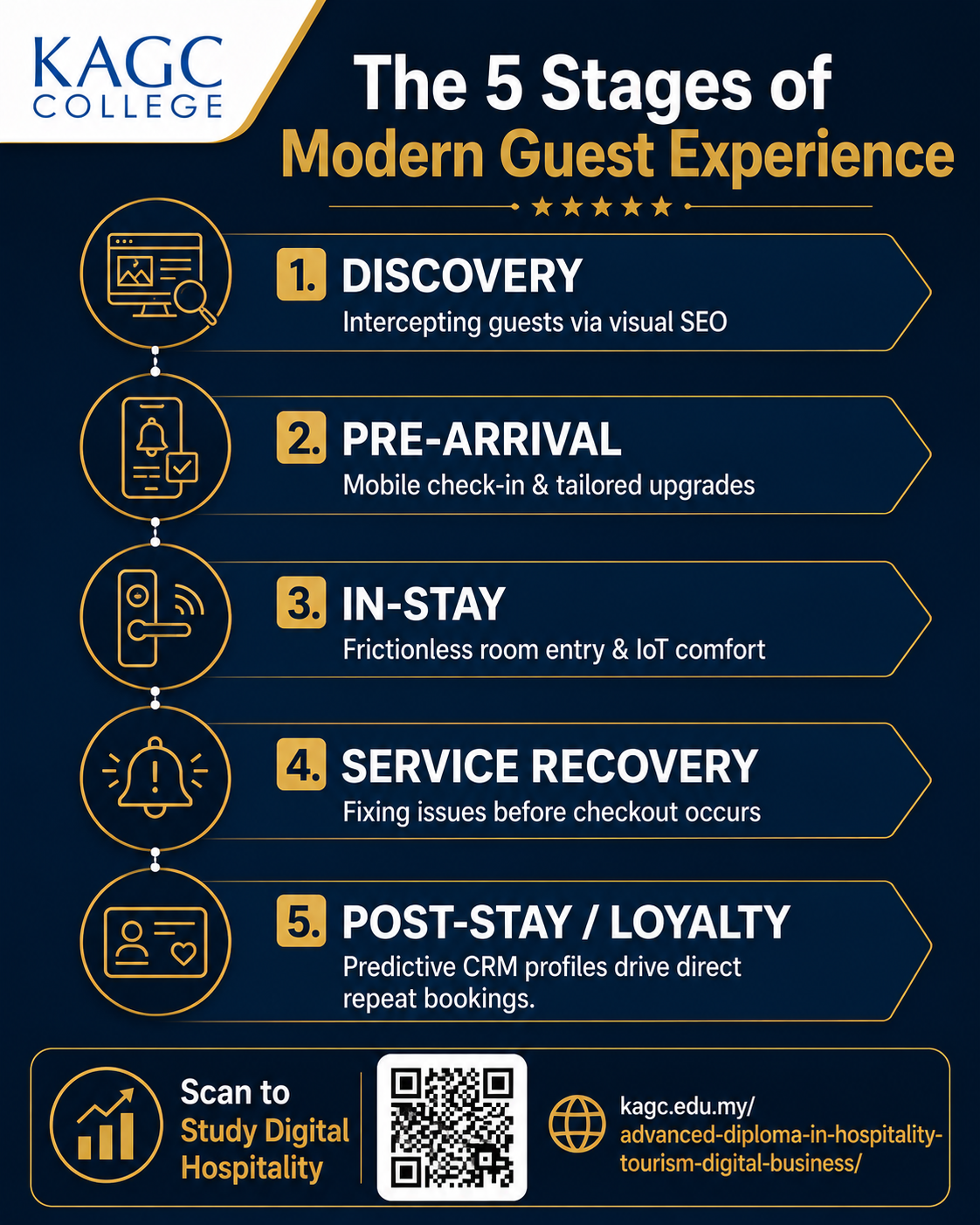
To build an ecosystem that consistently manufactures five-star reviews, modern revenue managers rely on customer journey mapping hospitality frameworks. Instead of viewing a hotel stay as a single block of time, they map out an end-to-end loop consisting of five distinct digital and physical phases.
Inspiration & Discovery ➔ Pre-Arrival Optimization ➔ The In-Stay Lifecycle ➔ In-Stay Service Recovery ➔ Post-Stay Loyalty Loop
Phase 1: Inspiration & Discovery (The Digital Intercept)
The guest journey begins long before money changes hands. It starts when a traveler searches for destinations online or browses visual platforms like Instagram and Xiaohongshu.
- The Strategy: Hotels optimize their digital business assets via hyper-local visual SEO, structured schema markup, and engaging user-generated content (UGC).
- The Friction Point: If a property relies on stale stock photos, a slow website, or has unverified, unmanaged business profiles on Google Maps, the traveler will skip them entirely.
Phase 2: Pre-Arrival Optimization (The Frictionless Booking)
Once a consumer decides to book, the focus shifts to minimizing drop-offs on the booking engine and establishing a seamless digital relationship.
- The Strategy: Deploying automated smart confirmation systems that upsell tailored add-ons (e.g., airport transfers, spa packages, or late check-outs) based on the guest’s specific travel profile (business vs. leisure).
- The Friction Point: A confusing, multi-step checkout screen that lacks localized mobile payment options (like Touch ‘n Go eWallet, Apple Pay, or secure instant bank transfers). This pushes the guest directly back into the arms of high-commission Online Travel Agencies (OTAs).
Phase 3: The In-Stay Lifecycle (The Frictionless Stay)
This is the physical execution phase, but it is heavily supported by digital business infrastructure and the Internet of Things (IoT).
- The Strategy: Transitioning standard operations over to a mobile-first environment. Guests check in via the hotel’s app, receive a digital smartphone room key, and control their room’s smart lighting, blinds, and climate settings directly from their personal mobile device.
- The Friction Point: Forcing an exhausted international traveler to stand in a slow reception line for 20 minutes to sign paper forms just to get a physical plastic room card.
Phase 4: In-Stay Service Recovery (The Proactive Intercept)
This is the most critical phase for protecting a hotel’s public rating. Traditional hotels only discover a guest was unhappy after reading a scathing one-star review on TripAdvisor. Modern smart hotels fix the problem while the guest is still on the property.
- The Strategy: Deploying automated micro-surveys via the hotel’s guest Wi-Fi portal or a WhatsApp trigger 2 hours after check-in, asking a single question: “How is your stay so far?” If the guest inputs a low score, an automated high-priority alert is immediately pushed to the Duty Manager’s tablet, triggering an instant, in-person service recovery (e.g., sending a complimentary dessert or swapping a noisy room).
- The Friction Point: Ignoring silent, unhappy guests, which guarantees they will vent their frustration publicly online once they check out.
Phase 5: Post-Stay Loyalty & Advocacy (The Data Loop)
The journey does not end at check-out. The final phase feeds clean customer data right back into the top of the funnel to secure long-term value.
- The Strategy: Integrating Guest Experience Platforms (like Medallia or ReviewPro) with a centralized Customer Relationship Management (CRM) database. When a guest leaves a positive review, the CRM logs their preferences—such as their room type preference, dietary needs, or traveling patterns. The next time they plan a trip, automated email marketing systems deliver a highly personalized direct booking offer, bypassing OTA commissions entirely.
- The Friction Point: Sending generic, spammy, unpersonalized monthly newsletters that offer zero relevant value to the recipient, causing them to unsubscribe from hotel loyalty programs.
4. The Unified Tech Stack Powering Modern GX
A flawless guest experience cannot rely on human memory alone. It requires a modern, integrated software ecosystem where different programs instantly share data with one another.
Figure 1: The unified tech stack powering modern guest experience
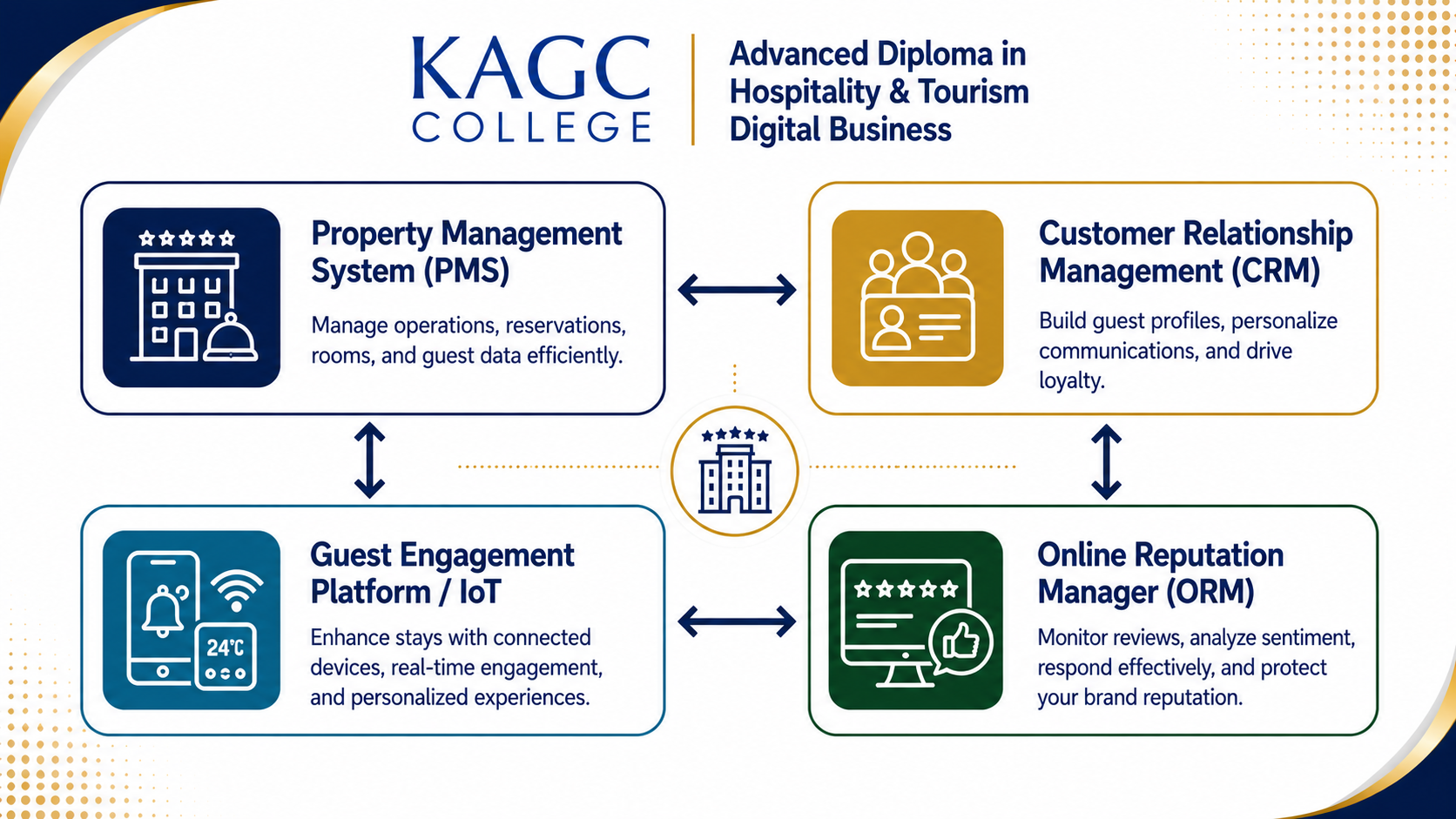
- Property Management System (PMS): The operational core of the hotel. It monitors real-time room availability, check-out statuses, and billing profiles.
- Customer Relationship Management (CRM): The memory bank of the hotel group. It archives clean guest profiles, personal preferences, transaction histories, and communication records across multiple stays.
- Guest Engagement Platforms & IoT Infrastructure: The real-time messaging and automation engine. It powers automated WhatsApp concierges, interactive smart TV systems, mobile room keys, and automated in-room environmental settings.
- Online Reputation Management (ORM) Software: The market listener. It uses natural language processing (NLP) to constantly scrape user reviews from hundreds of travel sites, automatically translating foreign languages and running sentiment analysis to show management exactly which operational areas need improvement.
5. Transition from Frontline Staff to Corporate Experience Strategist
The massive rise of automation, self-service check-in apps, and keyless room entry systems has fundamentally changed why human capital is needed in the hospitality workforce. Because digital workflows now handle repetitive, administrative tasks, staff are liberated to focus entirely on high-value human connections, cultural curation, and advanced business analytics.
This is why top hospitality brands are aggressively hiring a new class of professional: the Guest Experience Strategist. These modern corporate executives do not stand stationary behind a physical lobby desk all day. Instead, they sit in regional corporate headquarters analyzing sentiment data, optimizing user-journey algorithms, managing hotel online reputation management metrics, and restructuring multi-property operational standards.
If your goal is to step into these future-proof corporate paths, a traditional, service-only hospitality training certificate won’t cut it. You must combine operational foundations with a cutting-edge digital business course.
The KAGC Advantage: Shifting from Service to Strategy
At KAGC College, our specialized Advanced Diploma in Hospitality & Tourism Digital Business is meticulously structured to address these precise economic changes. We train our students to think like commercial growth analysts rather than entry-level service employees.
- 70% Applied Learning Strategy: Move past old textbooks. Spend your time building live customer journey maps, interpreting real reputation analytics dashboards, and structuring predictive digital loyalty campaigns that generate actual customer value.
- A Balanced 15-Month Fast Track: Optimize your educational timeline with 9 months of intensive, project-driven classroom learning, followed immediately by 6 full months of Industry On-the-Job Training (OJT) inside corporate hotel divisions, premium resorts, or travel-tech platforms.
- Elite International Validation: Graduate with an internationally recognized qualification endorsed by the City College of Birmingham (UK Level 4), giving your resume global mobility across competitive hospitality and tourism networks worldwide.
The modern traveler values control, speed, and personalized experiences. Stop training for old-school service shifts—learn how to orchestrate the digital and analytical strategies that turn guest experiences into sustainable business growth.
Explore More Hospitality & Tourism Digital Business Resources
Interested in learning more about the profession?