

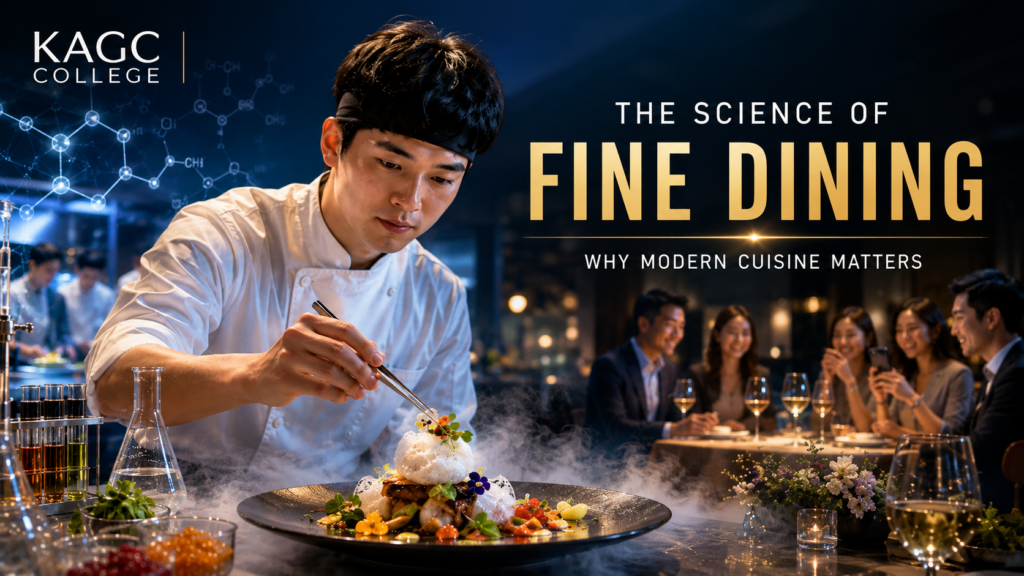
How Culinary Innovation, Food Science, and Creativity Are Shaping the Future of Fine Dining Careers.
For generations, culinary excellence was measured by a chef’s ability to master traditional cooking techniques, execute recipes consistently, and deliver exceptional flavours.
While these skills remain essential, today’s culinary industry has evolved far beyond traditional cooking.
Modern diners are no longer seeking only delicious food. They are increasingly looking for memorable dining experiences, unique presentations, innovative concepts, and stories that create emotional connections with every dish.
This shift has given rise to one of the most exciting developments in contemporary gastronomy:
Modern Cuisine and Molecular Gastronomy.
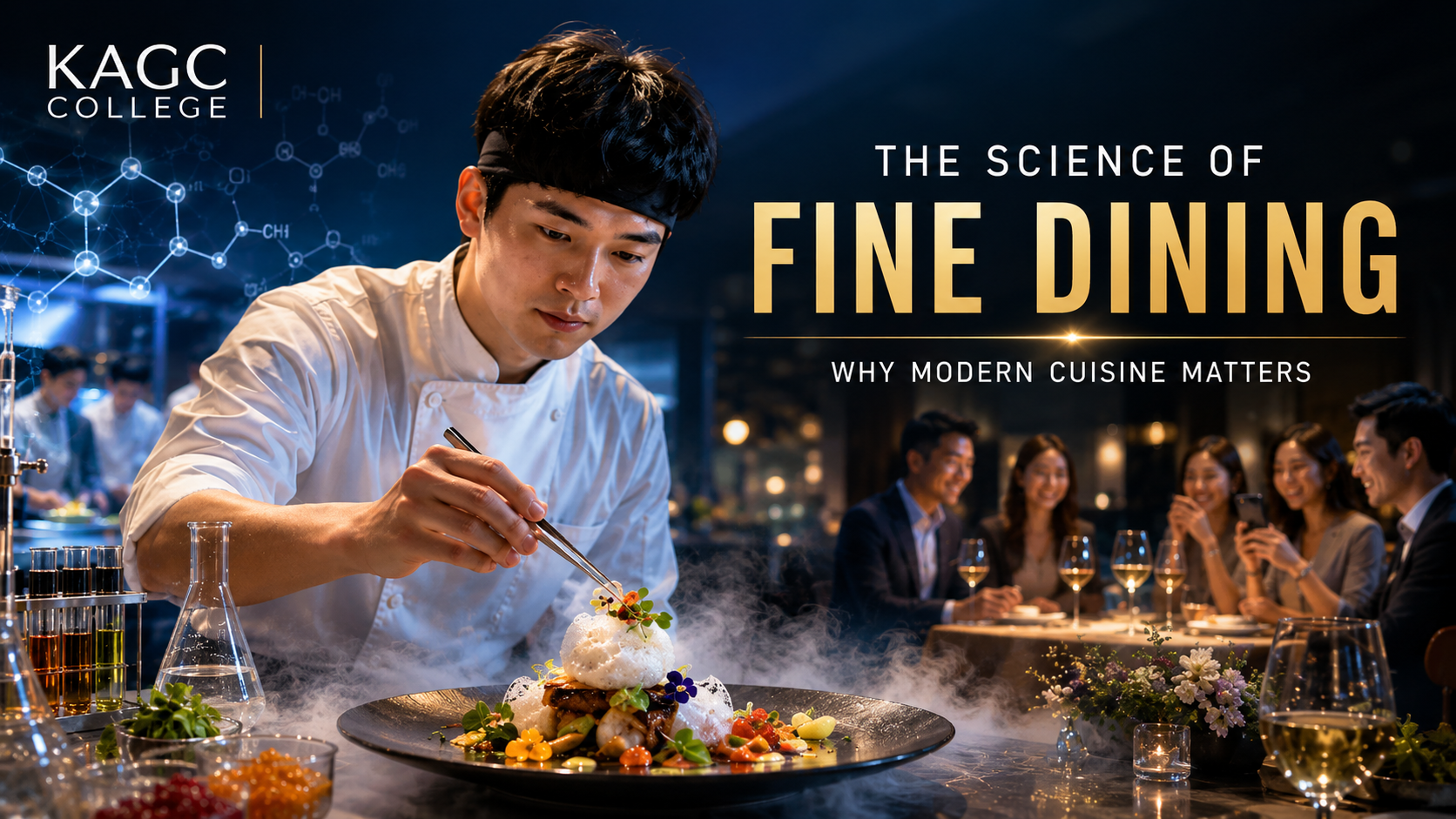
These disciplines combine culinary artistry with scientific understanding, enabling chefs to create experiences that challenge expectations, stimulate curiosity, and elevate dining into a form of entertainment.
For aspiring culinary professionals, understanding modern cuisine is no longer reserved exclusively for Michelin-starred restaurants.
It is rapidly becoming a valuable skill set that can differentiate chefs, increase career opportunities, and prepare them for the future of the hospitality industry.
What Is Modern Cuisine?
Modern cuisine refers to contemporary culinary approaches that combine traditional cooking principles with innovation, creativity, technology, and food science.
Unlike classical cooking, which focuses primarily on established techniques and recipes, modern cuisine encourages chefs to experiment with:
- Ingredients
- Textures
- Temperatures
- Presentation styles
- Cooking technologies
- Guest experiences
The goal is not simply to make food look different.
The objective is to enhance flavour, improve consistency, create memorable experiences, and challenge conventional perceptions of dining.
Modern cuisine has influenced some of the world’s most celebrated restaurants and continues to shape culinary trends across luxury hotels, fine dining establishments, and premium hospitality brands.
What Is Molecular Gastronomy?
One of the most recognised branches of modern cuisine is molecular gastronomy.
Molecular gastronomy explores the scientific principles behind cooking and food preparation.
It examines how ingredients behave during cooking and how chefs can manipulate physical and chemical reactions to create unique dining experiences.
Examples include:
Spherification
Transforming liquids into small spheres that resemble caviar while bursting with flavour when consumed.
Foams and Espumas
Creating light, flavourful foams that deliver intense taste with a unique texture.
Gelification
Using food-safe gelling agents to create innovative textures and presentations.
Sous Vide Cooking
Preparing food under precise temperature control to achieve exceptional consistency and quality.
Liquid Nitrogen Applications
Using extremely low temperatures to create dramatic presentations and innovative dessert experiences.
While these techniques may appear complex, they are built upon a deeper understanding of food science and culinary principles.
Why Modern Cuisine Matters to Restaurants
Many people assume modern cuisine exists purely for visual appeal.
In reality, culinary innovation can create significant business value.
Restaurants operate in a highly competitive environment where differentiation is essential.
When diners have hundreds of dining options available, memorable experiences often become a deciding factor.
Innovative culinary concepts can help businesses:
Create Stronger Brand Identity
Unique dining experiences help restaurants stand out from competitors.
Increase Customer Satisfaction
Guests are more likely to remember experiences that surprise and delight them.
Encourage Repeat Visits
Memorable dining experiences often lead to repeat business and customer loyalty.
Generate Social Media Exposure
Visually impressive dishes frequently attract attention across digital platforms and user-generated content.
Support Premium Pricing
Restaurants offering distinctive experiences can often command higher perceived value.
For hospitality businesses, culinary innovation is increasingly viewed as both a creative and commercial advantage.
Why Employers Value Chefs Who Understand Culinary Innovation
The hospitality industry is continuously evolving.
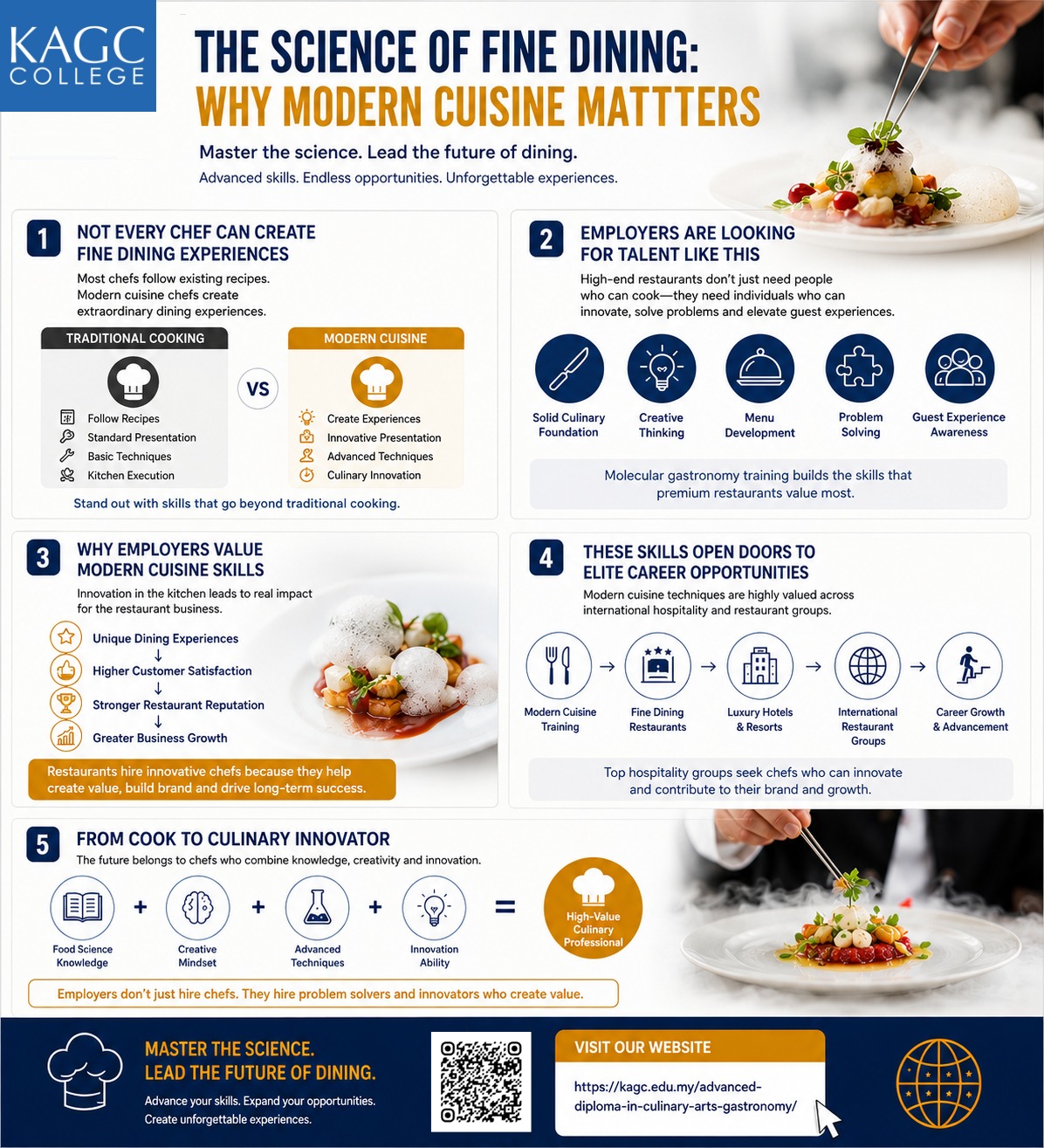
Employers increasingly seek culinary professionals who can contribute ideas, solve problems, and create value beyond routine kitchen operations.
Chefs who understand modern cuisine often develop competencies such as:
- Creative thinking
- Problem-solving
- Product development
- Presentation design
- Menu innovation
- Adaptability
- Research and experimentation
These skills are highly valuable because they contribute directly to business growth and customer satisfaction.
Rather than simply executing recipes, innovative chefs help organisations remain competitive in changing markets.
Fine Dining Is About More Than Expensive Food
A common misconception is that fine dining is simply expensive food served in luxurious environments.
In reality, fine dining focuses on delivering exceptional experiences through a combination of:
Culinary Excellence
Precise execution and technical mastery.
Creativity
Unique concepts that distinguish a restaurant from competitors.
Service Quality
Professional guest engagement and attention to detail.
Storytelling
Creating emotional connections through food and presentation.
Consistency
Delivering exceptional standards every time.
Modern cuisine plays an important role in helping restaurants achieve these objectives.
This is one reason why many fine dining establishments actively seek chefs with exposure to culinary innovation and gastronomy concepts.
The Growing Demand for Culinary Innovators
As consumer expectations evolve, hospitality employers increasingly value chefs who can contribute to menu development and culinary creativity.
Opportunities can be found across various sectors, including:
Fine Dining Restaurants
Restaurants competing on experience and culinary distinction.
Luxury Hotels
Premium hospitality brands offering signature dining concepts.
Integrated Resorts
Large-scale hospitality destinations focused on guest experiences.
Cruise Lines
International culinary environments that continuously innovate to meet diverse guest expectations.
Culinary Research and Development
Food companies developing new products, concepts, and dining experiences.
The ability to combine culinary expertise with innovation is becoming a valuable competitive advantage in many hospitality sectors.
From Cook to Culinary Innovator
Many aspiring chefs begin their careers focused primarily on mastering technical skills.
While these foundations remain critical, long-term career growth increasingly depends on broader capabilities.
The culinary professionals who progress into leadership roles often possess the ability to:
- Develop new menu concepts
- Improve operational efficiency
- Solve culinary challenges
- Create unique dining experiences
- Lead innovation initiatives
These individuals move beyond simply preparing food and become contributors to business strategy, customer experience, and brand development.
Modern cuisine education helps cultivate these competencies.
Why Modern Cuisine Skills Can Accelerate Career Growth
In competitive hospitality environments, employers often evaluate candidates based on the value they can contribute to the organisation.
A chef who can:
- Execute recipes consistently
- Understand food science
- Create innovative dishes
- Contribute to menu development
- Enhance guest experiences
will often possess greater career flexibility than someone limited to operational execution alone.
This can lead to opportunities in:
- Fine dining restaurants
- Luxury hospitality brands
- Executive chef pathways
- Culinary consultancy
- Product development
- International hospitality organisations
As the hospitality industry continues to evolve, innovation increasingly becomes a differentiator that separates culinary technicians from future culinary leaders.
How KAGC College Prepares Future Culinary Innovators
KAGC College’s Advanced Diploma in Culinary Arts & Gastronomy is designed to equip learners with both traditional culinary foundations and modern industry-relevant skills.
The programme combines:
Culinary Fundamentals
- Classical cooking techniques
- International cuisine preparation
- Professional kitchen operations
Modern Gastronomy Exposure
- Molecular gastronomy concepts
- Culinary innovation techniques
- Advanced food presentation
Business & Leadership Skills
- Food costing
- Menu engineering
- Inventory management
- Kitchen operations
Industry Experience
- Practical training
- Real-world kitchen exposure
- Structured On-the-Job Training (OJT)
This balanced approach helps learners develop the technical, creative, and operational competencies required by today’s hospitality industry.
The Future of Dining Belongs to Innovators
The world’s most influential chefs are not remembered solely because they followed recipes.
They are remembered because they challenged conventions, introduced new ideas, and transformed how people experience food.
As hospitality continues to evolve, the demand for chefs who combine technical mastery with creativity, innovation, and scientific understanding will continue to grow.
Whether your ambition is to work in a luxury hotel, a fine dining restaurant, an international resort, or even launch your own culinary concept, understanding modern cuisine can provide a significant advantage.
The future of dining is not only about cooking food.
It is about creating experiences.
And those who understand the science behind those experiences will be best positioned to lead the next generation of culinary innovation.
Frequently Asked Questions (FAQ)
What is modern cuisine?
Modern cuisine combines traditional cooking techniques with innovation, creativity, technology, and food science to create unique dining experiences.
What is molecular gastronomy?
Molecular gastronomy is the study of the scientific principles behind cooking and food preparation. It explores how ingredients interact and how culinary techniques can be used to create new textures, flavours, and presentations.
Is molecular gastronomy only used in Michelin-starred restaurants?
No. While it is common in fine dining, many modern culinary techniques are increasingly used in hotels, resorts, premium restaurants, and contemporary food businesses.
Why do employers value chefs with modern cuisine skills?
These skills demonstrate creativity, problem-solving ability, innovation, and a deeper understanding of food science, all of which contribute to menu development and guest experience enhancement.
Can learning modern cuisine improve career opportunities?
Yes. Exposure to culinary innovation can support career progression into fine dining, luxury hospitality, culinary research, menu development, and leadership roles within the hospitality industry.
Do I need strong cooking fundamentals before learning molecular gastronomy?
Yes. Modern cuisine builds upon traditional culinary foundations. A strong understanding of cooking techniques, ingredients, and kitchen operations is essential before applying advanced gastronomy concepts.
Explore More Culinary Arts & Gastronomy Resources
Interested in learning more about the profession?