
Advanced Diploma in Culinary Arts & Gastronomy
Go Beyond the Stove. Master the Kitchen. Lead the Industry.

Don‘t just learn to cook. Earn a prestigious UK Diploma and a Malaysian skills certification (SKM) that transforms you from a line cook into a fine-dining F&B leader. Graduate job-ready with real-world management skills.
Graduate in just 15 months with:
- Dual Qualification: UK Advanced Diploma (City College of Birmingham) & Malaysian SKM Certification
- 9 Months Intensive Practical & Management Training
- 6-Month High-Tier Industry On-the-Job Training (OJT)
- Modern Cuisine (Molecular Gastronomy) & F&B Costing Expertise
- Direct Pathways to 5-Star Hotels and Global Kitchens
The Kitchen vs. The Career
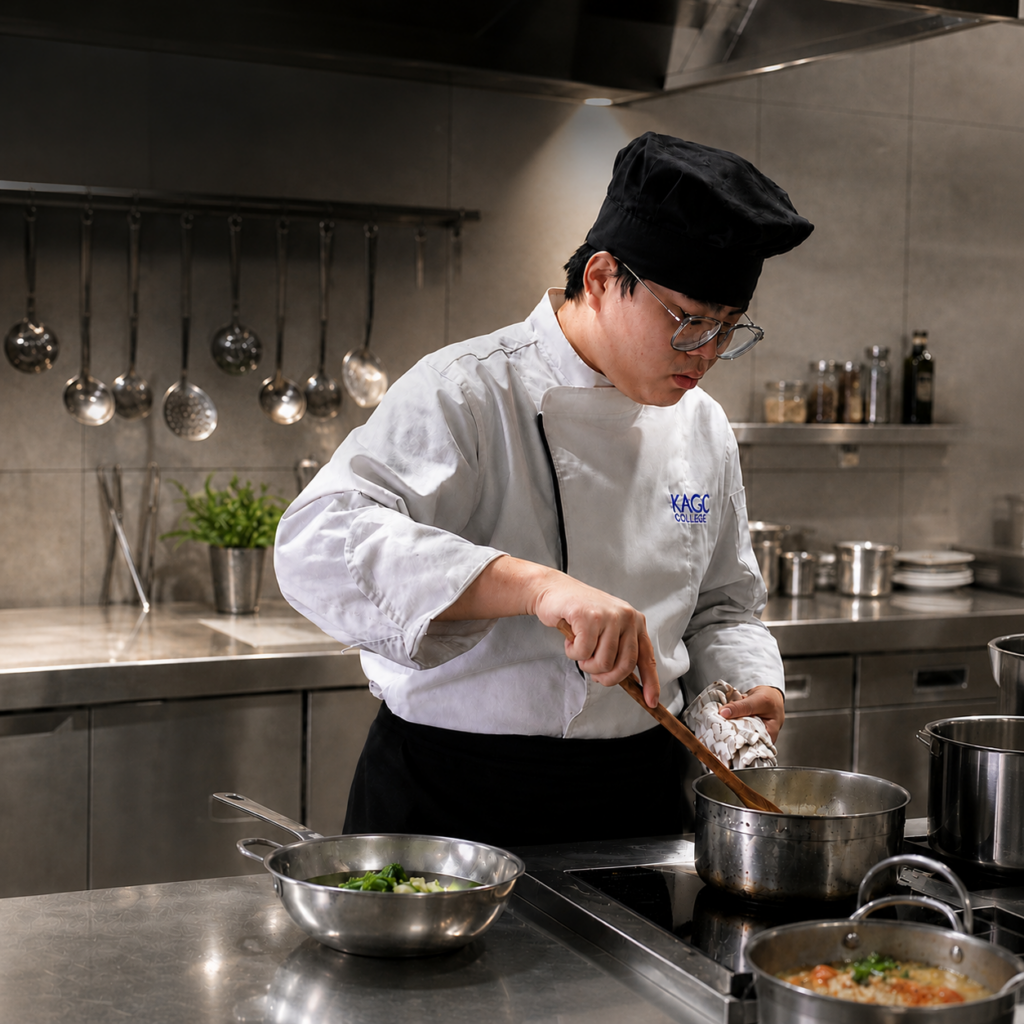
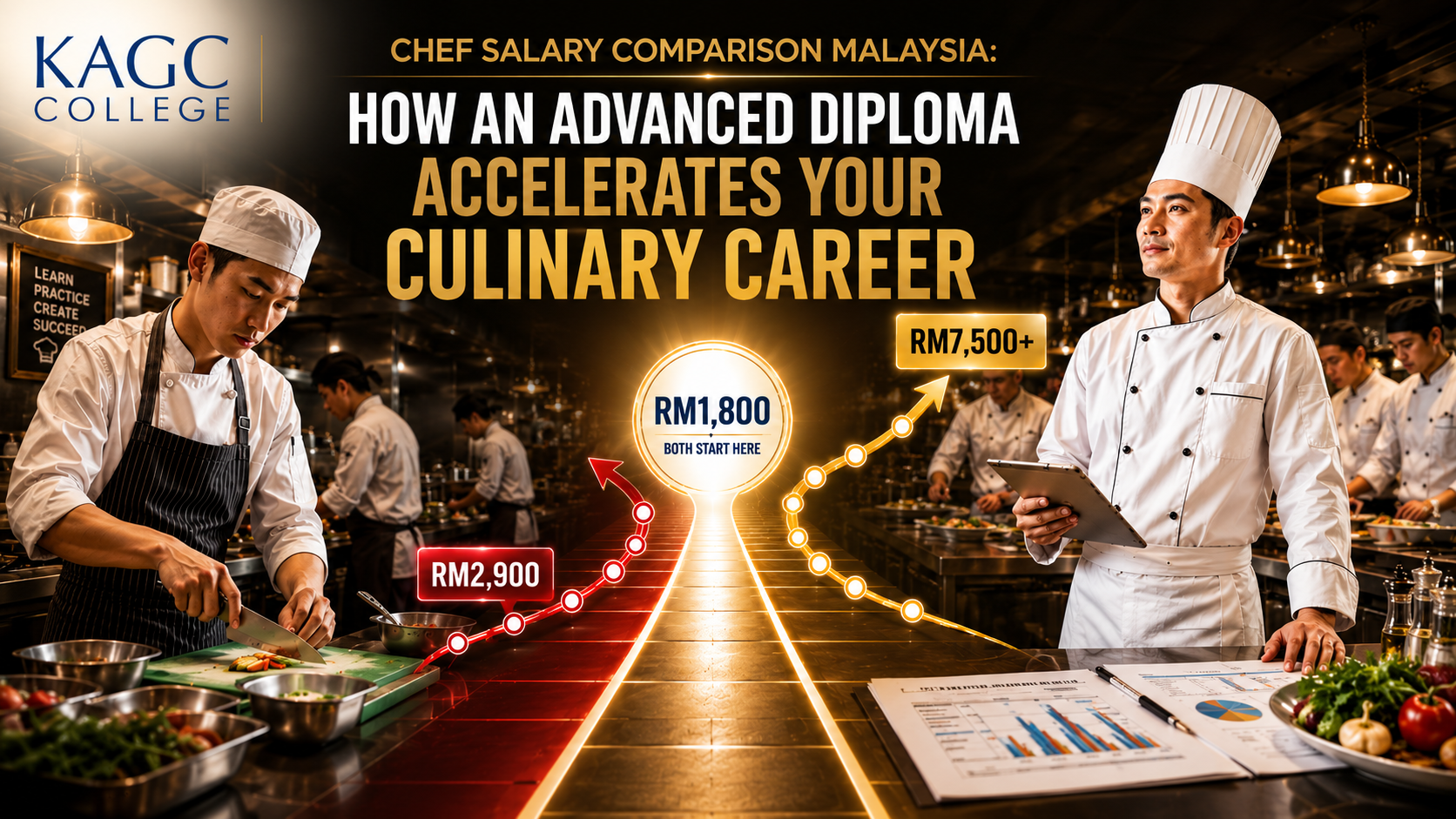
It is a common misconception that working in a kitchen doesn’t require a diploma. While it is true that both an uncertified cook and a diploma graduate might start at a similar salary, their career ceilings are vastly different.
An uncertified cook learns by memorization and is often capped at a Junior Cook role. A KAGC dual-diploma graduate understands modern gastronomy, food costing, kitchen management, and business operations. Our program ensures that “having a skill so you won’t starve” evolves into “having the management expertise to lead an F&B empire.”
Why Parents and Students Choose KAGC
We protect your investment by ensuring graduates don't just know how to chop vegetables; they know how to run a profitable, high-end kitchen. KAGC students graduate with:
- International Prestige: A UK Advanced Diploma from the City College of Birmingham.
- Local Recognition: Government-backed TVET SKM Certification.
- 6 Months of High-End Industry Experience (OJT).
- A Clear Pathway to Management Roles (Sous Chef, Executive Chef).
Program Highlights
Duration
15 Months (9 Months In-Class Training + 6 Months On-the-Job Training)
Learning Approach
70% Practical Learning, 30% Theory
Qualification
UK Advanced Diploma + SKM Level 2 Certification
Language Medium
English & Mandarin
About The Programme
At KAGC, Culinary Arts and Gastronomy are not taught through recipes alone.
Students learn by managing commercial kitchen workflows, engineering profitable menus, mastering the science of modern cuisine, and controlling food costs to solve real F&B business challenges.
This practical, business-focused approach allows students to develop elite, industry-relevant management and culinary skills long before graduation.
Who Should Apply?
- SPM Leavers aged 16-22 who want a hands-on, non-traditional classroom experience.
- Individuals who want to master both the art of cooking and the science of F&B management.
- Aspiring chefs aiming for the fine-dining sector who need to understand avant-garde techniques.
- Students who want to enter the workforce faster but with an internationally recognized qualification.
Course Format & Features
- 15-Month Fast-Track Programme
- 9 Months In-Class Practical & Academic Learning
- 6 Months Industry On-the-Job Training (OJT)
- 70% Practical Learning
- Beginner-Friendly (No prior experience required)
- Fine-Dining & Modern Cuisine Focus
- Professional Culinary Portfolio Development
- English & Mandarin Medium
What Does 70% Practical Learning Mean?
Commercial Kitchen Operations
Master essential knife skills, global cuisine preparation, and the high-pressure, fast-paced workflow of a professional kitchen brigade
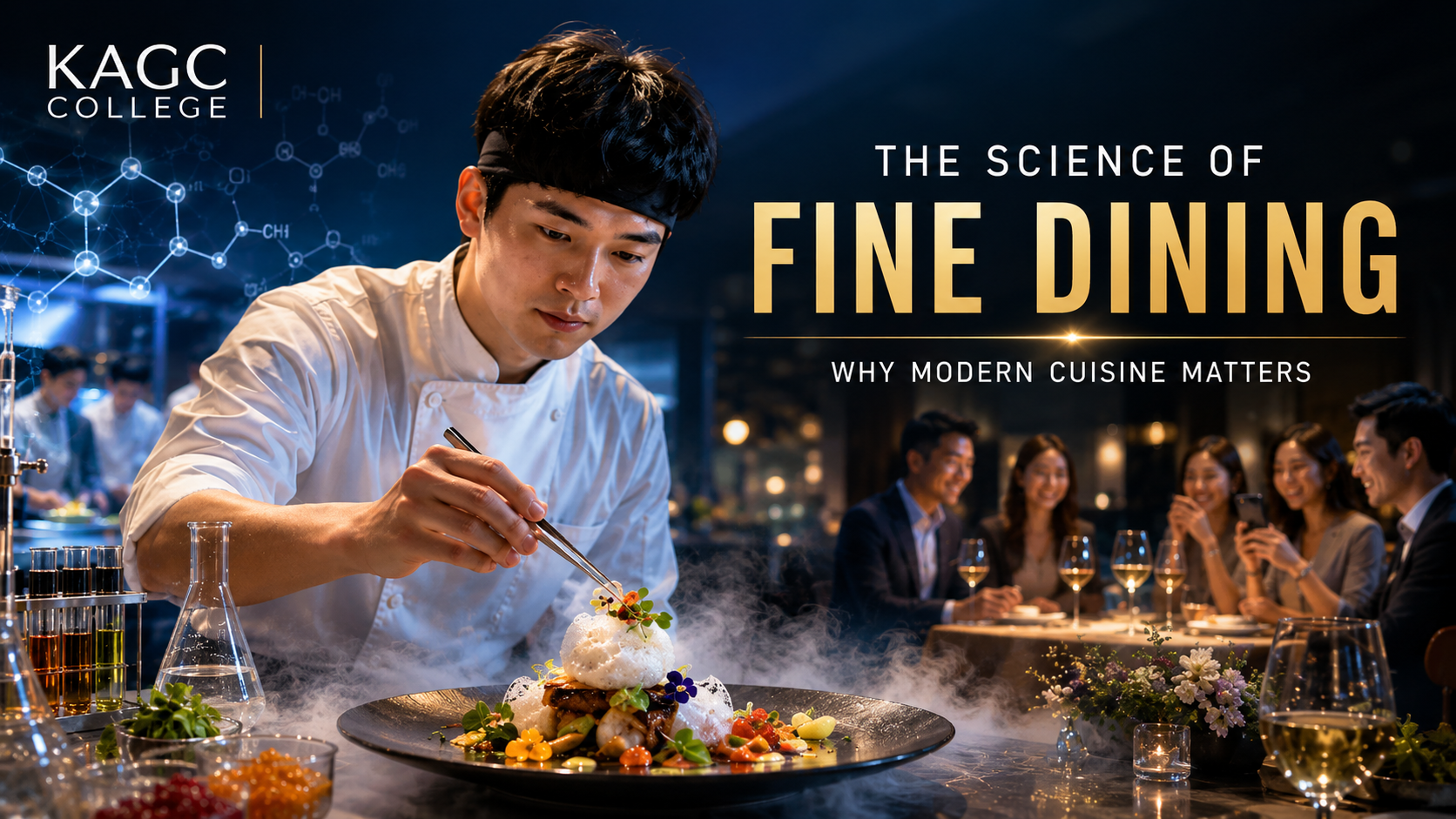
Modern Cuisine & Molecular Gastronomy
Apply scientific techniques to transform ingredients—creating foams, gels, and edible spheres to plate Michelin-style, avant-garde dishes.
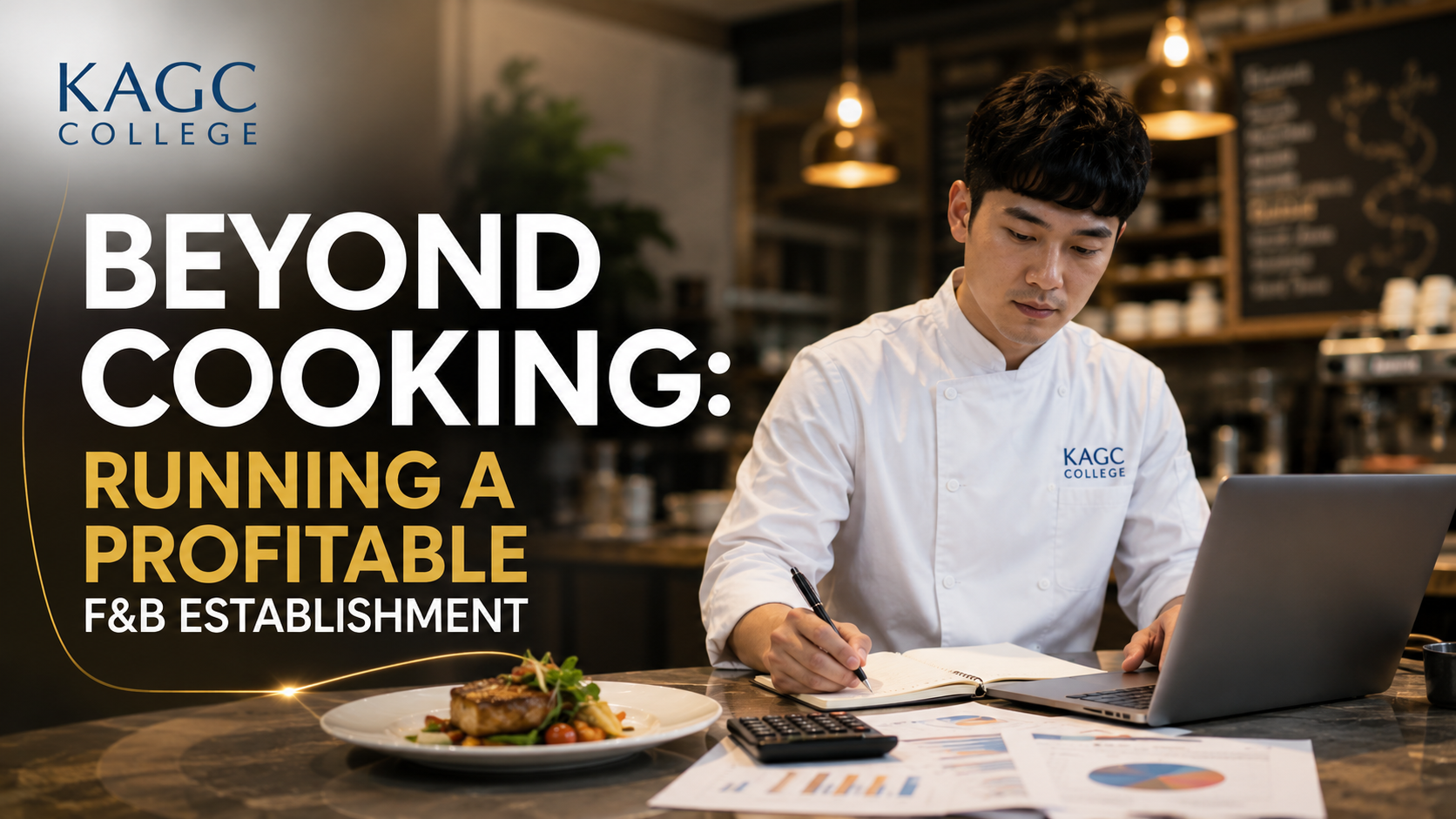
Menu Engineering & Food Costing
Design profitable menus, calculate precise ingredient costs, and implement waste control strategies to ensure a restaurant remains profitable.
F&B Business Management
Run practical restaurant service simulations, manage inventory lifecycles, and understand the daily operational logistics of a successful food business.
Industry On-the-Job Training (OJT)
Spend 6 months stepping out of the classroom and into the kitchens of 5-star hotels and premium restaurant groups to apply these skills in the real world.
What Does the Curriculum Cover?
Students learn through a combination of intense kitchen practicals and essential business modules:
| Training Focus | Key Areas Covered |
|---|---|
| Culinary Fundamentals | Knife skills, foundational cooking techniques, and global cuisine preparation. |
| Modern Cuisine | Preparing for Fine Dining: Mastering molecular gastronomy. Learn the science behind food transformation (spherification, foams, gels, and emulsions) to craft avant-garde, Michelin-style culinary experiences that high-end employers demand. |
| Kitchen Operations | Hygiene, food safety regulations, and commercial kitchen workflow. |
| F&B Business Management | Menu engineering, food costing, waste control, and profit margin analysis. |
| Leadership | Managing a kitchen brigade and HR basics for the F&B industry. |
The Reality of Progression
Without formal management and fine-dining knowledge, climbing the culinary ladder takes over a decade, if it happens at all. With the KAGC UK Advanced Diploma, graduates bypass the plateau.
Careers unlocked by this diploma:
- Commis Chef / Demi Chef (Fine Dining)
- Sous Chef / Executive Chef (Fast-tracked)
- Food & Beverage Manager
- Menu Developer / Molecular Gastronomist
- F&B Entrepreneur / Restaurateur
Industry Recognition
Graduates have secured internship and employment opportunities with Michelin-standards F&B establishments and/or leading five-stars hotel group










Explore Your Future
Why CHOOSE KAGC’S ADVANCED DIPLOMA IN CULINARY ARTS & GASTRONOMY?
We Don't Just Train Chefs. We Develop Industry-Ready Culinary Professionals.
Learn Through Practice, Just Like the Industry
- Professional culinary techniques
- International cuisine preparation
- Food safety and hygiene
- Kitchen workflow and operations
- Modern gastronomy
- Menu engineering
- Food costing
- Inventory management
- Leadership and teamwork
Instead of leaving college with theoretical knowledge alone, graduates build a professional portfolio that demonstrates the practical skills employers expect from day one.
Master Modern Culinary Innovation
- Modern Cuisine
- Molecular gastronomy
- Contemporary food innovation
- International culinary trends
- Fine dining preparation
- Professional food presentation and plating
Learn How Successful Restaurants Are Built
Outstanding food alone does not guarantee a successful restaurant.
Behind every profitable hospitality business is a team that understands operations, financial performance, customer satisfaction, and efficient resource management.
Unlike many culinary programmes that focus almost entirely on cooking techniques, KAGC prepares students to understand the commercial realities of running a modern food business.
Students receive practical experience in:
- Menu engineering and pricing strategy
- Food costing and cost control
- Purchasing and procurement
- Inventory and stock management
- Kitchen workflow optimisation
- Restaurant financial management
- Team leadership and staff supervision
- Customer experience and service quality
These concepts are reinforced through practical projects, restaurant simulations, and real operational scenarios, enabling students to understand how every business decision—from supplier selection to menu pricing—directly influences profitability and customer satisfaction.
As a result, graduates leave KAGC thinking not only like chefs, but also like future restaurant managers, hospitality leaders, and entrepreneurs.
Experience the Real Hospitality Industry Before You Graduate
- Professional workplace discipline
- Commercial kitchen operations
- Time management during live service
- Team communication
- Large-scale food production
- Industry networking
- Professional references
Graduate Earlier. Start Building Your Career Sooner.
- 9 months of intensive practical learning on campus
- 6 months of structured industry On-the-Job Training
Why Employers Value KAGC Graduates
- Professional culinary skills
- Modern gastronomy expertise
- Restaurant business operations knowledge
- Commercial kitchen management
- Food costing and menu engineering
- Leadership and teamwork
- Six months of industry experience
- A professional portfolio demonstrating real capabilities
- Commis Chef
- Chef de Partie
- Sous Chef
- Executive Chef
- Kitchen Supervisor
- Restaurant Operations Executive
- Food & Beverage Executive
- Catering Manager
- Food Product Development Executive
- Culinary Entrepreneur
More Than Practical Skills—A Qualification the Industry Trusts
Everything students learn throughout the programme—from culinary techniques and modern gastronomy to restaurant operations and six months of professional industry experience—is supported by qualifications recognised by both industry employers and academic institutions.
Behind KAGC’s industry-focused curriculum is an international academic partnership that combines Malaysian TVET excellence with UK-recognised higher education. This ensures graduates leave not only with practical competencies but also with credentials that strengthen employability, support future academic progression, and open opportunities both in Malaysia and internationally.
The following section explains how KAGC’s academic partners help ensure your qualification is respected wherever your culinary career takes you.
ACADEMIC PARTNER
Earn a Malaysian Skills Qualification and a UK-Recognised Advanced Diploma
KAGC College’s Advanced Diploma in Culinary Arts & Gastronomy is delivered through an international academic partnership that combines the strengths of Malaysian TVET education with globally recognised higher education. Upon successful completion of the programme, graduates receive:- A Malaysian Skills Certificate (SKM) awarded through Jabatan Pembangunan Kemahiran (JPK), Malaysia’s national authority for skills development.
- An Advanced Diploma awarded by City College Birmingham, providing international recognition that enhances both career and academic opportunities.
- Professional culinary techniques
- International cuisine preparation
- Food safety and hygiene
- Kitchen workflow and operations
- Modern gastronomy
- Menu engineering
- Food costing
- Inventory management
- Leadership and teamwork
Learn According to International Industry Standards
The curriculum has been developed around the expectations of modern commercial kitchens, hotels, restaurants, resorts, bakeries, catering companies, and international hospitality employers.
Students receive extensive practical training in:
- Professional culinary techniques
- International cuisine preparation
- Modern gastronomy and food innovation
- Kitchen operations and workflow management
- Food costing and menu engineering
- Food safety and hygiene
- Leadership and kitchen management
With approximately 70% practical learning, graduates complete the programme with substantial real-world experience and a professional portfolio that demonstrates their capabilities to employers.
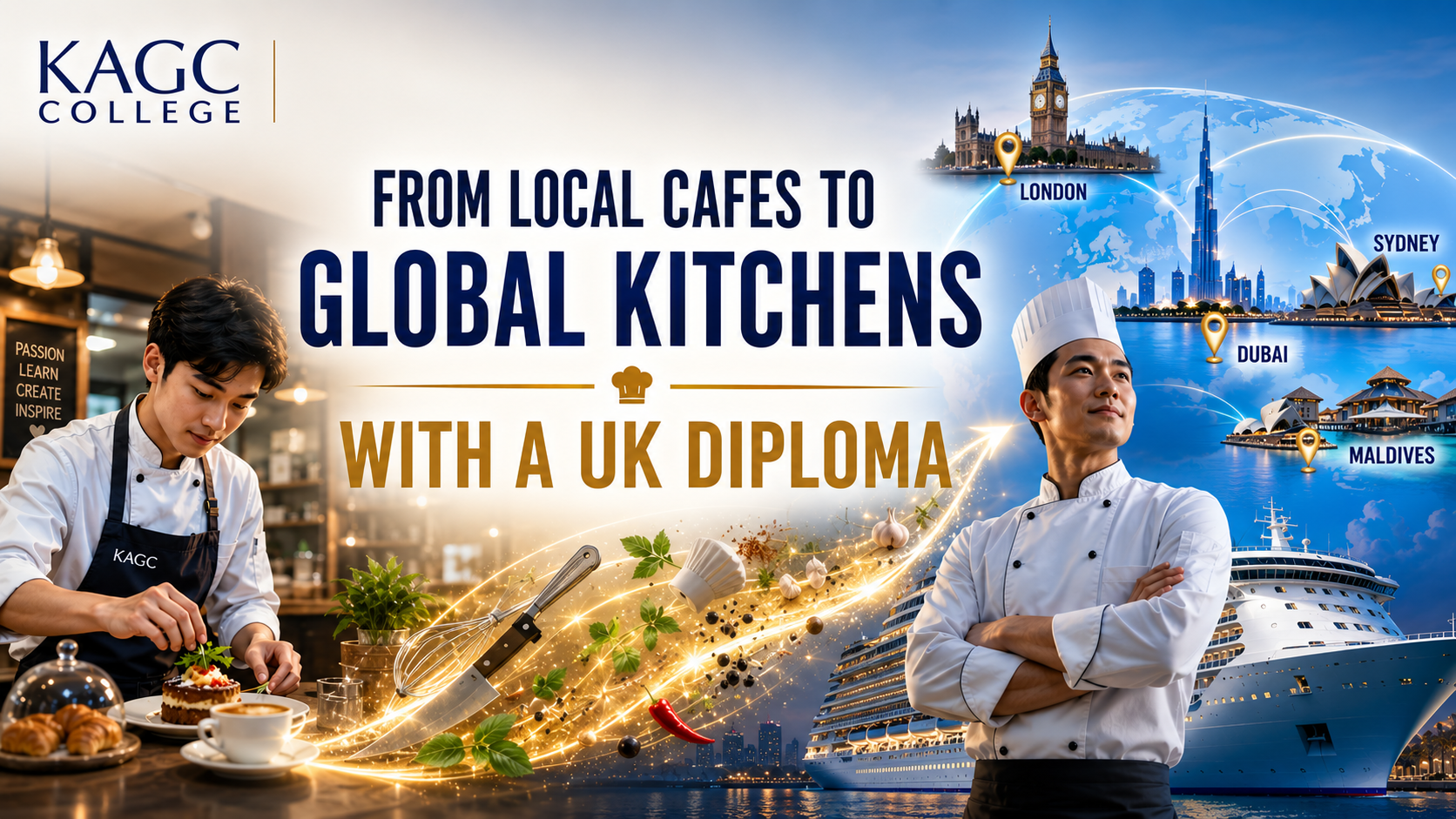
A Qualification That Opens Doors Worldwide
- Luxury hotels
- International restaurant groups
- Cruise lines
- Integrated resorts
- Airline catering companies
- Central production kitchens
- Fine dining establishments
Why This Partnership Matters
Choosing a culinary programme is about more than learning recipes—it is about investing in an education that is recognised, respected, and relevant to the industry you aspire to join.
The partnership between JPK and City College Birmingham ensures that every KAGC graduate benefits from:
- A Malaysian government-recognised skills qualification
- A UK-recognised Advanced Diploma
- Industry-focused practical education
- Internationally relevant culinary knowledge
- Enhanced employability in Malaysia and overseas
- Clear opportunities for future academic progression
Whether your goal is to become a professional chef, lead culinary teams, specialise in modern gastronomy, or establish your own hospitality business, KAGC’s academic partnership provides qualifications that validate the practical skills and commercial competencies developed throughout the programme—giving employers and universities confidence in your abilities while supporting a successful culinary career.
Focused Financial Support
- Government Skills Funding: Eligible students can apply for the Skills Development Fund Corporation (PTPK) loan under the Ministry of Human Resources (MoHR) to support their tuition fees.
- Internal Payment Plans: Speak with our admissions counselors about flexible installment options designed to ease out-of-pocket expenses for parents.

Entry Requirements
Minimum Requirements
✓ Minimum age: 16 years old
✓ Completed SPM or equivalent qualification
✓ School leavers and working adults are welcome
Intake
January
May
July
October
Required Documents
✓ KAGC College Application Form
✓ Photocopy of NRIC of the student(front & back)
✓ A certified photocopy of SPM and/or school leaving certificate
✓ A copy of a passport-size photo on white background
✓ A certified copy of your previous qualification to claim for exemption (if applicable)
Frequently Asked Questions
What is KAGC's Advanced Diploma in Culinary Arts & Gastronomy?
KAGC College’s Advanced Diploma in Culinary Arts & Gastronomy is a career-focused culinary programme designed for students who want to become professional chefs, kitchen leaders, restaurant operators, or future F&B entrepreneurs. The programme goes beyond cooking techniques by combining culinary training, modern gastronomy, restaurant business operations, food costing, menu engineering, leadership, and industry-based On-the-Job Training.
Students graduate with practical kitchen skills, commercial understanding, and recognised qualifications that support career opportunities in hotels, restaurants, resorts, cruise lines, catering operations, and other food service businesses.
Why should I choose KAGC for Culinary Arts instead of a normal culinary diploma?
KAGC is suitable for students who want a more practical, career-driven culinary education rather than a long theory-heavy academic route. The programme is built around approximately 70% practical learning, allowing students to train in realistic kitchen environments while developing skills in cooking, kitchen operations, food costing, menu planning, procurement, inventory management, and team leadership.
Compared with many culinary diploma programmes in Malaysia, which commonly take around 1.5 to 2 years, KAGC’s 15-month structure provides a faster route into the industry while still including six months of real workplace exposure through OJT.
What makes KAGC's culinary programme different?
KAGC’s main difference is that it prepares students to become industry-ready culinary professionals, not just cooks. Students are trained in three important areas: professional culinary skills, modern gastronomy, and restaurant business operations.
This means students learn how to prepare food professionally, understand fine-dining techniques, manage kitchen workflows, control costs, design profitable menus, and operate within a commercial F&B environment. These are the skills employers often value when considering graduates for long-term career progression into supervisory and management roles.
Is KAGC's Advanced Diploma in Culinary Arts & Gastronomy recognised?
Yes. KAGC’s programme is positioned around both local and international recognition. KAGC’s public programme page states that the Advanced Diploma in Culinary Arts & Gastronomy is jointly accredited by Jabatan Pembangunan Kemahiran (JPK) and City College Birmingham.
This gives students a dual-recognition advantage: Malaysian skills-based recognition through the national TVET framework and a UK-recognised advanced diploma that strengthens graduates’ profiles when applying for local or overseas opportunities.
What qualifications will I receive after completing the programme?
Upon successful completion, students graduate with a UK Advanced Diploma awarded by City College Birmingham and a Malaysian SKM Certification issued through JPK. This combination is valuable because it shows employers that graduates have both internationally relevant culinary knowledge and nationally recognised skills-based competencies.
JPK’s Malaysian Skills Certification framework includes structured skills certification levels under Malaysia’s national skills development system.
What is the role of City College Birmingham in this programme?
City College Birmingham is KAGC’s UK academic partner for the Advanced Diploma in Culinary Arts & Gastronomy. The City College Birmingham programme page describes the course as suitable for learners who want to build careers as chefs in hotels, restaurants, or the cruise industry, with curriculum coverage from basic to advanced culinary levels.
For students, this UK qualification helps strengthen the academic and professional value of the programme, especially when applying to international hospitality employers or considering further studies later.
What is JPK and why is SKM important?
Jabatan Pembangunan Kemahiran (JPK) is Malaysia’s Department of Skills Development. It oversees the Malaysian Skills Certification system, which is designed to recognise occupational skills and practical competencies.
For culinary students, SKM is important because it validates hands-on technical capability. This is especially relevant in TVET education, where employers want graduates who can perform in real workplace environments rather than relying only on classroom theory.
How long is KAGC's Advanced Diploma in Culinary Arts & Gastronomy?
The programme takes 15 months to complete. It consists of 9 months of campus-based practical and academic learning, followed by 6 months of structured On-the-Job Training (OJT).
This makes the programme suitable for students who want to enter the workforce faster while still gaining a recognised qualification and meaningful industry experience.
What does 70% practical learning mean?
At KAGC, 70% practical learning means students spend most of their training time applying culinary and operational skills rather than only studying theory. Students learn through kitchen practicals, commercial kitchen workflow training, restaurant simulations, menu engineering exercises, food costing activities, and industry-based OJT.
This practical approach helps students build confidence, discipline, speed, accuracy, teamwork, and problem-solving ability—the qualities required in professional kitchens.
Do I need cooking experience before joining this programme?
No. The programme is suitable for beginners, including SPM leavers and students who are passionate about food but do not yet have formal culinary training. The curriculum is structured to build students from foundational culinary skills into more advanced areas such as international cuisine, modern gastronomy, food costing, kitchen operations, and restaurant management.
What matters most is interest, discipline, willingness to practise, and readiness to work in a hands-on environment.
Is this programme suitable for SPM leavers?
Yes. The programme is suitable for SPM leavers who prefer a practical, skills-based learning pathway and want to enter the culinary or hospitality industry earlier. The current programme content positions the course for SPM leavers, school leavers, working adults, and aspiring chefs who want a hands-on route into the industry.
It is especially suitable for students who enjoy practical learning, teamwork, creativity, food preparation, and real-world problem solving.
What will students learn in the programme?
Students learn a combination of culinary, business, and leadership skills. Key learning areas include professional cooking techniques, international cuisine, kitchen hygiene, food safety, kitchen workflow, modern cuisine, molecular gastronomy, menu engineering, food costing, waste control, inventory management, procurement, restaurant operations, and kitchen leadership.
This combination is important because culinary arts is not only about preparing food. It also requires time management, teamwork, attention to detail, kitchen management, and creativity, which are commonly highlighted as important skills in culinary education.
What is Modern Cuisine or Molecular Gastronomy?
Modern Cuisine, also known as molecular gastronomy, is a scientific and creative approach to cooking. It studies how ingredients react under different cooking methods and uses techniques such as foams, gels, emulsions, and spherification to create new textures, presentations, and dining experiences.
At KAGC, this subject helps students understand the innovation behind fine dining and premium restaurant concepts. It is useful for students who want to stand out in hotels, fine-dining restaurants, resorts, cruise kitchens, or modern F&B concepts.
Will I learn restaurant business management at KAGC?
Yes. KAGC’s programme goes beyond cooking by teaching students the business side of F&B. Students learn menu engineering, food costing, cost control, procurement, stock management, waste control, kitchen workflow, restaurant financial awareness, team leadership, and customer experience.
This is important because many chefs eventually move into supervisory or management roles. A chef who understands cost, quality, labour, operations, and customer satisfaction is better prepared for long-term career progression.
Why is food costing important for culinary students?
Food costing teaches students how to calculate ingredient costs, set selling prices, control wastage, and protect profit margins. In a real restaurant, even a popular dish can hurt the business if it is priced wrongly or produces too much waste.
For example, if a pasta dish costs RM8 to produce but is sold at RM12, the restaurant may struggle to cover rent, labour, utilities, and profit. Through food costing and menu engineering, students learn how chefs and restaurant managers make decisions that keep a food business sustainable.
Can I become a chef without a diploma?
Yes, it is possible to enter a kitchen without a diploma. Many people start as kitchen assistants or junior cooks and learn on the job. However, without formal training, progression may depend heavily on years of experience, employer trust, and available promotion opportunities.
A structured culinary diploma can shorten the learning curve by giving students professional kitchen techniques, food safety knowledge, business operations training, leadership exposure, and industry experience. For students who want long-term progression into Chef de Partie, Sous Chef, Executive Chef, Kitchen Manager, or F&B leadership roles, formal training can be an advantage.
Is a culinary diploma worth it in Malaysia?
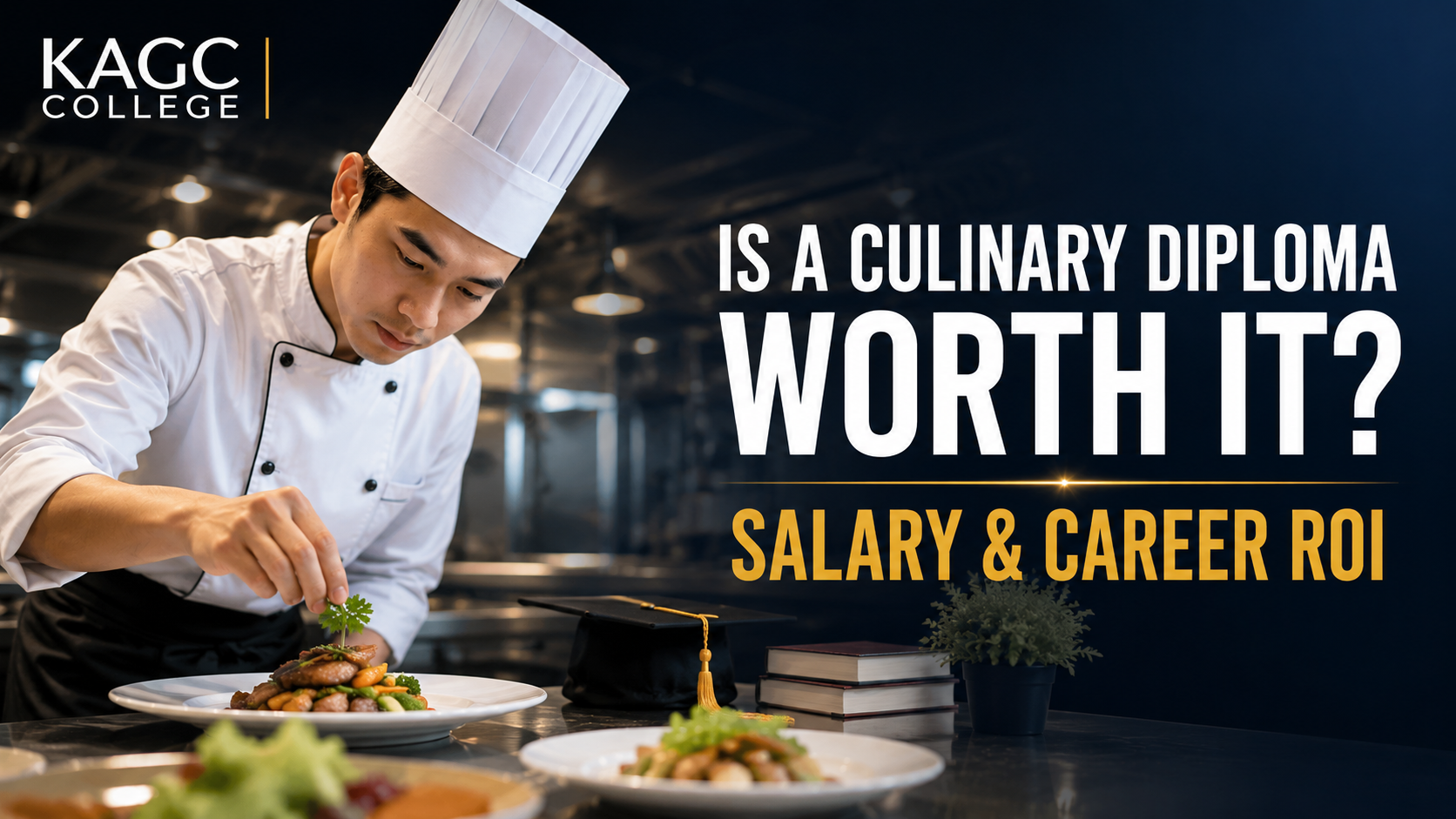
A culinary diploma can be worth it for students who want long-term growth rather than only an entry-level kitchen job. The value is not only in the starting salary. The bigger value is in building the skills needed for promotion, leadership, overseas opportunities, and future business ownership.
Current job listings in Malaysia show ongoing demand for chef and culinary roles, including hundreds of chef-related and culinary arts-related vacancies at the time of research. Formal culinary training can help students compete more confidently for these opportunities, especially when employers prefer candidates with a certificate or diploma in Culinary Arts or a related field.
What jobs can I get after completing KAGC's Advanced Diploma in Culinary Arts & Gastronomy?
Graduates may pursue roles such as Commis Chef, Demi Chef, Chef de Partie, Sous Chef, Executive Chef, Kitchen Supervisor, Restaurant Operations Executive, Food & Beverage Executive, Catering Manager, Menu Developer, Food Product Development Executive, or Culinary Entrepreneur.
Culinary career pathways in Malaysia commonly include roles such as Executive Chef, Sous Chef, Restaurant Manager, and Food Stylist, while hotel and restaurant employers remain among the relevant recruiters for culinary graduates.
Can KAGC graduates work overseas or on cruise ships?
KAGC’s programme can support international career preparation because students graduate with a UK Advanced Diploma, Malaysian SKM Certification, practical training, and six months of OJT. City College Birmingham also positions the programme for those interested in careers as chefs in hotels, restaurants, or the cruise industry.
However, overseas employment always depends on the employer’s requirements, work experience, visa rules, language ability, and individual performance. The qualification strengthens the graduate’s profile, but students should still expect to build experience and meet destination-country employment conditions.
What is On-the-Job Training and why does it matter?
On-the-Job Training, or OJT, allows students to apply what they have learned in real commercial kitchens. At KAGC, students complete six months of OJT after their campus-based training.
This matters because employers want graduates who understand workplace discipline, kitchen pressure, teamwork, service timing, hygiene standards, and professional communication. OJT helps students move from classroom learning into real industry performance before graduation.
Where can students complete their OJT?
Students may complete OJT with hospitality and F&B industry partners such as hotels, restaurants, resorts, premium dining establishments, catering operations, or commercial kitchens, depending on placement availability, student suitability, and employer requirements.
The purpose of OJT is to expose students to real kitchen operations, professional standards, service pressure, team communication, and commercial food production. Strong OJT performance may also help students build employer references and future job opportunities.
Can this programme help me start my own café, restaurant, or catering business?
Yes. While no programme can guarantee business success, KAGC’s curriculum is useful for students who may want to become food entrepreneurs because it includes both culinary and business operations training.
Students learn areas such as menu engineering, food costing, procurement, inventory management, waste control, kitchen workflow, and customer experience. These are important because running a food business is not only about cooking delicious food. A sustainable restaurant must also manage pricing, suppliers, staff, quality, consistency, customer satisfaction, and profit.
What is the difference between Culinary Arts and Gastronomy?
Culinary Arts focuses on professional cooking techniques, food preparation, kitchen skills, plating, and food production. Gastronomy goes deeper into the science, creativity, culture, innovation, and experience of food.
KAGC combines both. Students learn how to cook professionally while also understanding modern cuisine, food innovation, fine-dining presentation, and the business decisions behind successful F&B operations.
What is the difference between a cook and a chef?
A cook usually focuses on preparing dishes according to recipes and instructions. A chef has broader responsibilities, including menu planning, kitchen management, food costing, quality control, team supervision, workflow management, and consistency during service.
KAGC prepares students to grow beyond basic cooking roles by developing the culinary, business, leadership, and operational skills needed for long-term chef progression.
Is financial aid available for this programme?
Eligible students may apply for PTPK support, subject to approval and current funding conditions. PTPK, or the Skills Development Fund Corporation, is an agency under Malaysia’s Ministry of Human Resources that provides loan facilities for students pursuing skills training at public and private training institutions.
Parents and students should speak with KAGC’s admissions team to confirm current eligibility, required documents, application process, and available payment options.
What are the entry requirements?
Based on the current programme content, the minimum requirements include being at least 16 years old and having completed SPM or an equivalent qualification. School leavers and working adults are welcome to apply.
Applicants should prepare documents such as the KAGC application form, NRIC copy, certified SPM or school-leaving certificate, passport-size photo, and previous qualification documents if applying for exemption.
Is the programme taught in English or Mandarin?
The programme content indicates that English and Mandarin support are part of the learning approach. This makes the programme more accessible to Malaysian students who may be stronger in one language but still need to build professional vocabulary for the culinary and hospitality industry.
Students should confirm the latest language delivery arrangement with KAGC’s admissions team before enrolment.
How do parents know this programme is a good investment?
Parents should evaluate a culinary programme based on more than the certificate title. A strong programme should help students build practical skills, workplace discipline, recognised qualifications, real industry experience, and career progression potential.
KAGC addresses these concerns by combining 70% practical learning, modern gastronomy, restaurant business operations, dual recognition, and six months of OJT. This makes the programme suitable for parents who want their child to graduate with real skills, not just classroom knowledge.
Who should choose KAGC's Advanced Diploma in Culinary Arts & Gastronomy?
This programme is suitable for students who want a practical, career-focused culinary pathway. It is especially suitable for:
Students who love food and want to become professional chefs.
SPM leavers who prefer hands-on learning over traditional classroom study.
Students who want to enter the workforce faster.
Aspiring chefs who want modern cuisine and fine-dining exposure.
Future café, restaurant, catering, or F&B business owners.
Students who want both Malaysian skills recognition and a UK Advanced Diploma.
Why should students choose KAGC now?
Students should consider KAGC if they want to build a culinary career with practical skills, recognised qualifications, real industry exposure, and business knowledge. The hospitality and F&B industry continues to need skilled professionals who can cook well, manage kitchen operations, control costs, lead teams, and deliver consistent customer experiences.
KAGC’s Advanced Diploma in Culinary Arts & Gastronomy is designed to prepare students for exactly that: not only to enter the kitchen, but to grow into future culinary leaders, restaurant managers, and F&B entrepreneurs.